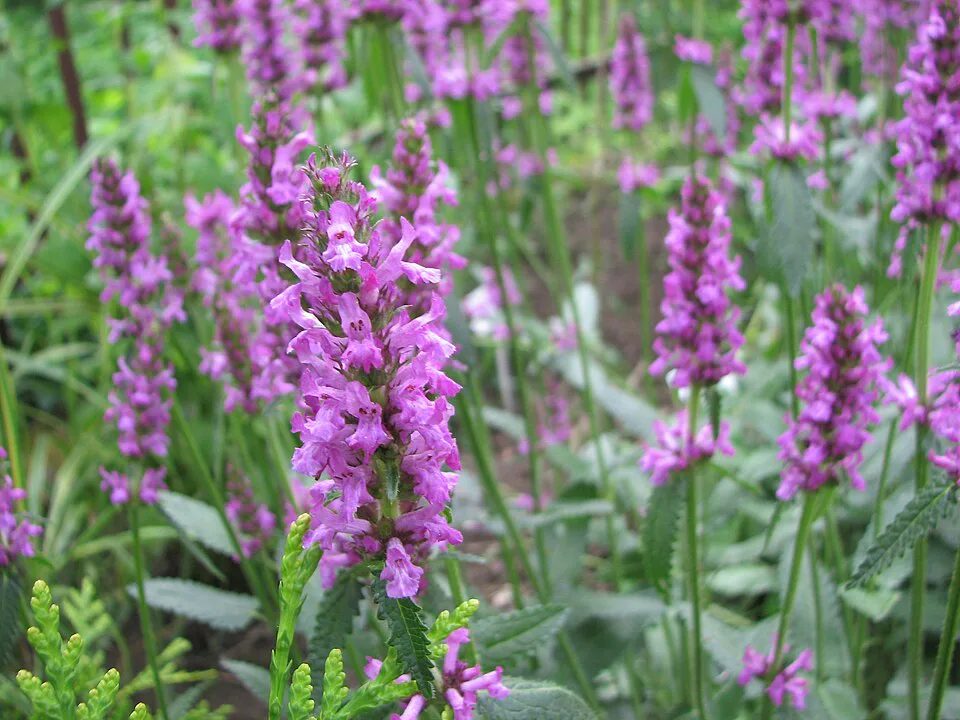
Betony is a native perennial wildflower of old grasslands, woodland rides and sunny banks. In summer, its slender stems carry short spikes of pinkish-purple flowers above a low cluster of wrinkled leaves. It is also called Wood Betony or Bishop’s-wort, and older books often name it Stachys officinalis. It belongs to Lamiaceae, the mint family.
Identification
- Usually around 20–60 cm tall, with upright, slightly hairy, four-angled stems.
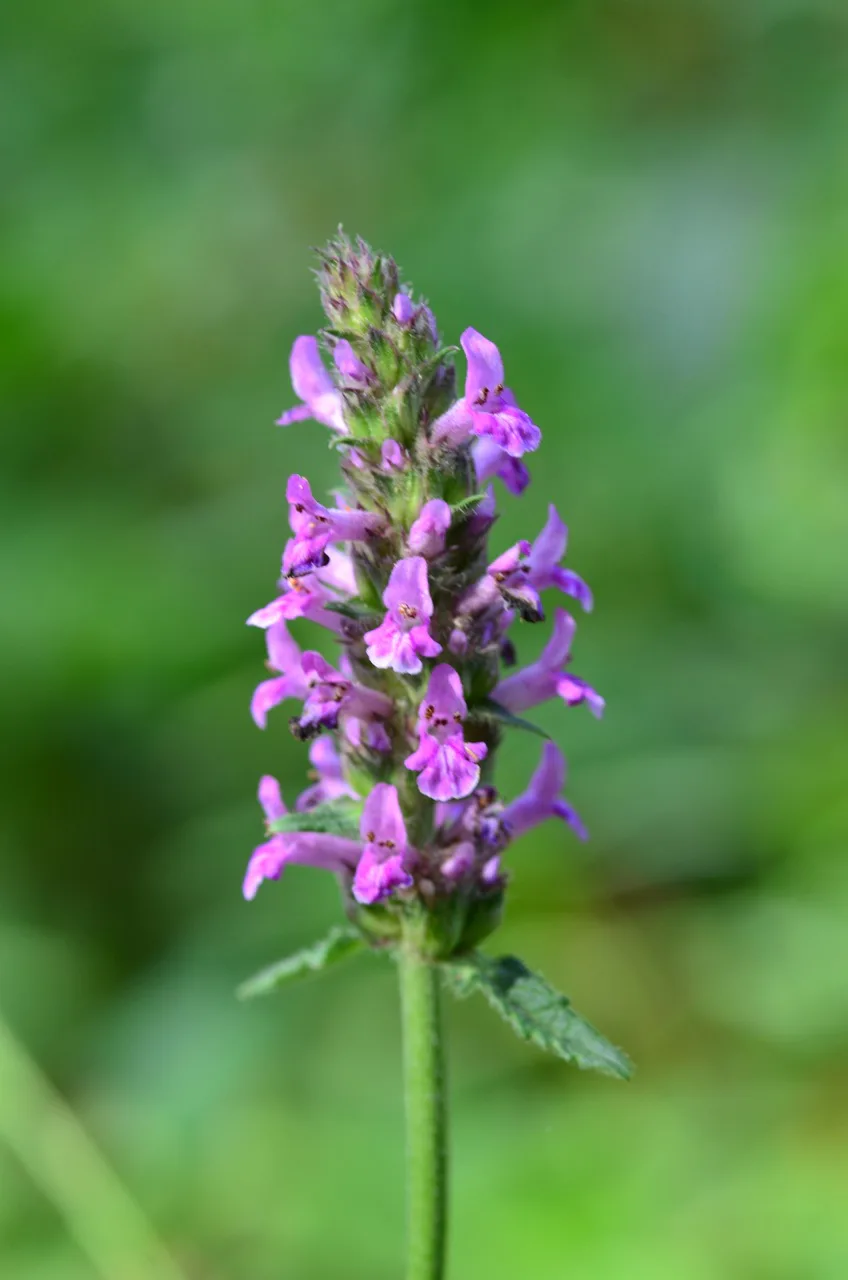
- Dense, upright flower spikes made of many small pinkish-purple, two-lipped flowers.
- Flower spikes often have a short gap or a few smaller clusters of flowers beneath the main head.
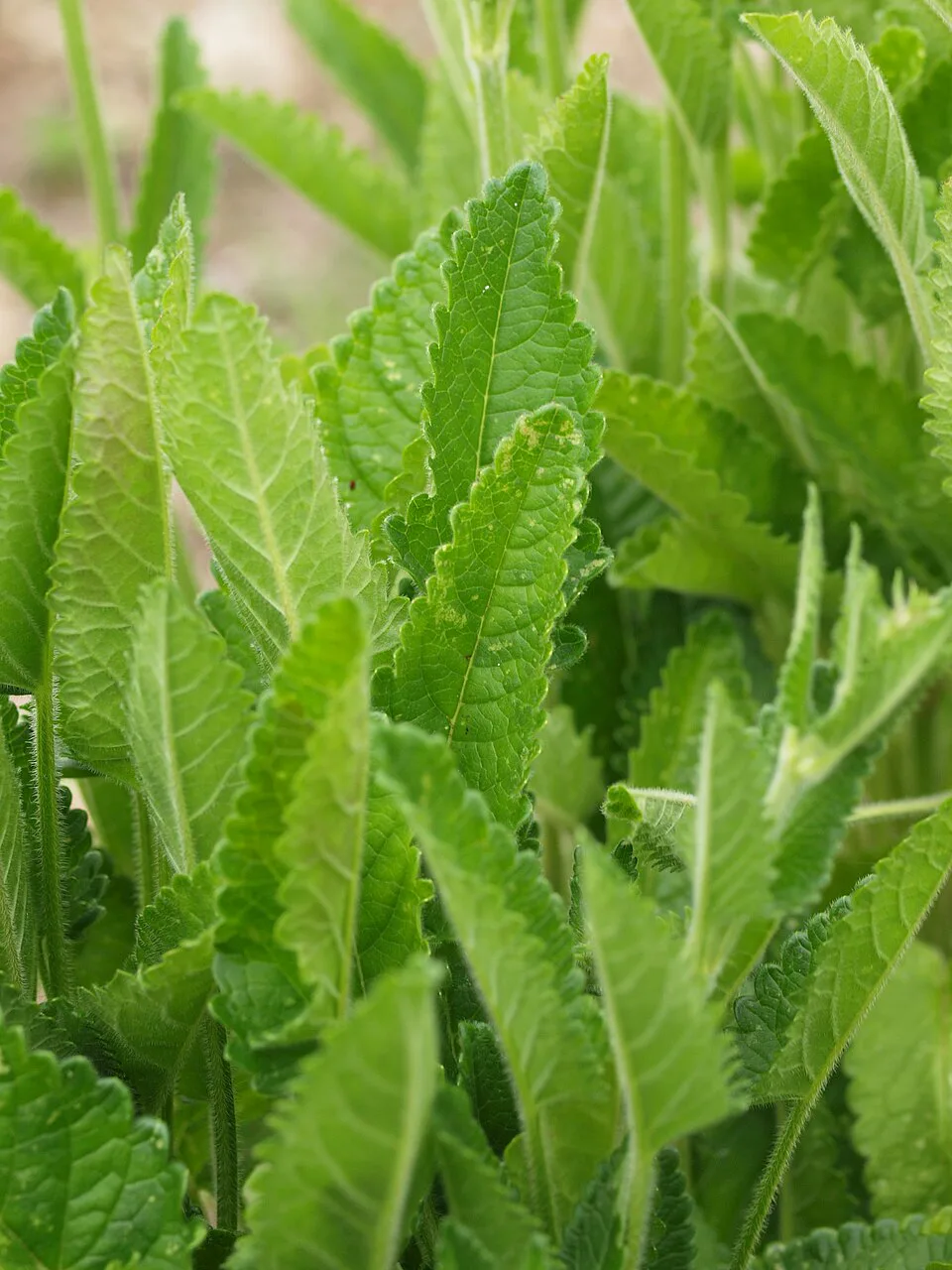
- A rosette of long-stalked, oval to oblong leaves grows near ground level.
- Leaves are wrinkled, prominently veined, softly hairy and edged with rounded teeth.
- Only a few pairs of smaller, opposite leaves appear along the flowering stem.
The combination of a low rosette, relatively leafless square stems and compact purple flower spikes is particularly useful for recognising Betony in the field.
Flower structure
The flower head is made up of crowded whorls of small individual flowers, often grouped so tightly that they resemble a single spike. In the mint family, these clusters are sometimes called verticillasters, or false whorls.
Each flower has a tubular corolla with two lips: a small, hooded upper lip and a broader lower lip that provides a landing surface for insects. The calyx is five-toothed, and the flower typically has four stamens. After pollination, the fruit divides into four small nutlets.
Leaves and stems
The lower leaves form a loose rosette and have long stalks. Their blades are broadly oval, sometimes with a slightly heart-shaped base, and have rounded teeth around the edges. The surface looks crumpled because the veins are deeply impressed. The leaves feel a little hairy rather than smooth.
Higher up the flowering stem, the leaves are smaller and occur in opposite pairs; some are almost sessile, meaning they have very short stalks or none at all. The stem is distinctly four-sided, typical of many mint-family plants, but Betony does not have the strong minty smell of culinary mints.
Habitat
Look for Betony in unimproved meadows, rough grassland, woodland rides, grassy banks and open edges of woods. It also occurs on heaths and along old hedgerows. It favours places where taller, more vigorous grasses do not overwhelm it and can be a clue to long-established grassland.
It is widespread in much of England and Wales, though less frequent in Scotland and Northern Ireland. It is also grown as a garden perennial, so not every plant beside a path is necessarily wild.
Flowering period
Betony generally flowers from June to October, with most flowers appearing during summer. The upright spikes can remain distinctive after the flowers have faded.
Similar species
- Self-heal (Prunella vulgaris) also has purple two-lipped flowers, but is much shorter and has a compact head immediately above broader stem leaves.
- Hedge Woundwort (Stachys sylvatica) usually has darker, dull reddish-purple flowers in more separated whorls, broader pointed leaves and a strong unpleasant smell when crushed.
- Marsh Woundwort (Stachys palustris) is generally taller, with pink-purple flowers in spaced whorls and long, pointed, toothed leaves.
Where the names come from
Betony is a very old plant name, traditionally traced to the Vettones, a people of the Iberian Peninsula mentioned by the Roman writer Pliny. The name passed into English through Latin and French.
Betonica preserves that old Latin plant name. Officinalis comes from officina, an apothecary’s storeroom or pharmacy, recalling the plant’s long history in herbal medicine.
Folklore & history
Betony had an extraordinary reputation in European herbal history. Roman writers, including Pliny the Elder, recorded its use as a remedy for many different complaints. In medieval Britain it was grown in monastery and cottage herb gardens, and it appears in Anglo-Saxon herbal traditions.
It was also regarded as a protective plant. Some people placed Betony in the home or carried it to ward off evil influences, bad dreams or misfortune. An old proverb praised its supposed virtues so highly that people were encouraged to sell their coat to buy Betony.
Wildlife
Betony’s flowers provide nectar for bumblebees and other pollinating insects, including the wool carder bee. Butterflies and hoverflies also visit it, and the plant can serve as a food source for the caterpillars of the Grey Pug moth.
Allowing Betony to flower and set seed in a meadow or garden helps support late-summer insects while preserving a characterful part of Britain’s grassland flora.