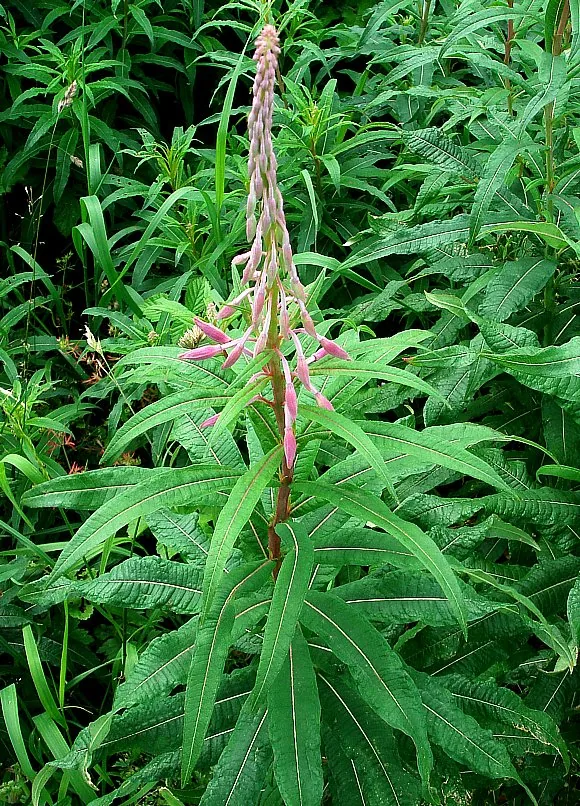
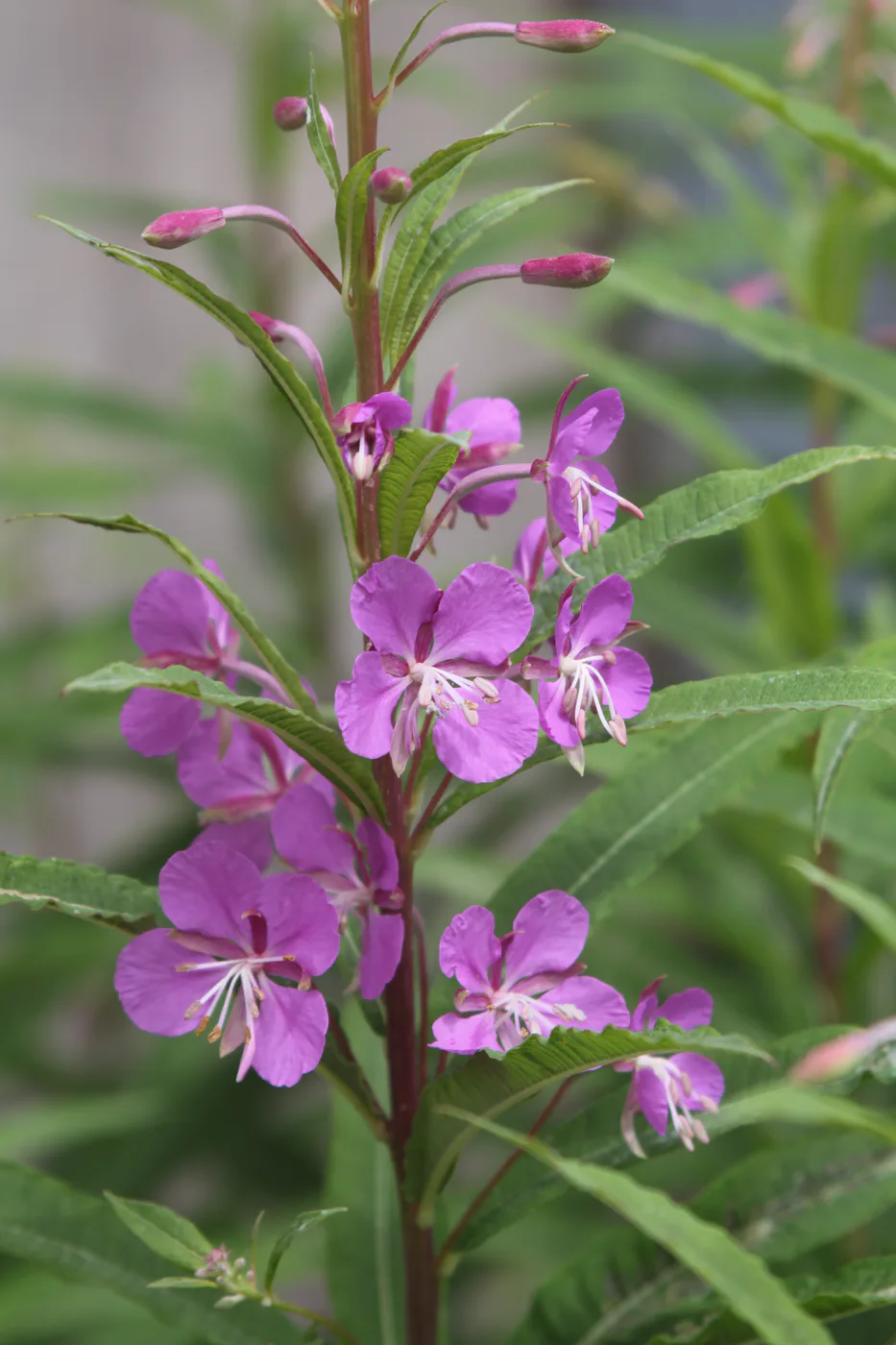
Rosebay Willowherb (Chamerion angustifolium) is one of the most familiar British members of Onagraceae. Its tall pink flower spike, four-petalled flowers, long narrow leaves and slender seed capsules make it an excellent introduction to the family.
In Britain, many wild members of Onagraceae are willowherbs. The family also includes evening-primroses and, more widely, plants such as fuchsias.
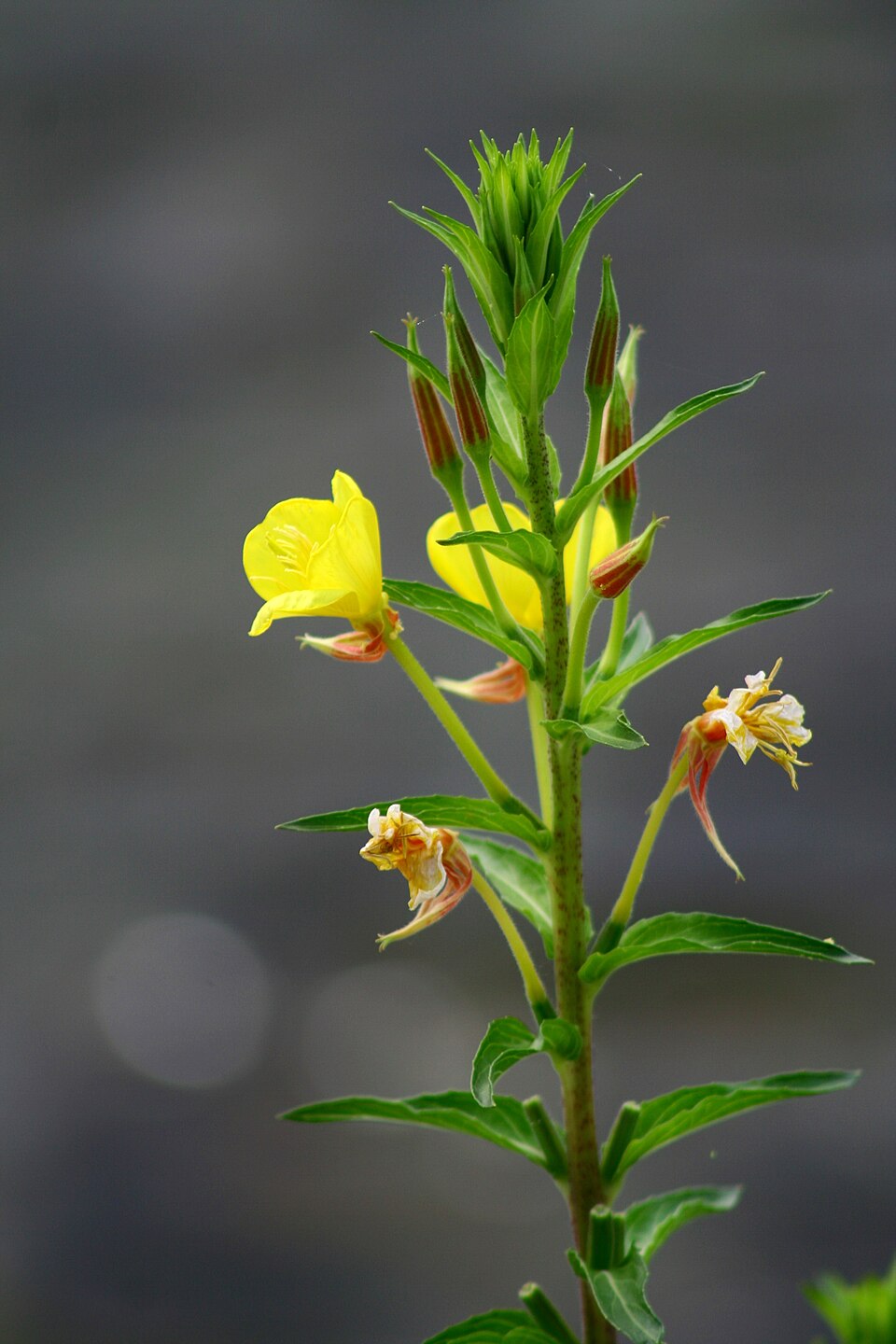
Common Evening-primrose (Oenothera biennis) adds another distinctive form: tall leafy stems, four yellow petals, a long floral tube and flowers that open towards dusk.
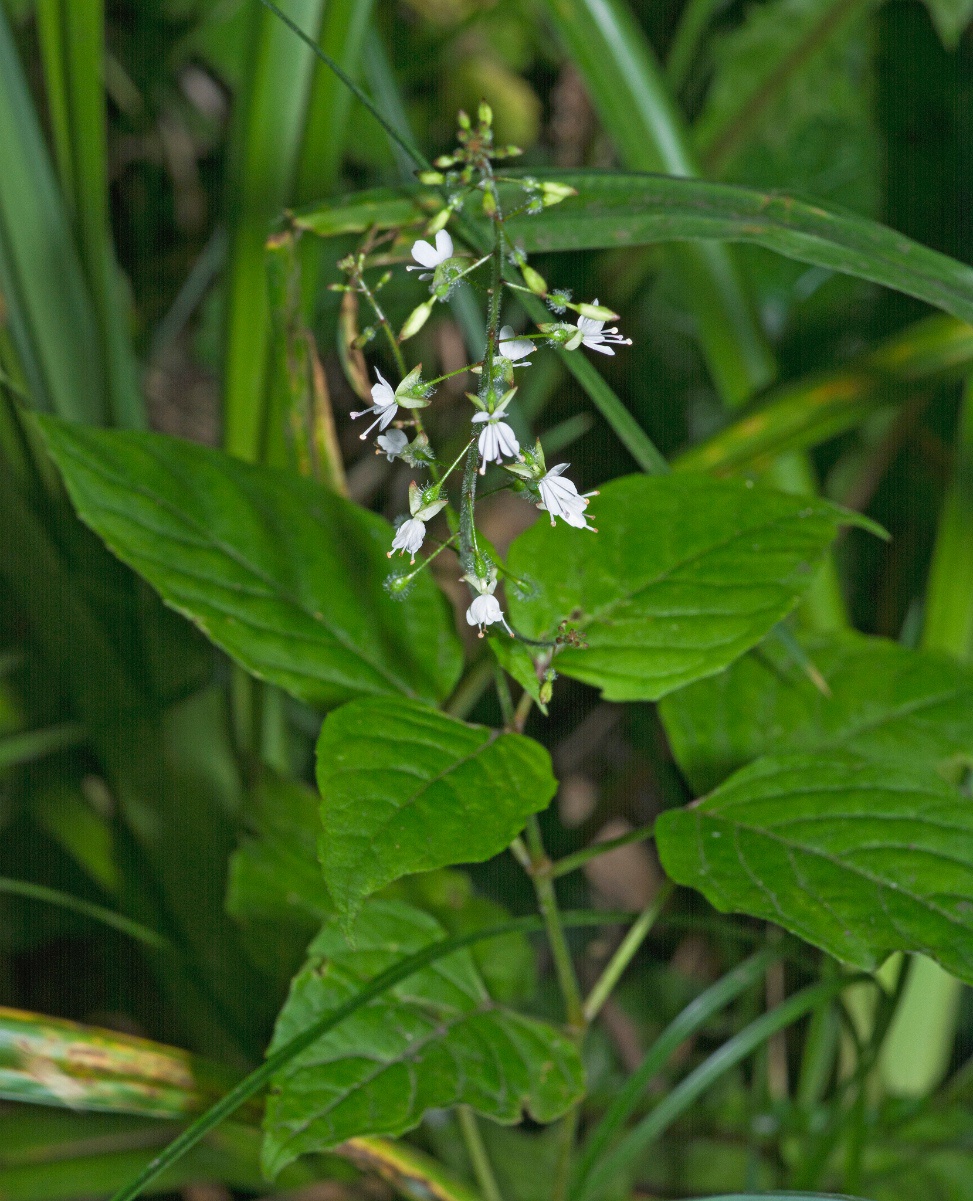
Enchanter's-nightshade (Circaea lutetiana) shows a less familiar side of the family: it has two deeply notched white petals, opposite leaves and tiny hooked fruits rather than willowherbs' four-petalled flowers and long seed capsules.
Rosebay Willowherb (Chamerion angustifolium): a tall member of Onagraceae with narrow leaves and a tapering spike of pink flowers.
Key family attributes
Flower parts: many members, including willowherbs, have four sepals and four petals. Enchanter's-nightshade is an exception, with just two deeply notched petals and two sepals.
Ovary: the ovary is inferior, sitting below the petals, sepals and stamens. It can appear as an elongated structure directly beneath the flower.
Stamens: many members have four or eight stamens. Rosebay Willowherb has eight, but Enchanter's-nightshade has two.
Leaves: leaves are simple and lack stipules. Their arrangement varies between genera and species, commonly opposite or alternate.
Fruit: many willowherbs have long capsules containing numerous tiny seeds. Enchanter's-nightshade instead produces small fruits covered in hooked bristles.
Seeds: many willowherb seeds carry silky hairs that catch the wind and allow them to disperse over long distances.
Features to look for in the field
Count the petals
Four petals are a useful first clue in British willowherbs. Look for four sepals behind them as well.
Look below the flower
The inferior ovary sits beneath the rest of the flower. In willowherbs it is often long and narrow and later becomes the seed capsule.
Check the fruit
Long capsules that split to reveal many silky-haired seeds are particularly characteristic of willowherbs.
Look closely at Rosebay Willowherb
Flowers: four broad pink petals surrounding eight stamens and a conspicuous four-lobed stigma.
Flower spike: flowers open from the bottom upwards, leaving developing capsules below and buds above.
Leaves: long and narrow, with a useful vein running close to the leaf margin.
Fruit: long slender capsules split open to release large numbers of silky-haired seeds.
Look closely at Common Evening-primrose
Flowers: four fragrant yellow petals and eight stamens around a four-lobed stigma.
Timing: buds usually open towards evening, and flowers often fade the following day.
Leaves: a low rosette forms in the first year, followed by an upright stem with alternate leaves.
Fruit: narrow, persistent capsules hold many small seeds without silky hairs.
Look closely at Enchanter's-nightshade
Flowers: each tiny white flower has two deeply notched petals, two sepals and two stamens.
Leaves: broadly oval to heart-shaped, with pointed tips, in opposite pairs.
Fruit: small oval fruits carry hooked bristles that cling to passing animals.
Habitat: forms low patches on damp, shaded woodland floors and hedgebanks.
Other British willowherbs
Great Willowherb (Epilobium hirsutum) is a robust plant of damp places with larger pink flowers and broader leaves. Broad-leaved Willowherb (Epilobium montanum) is smaller and has broader leaves with relatively small pink flowers.
When comparing willowherbs, pay attention to leaf shape and arrangement, the amount and type of hair on the stems and leaves, flower size, stigma shape and habitat.
Enchanter's-nightshade is easy to separate from the willowherbs listed above: it has paired broad leaves, small two-petalled flowers and burr-like fruits rather than tall pink spikes and long capsules.
Onagraceae flowers in this guide
Explore the individual flower pages for more photographs and identification details.