Joined petals
Fused petals are one of the most useful recurring characters. In Foxglove they form a large bell-shaped tube, while toadflaxes have a two-lipped flower and speedwells have a much smaller, more open corolla.
The plantain family
Plant family guide
Foxglove (Digitalis purpurea) is one of the most recognisable British members of Plantaginaceae. Its tall raceme of hanging tubular flowers looks very different from a plantain or a speedwell, which shows just how varied this family can be.
Older books may place Foxglove in Scrophulariaceae, the figwort family. Modern botanical classification places Digitalis in Plantaginaceae.
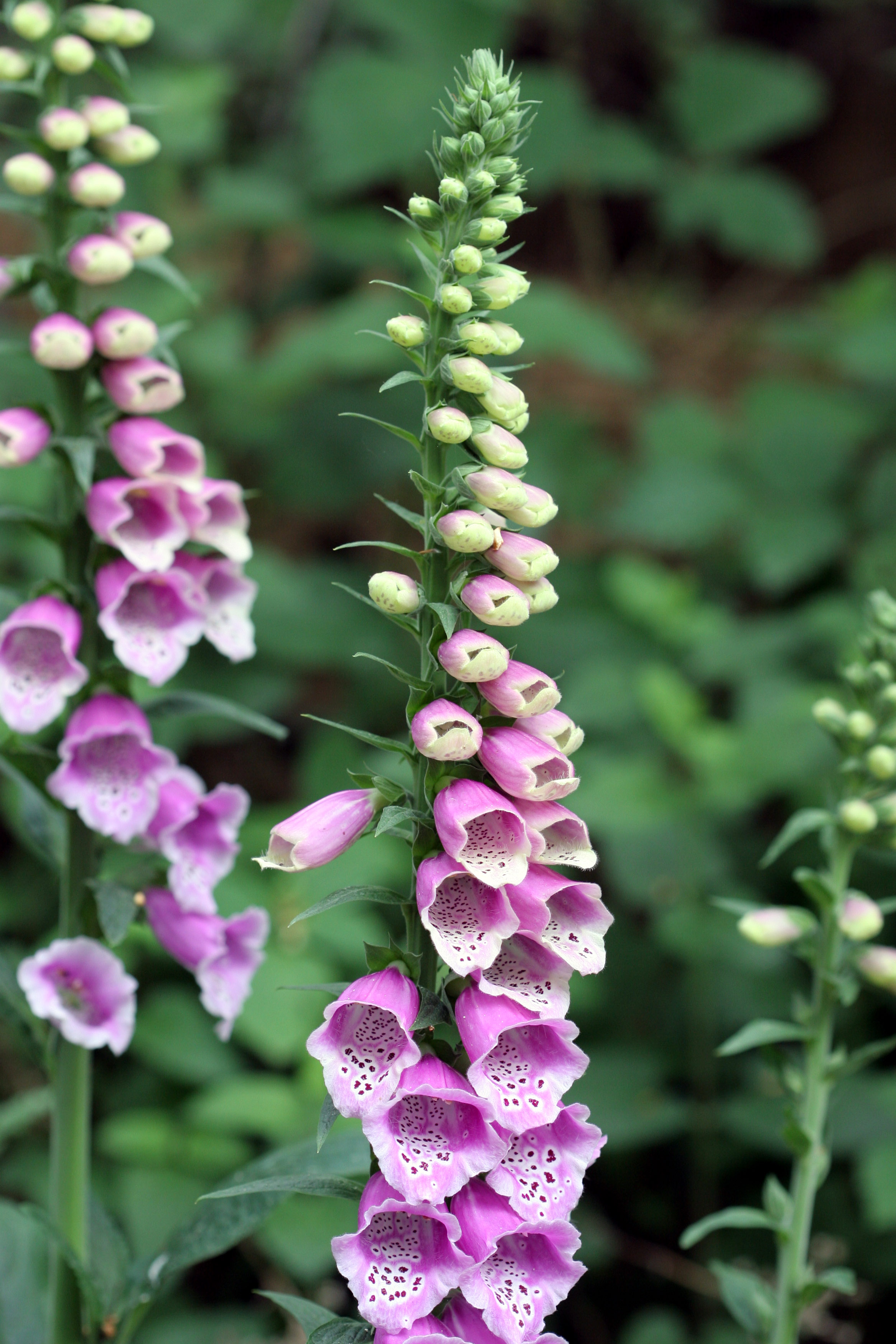
Fused petals are one of the most useful recurring characters. In Foxglove they form a large bell-shaped tube, while toadflaxes have a two-lipped flower and speedwells have a much smaller, more open corolla.
Look for four stamens in many members of the family, often in two unequal pairs. Speedwells stand out by having only two, making stamen number a useful clue when comparing genera.
Dry capsules are common throughout Plantaginaceae. Foxglove develops upright capsules along the old flower spike, while other genera use different capsule-opening mechanisms.
Plantaginaceae is a good reminder that a plant family does not always have an obvious single "look". Foxglove, Ribwort Plantain, Germander Speedwell and Common Toadflax can appear unrelated at first glance.
When learning the family, compare flower construction, fruit and other structural details rather than relying only on flower colour or the overall outline of the plant.
Explore the individual flower pages for more photographs and identification details.