Small yellow flowers
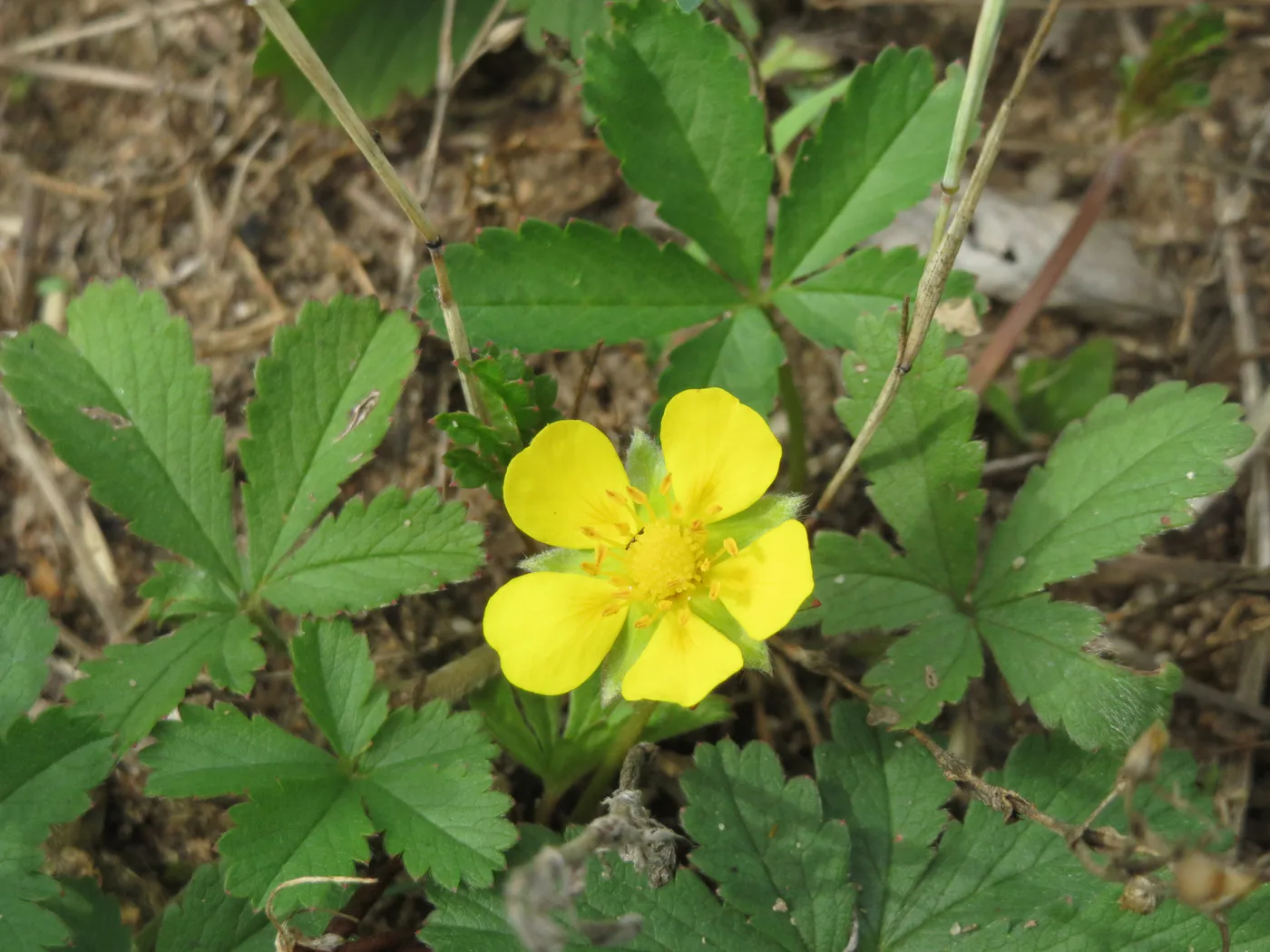
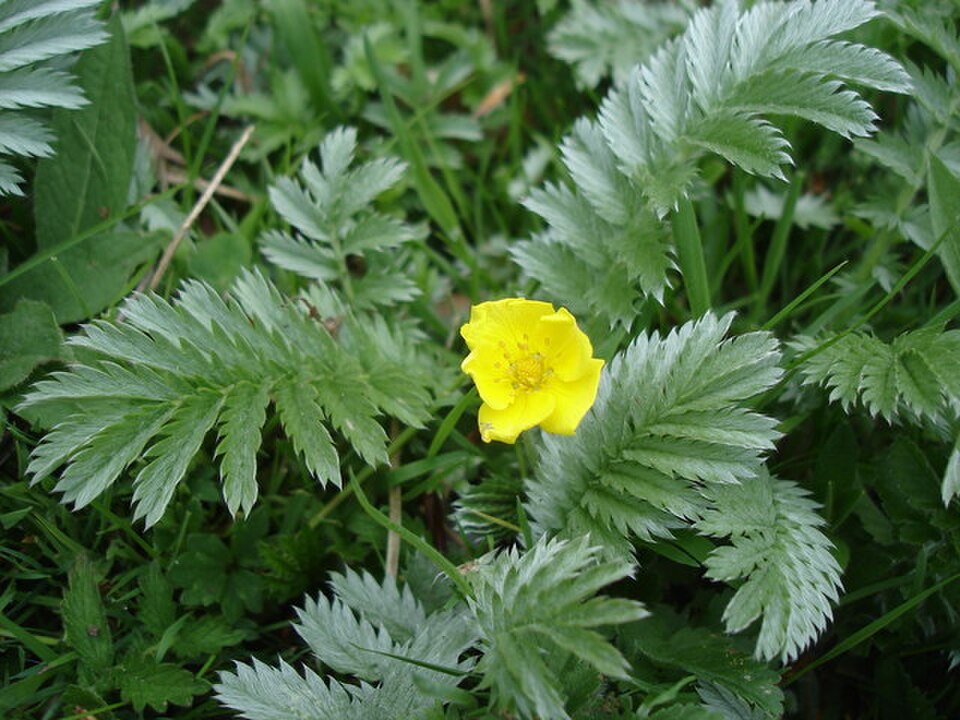
Five separate petals and a crowded centre of stamens show the basic rose-family flower pattern. Silverweed shares this pattern, but has creeping runners and feather-like leaves.
The rose family
Plant family guide
Wood Avens (Geum urbanum) is a useful introduction to the rose family. Its little yellow flowers have five separate petals and many stamens, but its dry, hooked fruits look very different from familiar roses or strawberries.
Rosaceae includes roses, brambles, Silverweed, Creeping Cinquefoil and other cinquefoils, strawberries, Meadowsweet, hawthorns and rowans. The family is remarkably varied: its members can be herbs, shrubs or trees, and they produce several distinctive kinds of fruit.
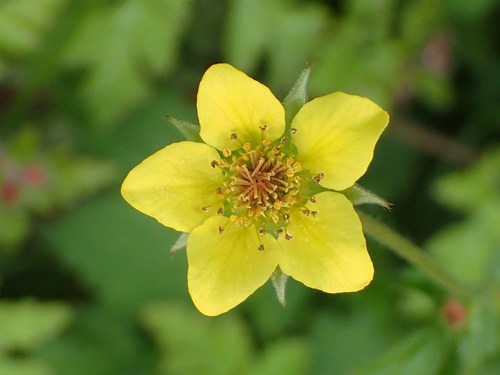
Five separate petals and a crowded centre of stamens show the basic rose-family flower pattern. Silverweed shares this pattern, but has creeping runners and feather-like leaves.
The lower leaves are divided, with one larger terminal leaflet. The smaller stem leaves often have conspicuous stipules.
The central cluster develops into many dry fruits with hooked tips that catch on animals and clothing.
Rosaceae is an excellent example of why botanists examine more than flower colour. Wood Avens has clusters of small, dry fruits, each formed from its own carpel. A blackberry is a cluster of fleshy drupelets, while an apple is a pome, in which much of the flesh comes from tissue surrounding the ovary.
These plants share elements of their flower structure despite having very different leaves, growth habits and fruits.
Creeping Buttercup also has five yellow petals and many stamens, but it belongs to Ranunculaceae. Looking at the whole plant, especially the leaves and fruits, helps distinguish it from Wood Avens.
Explore the individual flower pages for more photographs and identification details.
Potentilla reptans
Family: Rosaceae
Flowering: June, July, August, September
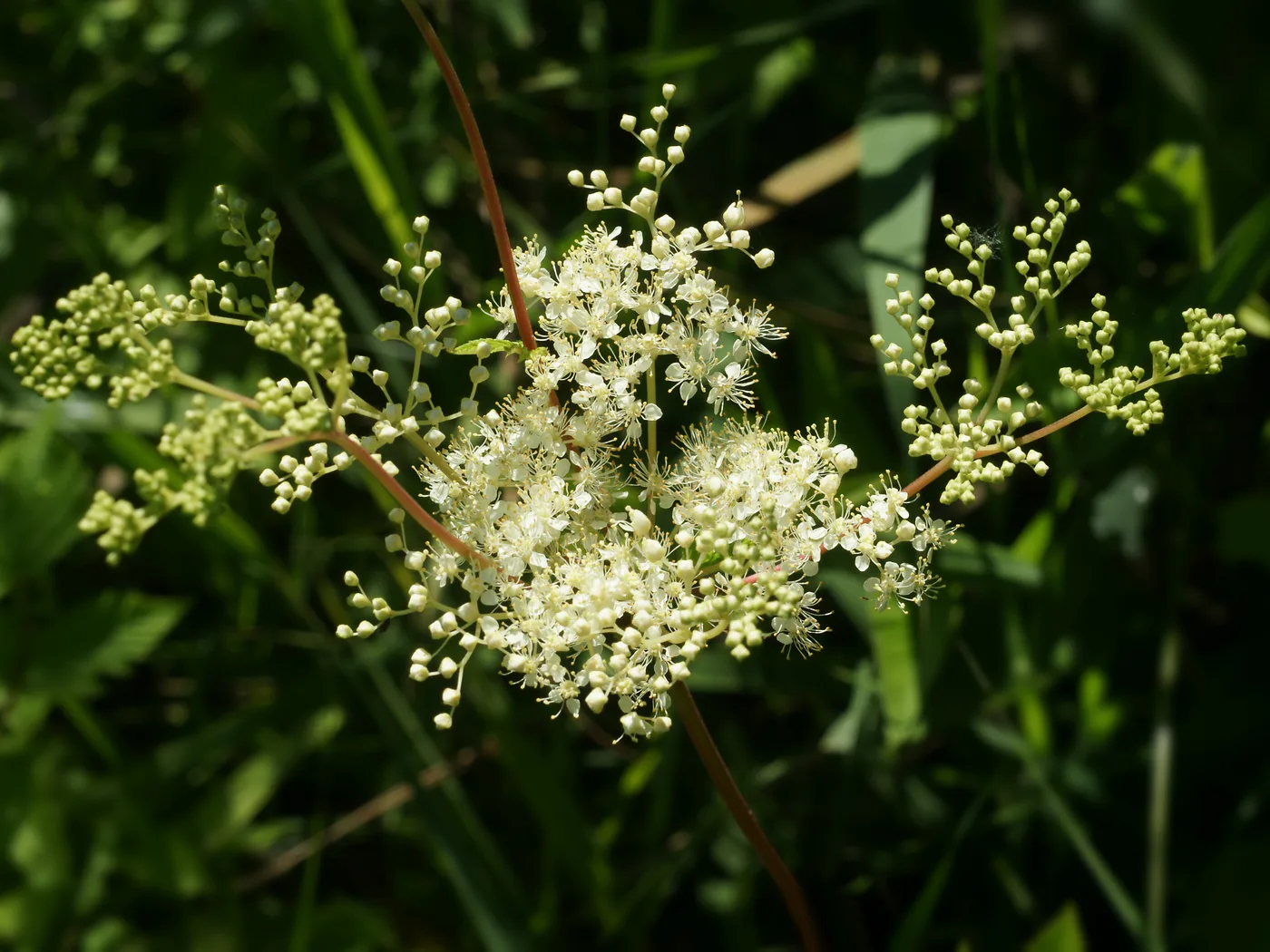
Filipendula ulmaria
Family: Rosaceae
Flowering: June, July, August, September
Potentilla anserina
Family: Rosaceae
Flowering: May, June, July, August, September
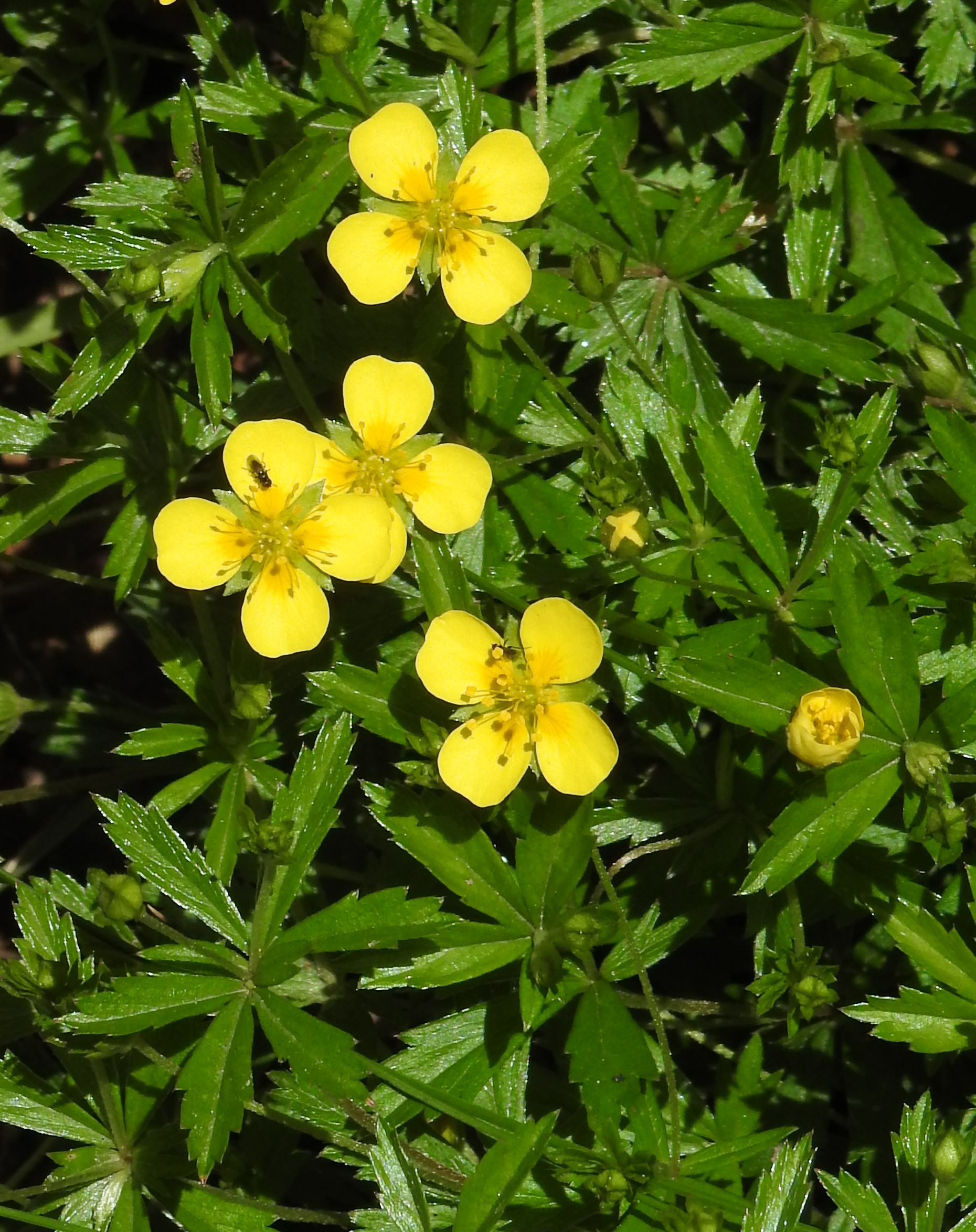
Potentilla erecta
Family: Rosaceae
Flowering: May, June, July, August, September
Geum urbanum
Family: Rosaceae
Flowering: May, June, July, August, September, October