Check the leaf pairs
Look for leaves arising opposite one another on the stem. In Devil's-bit Scabious they are simple and undivided, unlike the deeply divided leaves of some other scabiouses.
The honeysuckle family
Plant family guide
Devil's-bit Scabious (Succisa pratensis) is a British member of Caprifoliaceae. Its rounded blue-purple heads, opposite undivided leaves and preference for damp grassland make it a useful introduction to the scabious branch of this diverse family.
Modern classifications use a broad Caprifoliaceae that includes the plants once separated as Dipsacaceae and Valerianaceae. As a result, the family contains both woody honeysuckles and herbaceous plants such as scabiouses, teasels and valerians.
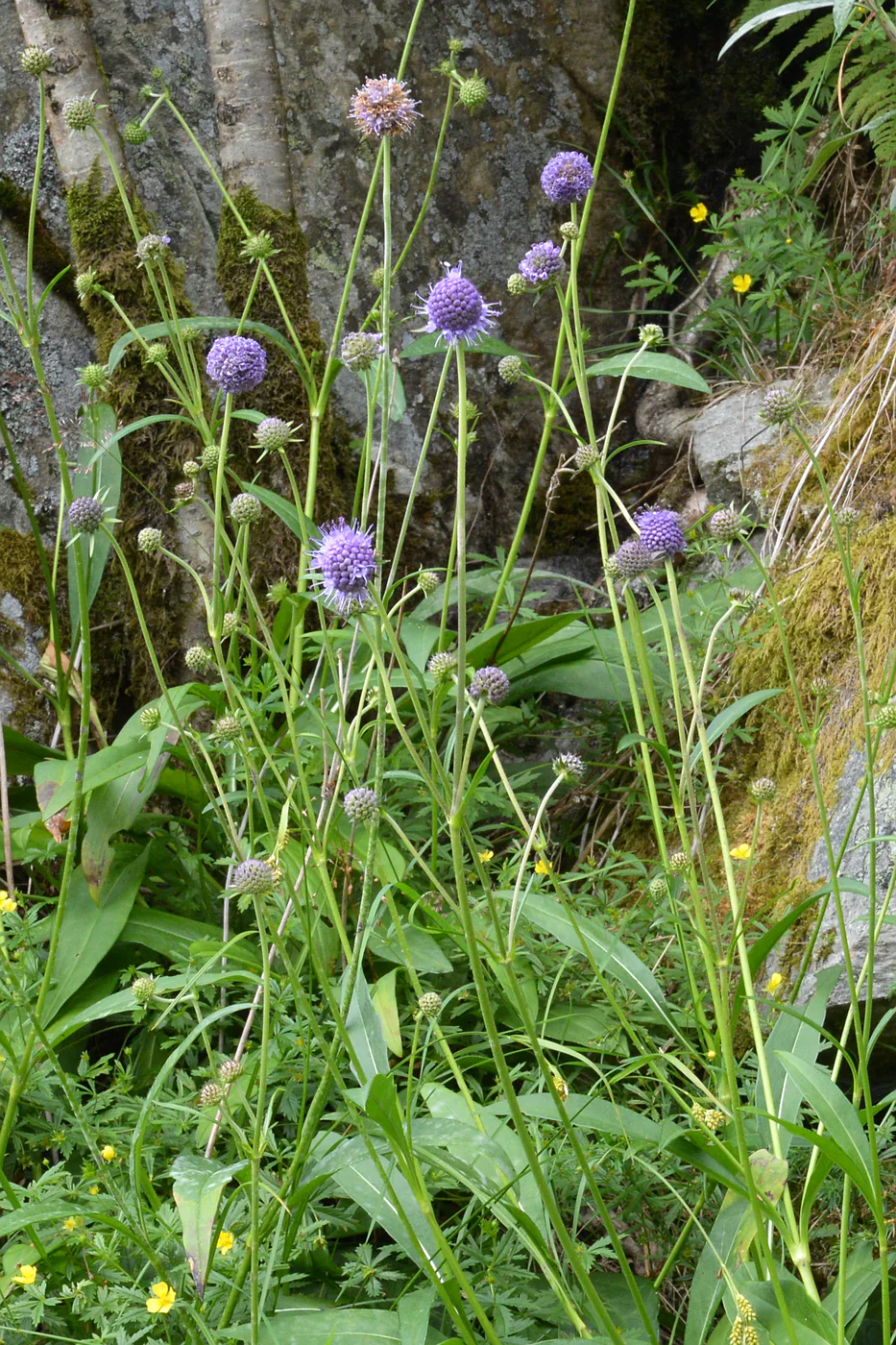
Look for leaves arising opposite one another on the stem. In Devil's-bit Scabious they are simple and undivided, unlike the deeply divided leaves of some other scabiouses.
A Devil's-bit Scabious head is not one flower. It contains many small tubular flowers, each with a four-lobed fused corolla.
The ovary is inferior. In the scabious group, each tiny flower also sits within specialised bracts that contribute to the compact head.
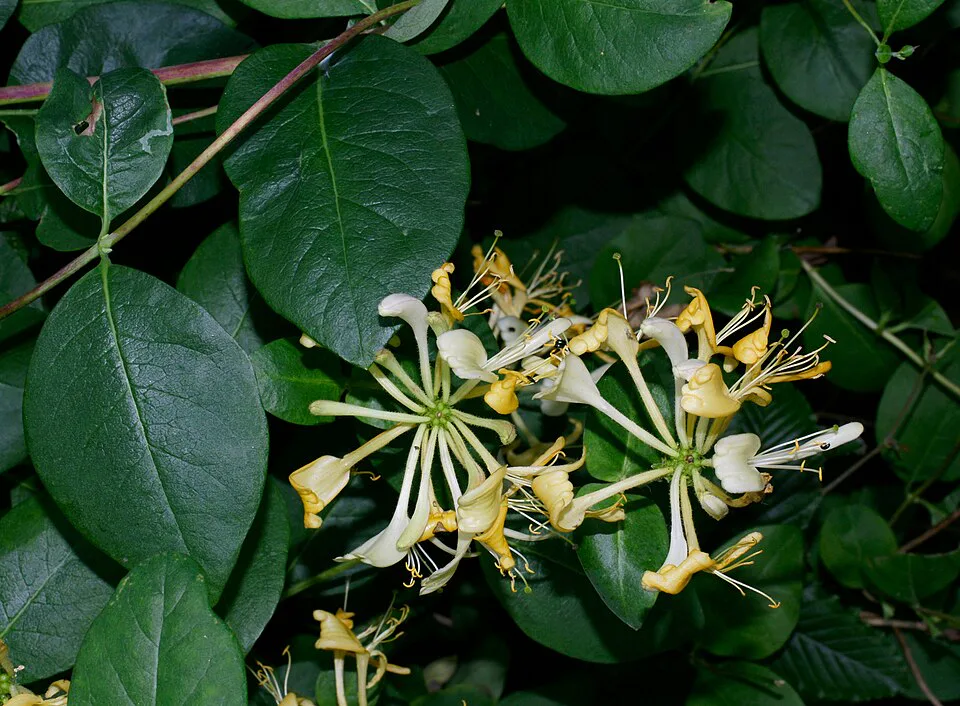
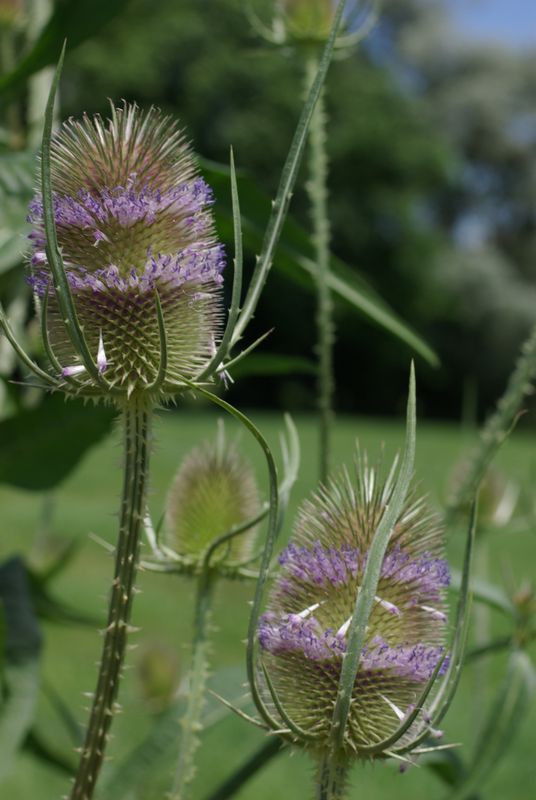
The broad modern Caprifoliaceae includes familiar plants that can look very different from one another. Common Honeysuckle (Lonicera periclymenum) is a native woody climber with fragrant tubular flowers and bright red berries. Teasel (Dipsacus fullonum) has tall prickly stems, opposite leaves joined into rain-catching cups and dense spiny flower heads whose lilac flowers open in two travelling rings.
For Devil's-bit Scabious itself, compare the undivided leaves and fairly even rounded head with Field Scabious (Knautia arvensis), whose outer florets are more enlarged and whose leaves are often lobed or divided, and Small Scabious (Scabiosa columbaria), which favours drier calcareous grassland and has deeply divided leaves.
See the Common Honeysuckle identification guide for photographs and more details.
Scabiouses and teasels were traditionally placed in their own family, Dipsacaceae. Modern classifications generally include that group within a broader Caprifoliaceae. This is why older floras may give Devil's-bit Scabious a different family name even though the plant itself has not changed.
Explore the individual flower pages for more photographs and identification details.
Lonicera periclymenum
Family: Caprifoliaceae
Flowering: June, July, August, September
Succisa pratensis
Family: Caprifoliaceae
Flowering: June, July, August, September, October
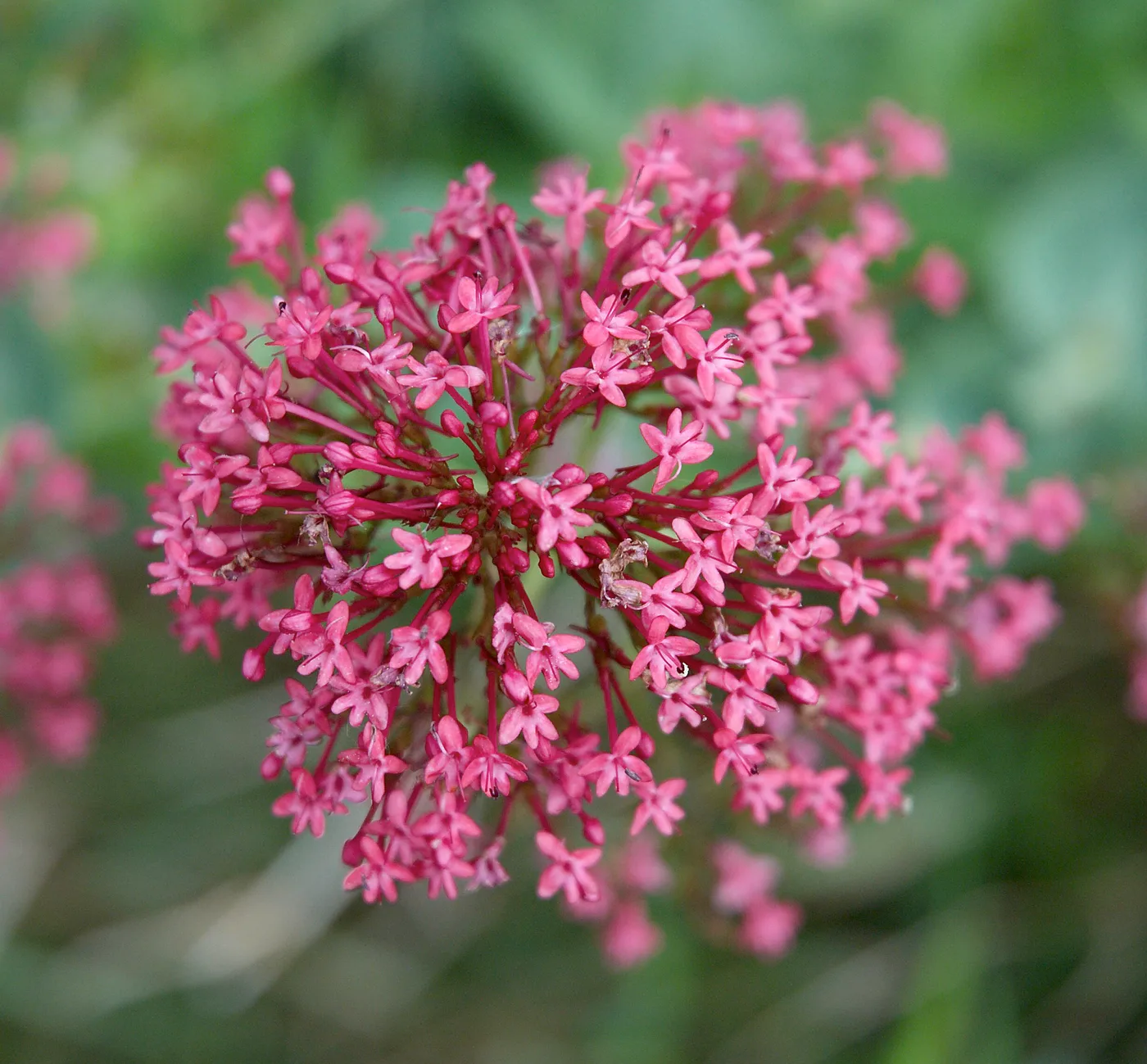
Centranthus ruber
Family: Caprifoliaceae
Flowering: May, June, July, August, September, October
Dipsacus fullonum
Family: Caprifoliaceae
Flowering: July, August, September