Paired, toothed leaves
The leaves are opposite and pointed, with prominent veins and strongly saw-toothed edges.
The nettle family
Plant family guide
Stinging Nettle (Urtica dioica) is the best-known UK member of Urticaceae. Its opposite, sharply toothed leaves, stinging hairs and small greenish flower clusters are useful identification features.
Not every member of Urticaceae has stinging hairs. The family also includes pellitories, such as Pellitory-of-the-wall, which have inconspicuous flowers but do not sting.
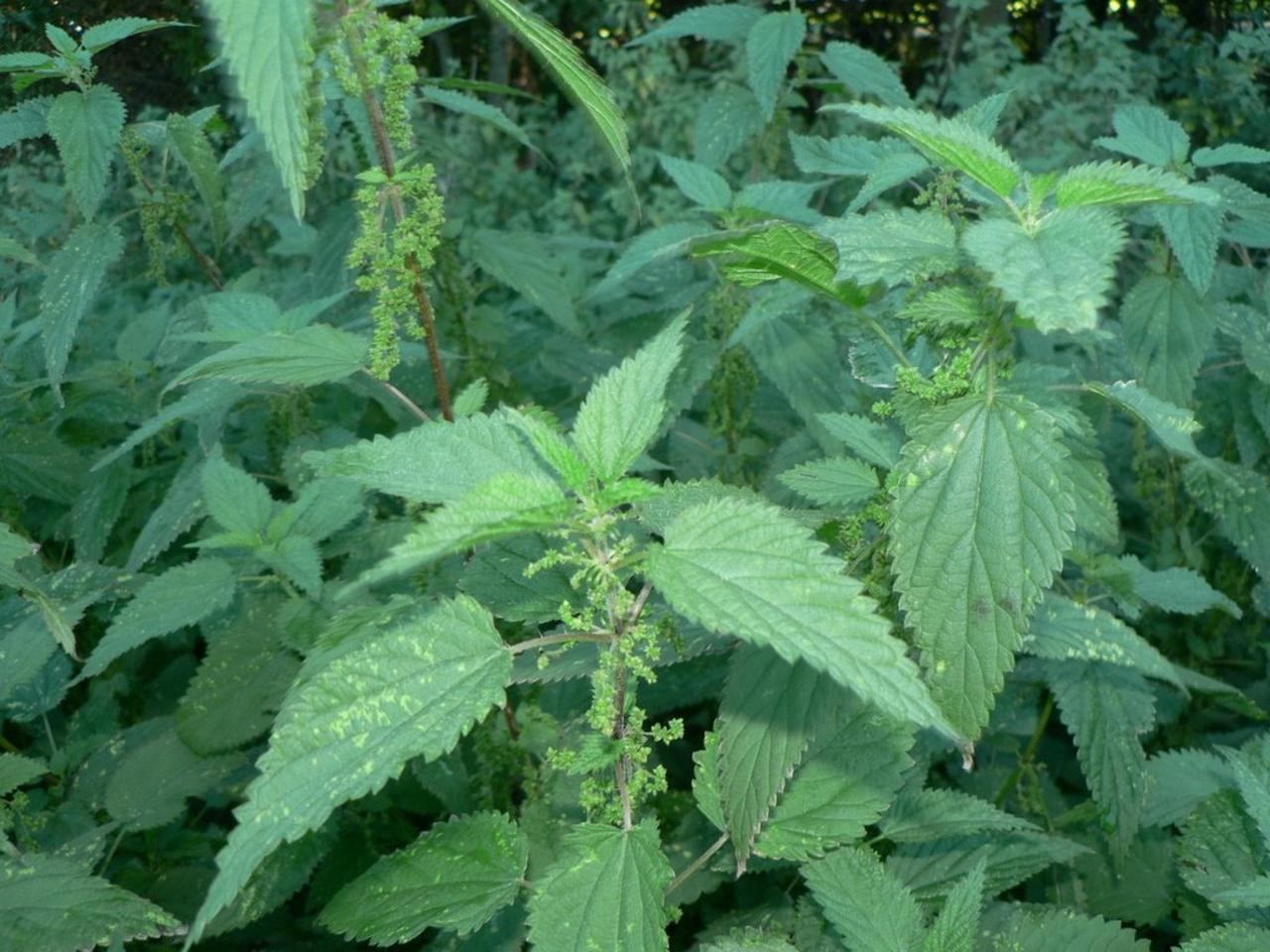
The leaves are opposite and pointed, with prominent veins and strongly saw-toothed edges.
Look closely at the stems and leaf surfaces for long, bristly hairs amongst shorter ordinary hairs.
Drooping sprays of tiny flowers appear from the upper leaf joints rather than forming showy flower heads.
Stinging Nettle is normally dioecious: male and female flowers are borne on different plants. Male flowers release pollen into the air, and the inconspicuous female flowers develop small, dry fruits after pollination.
The species also spreads from underground rhizomes, creating extensive patches without needing to establish new plants from seed.
Small Nettle (Urtica urens) is a smaller, usually annual relative that also stings. Pellitory-of-the-wall (Parietaria judaica) belongs to Urticaceae but lacks the familiar nettle sting.
Red Dead-nettle and White Dead-nettle are not part of this family. They belong to Lamiaceae, the mint family, and have conspicuous two-lipped flowers rather than nettles' small green wind-pollinated flowers.
Explore the individual flower pages for more photographs and identification details.