Wild Daffodil
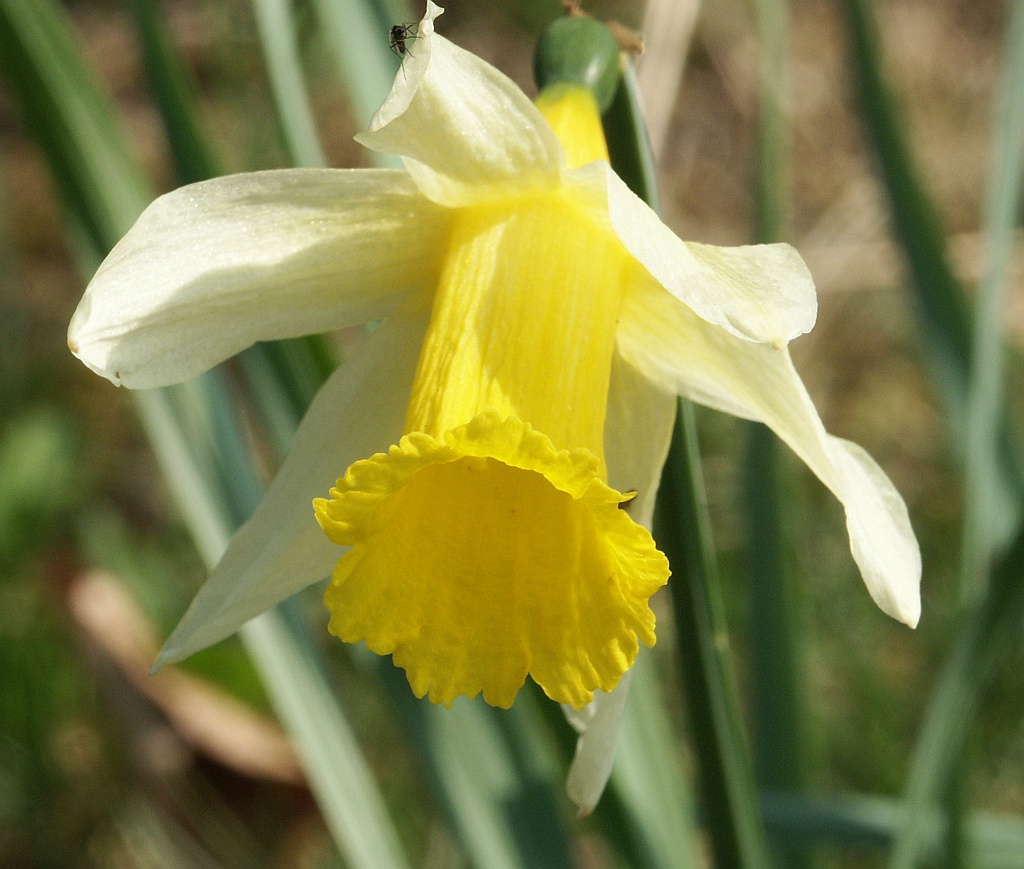
A single, nodding, two-tone yellow flower has six pale tepals around a longer, deeper yellow trumpet or corona. The ovary is inferior.
The amaryllis family
Plant family guide
The amaryllis family includes the native Wild Daffodil (Narcissus pseudonarcissus), Snowdrop (Galanthus nivalis) and Wild Garlic (Allium ursinum). All grow from bulbs and have flowers with six tepals and six stamens, but their flowers look very different.
Wild Daffodil and Snowdrop belong to the daffodil-and-amaryllis branch (Amaryllidoideae) and have inferior ovaries. Wild Garlic belongs to Allioideae, once often treated as the separate family Alliaceae, and has a superior ovary.
A single, nodding, two-tone yellow flower has six pale tepals around a longer, deeper yellow trumpet or corona. The ovary is inferior.
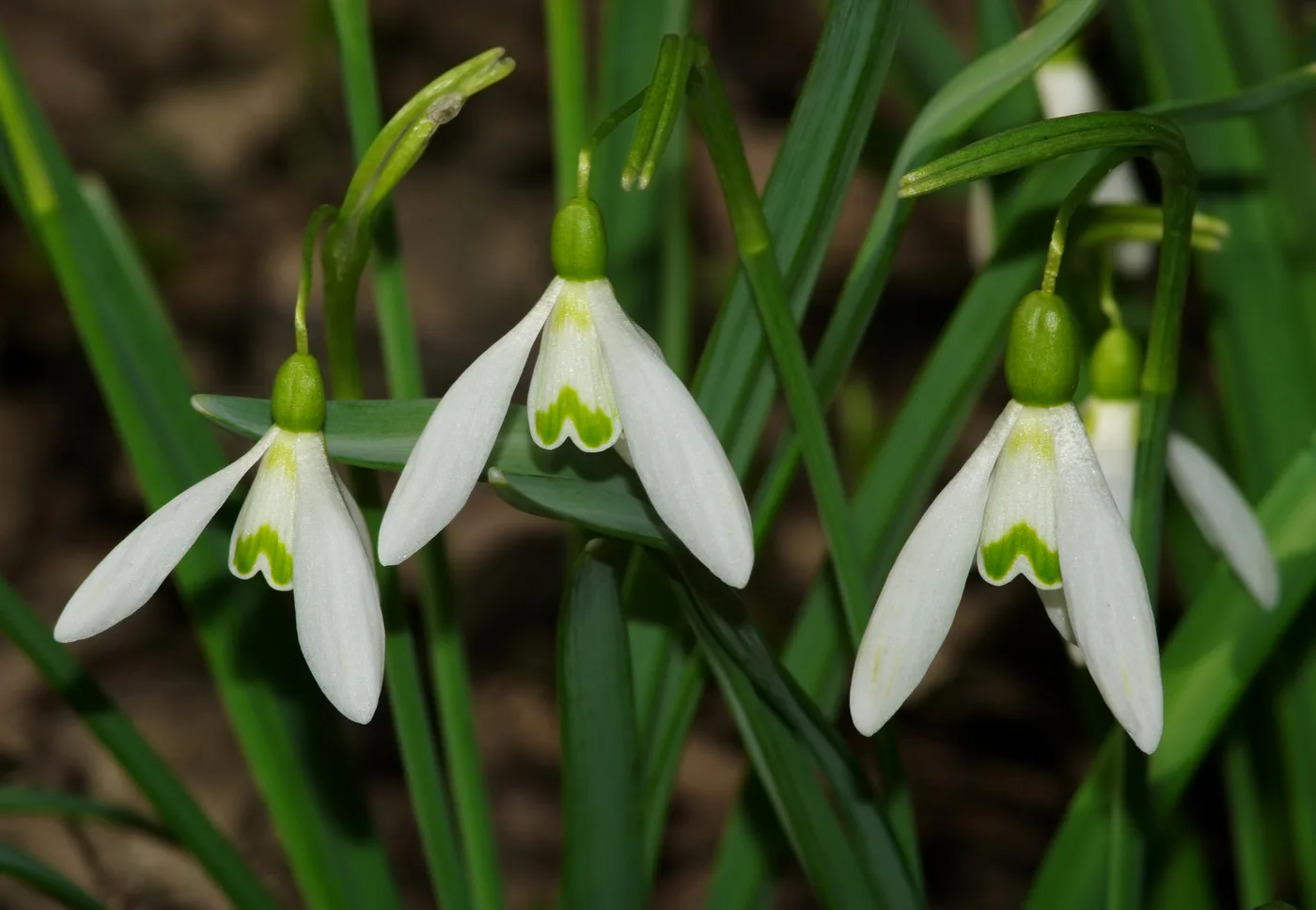
One nodding white flower with three long outer tepals and three shorter, green-marked inner tepals. It also has an inferior ovary.
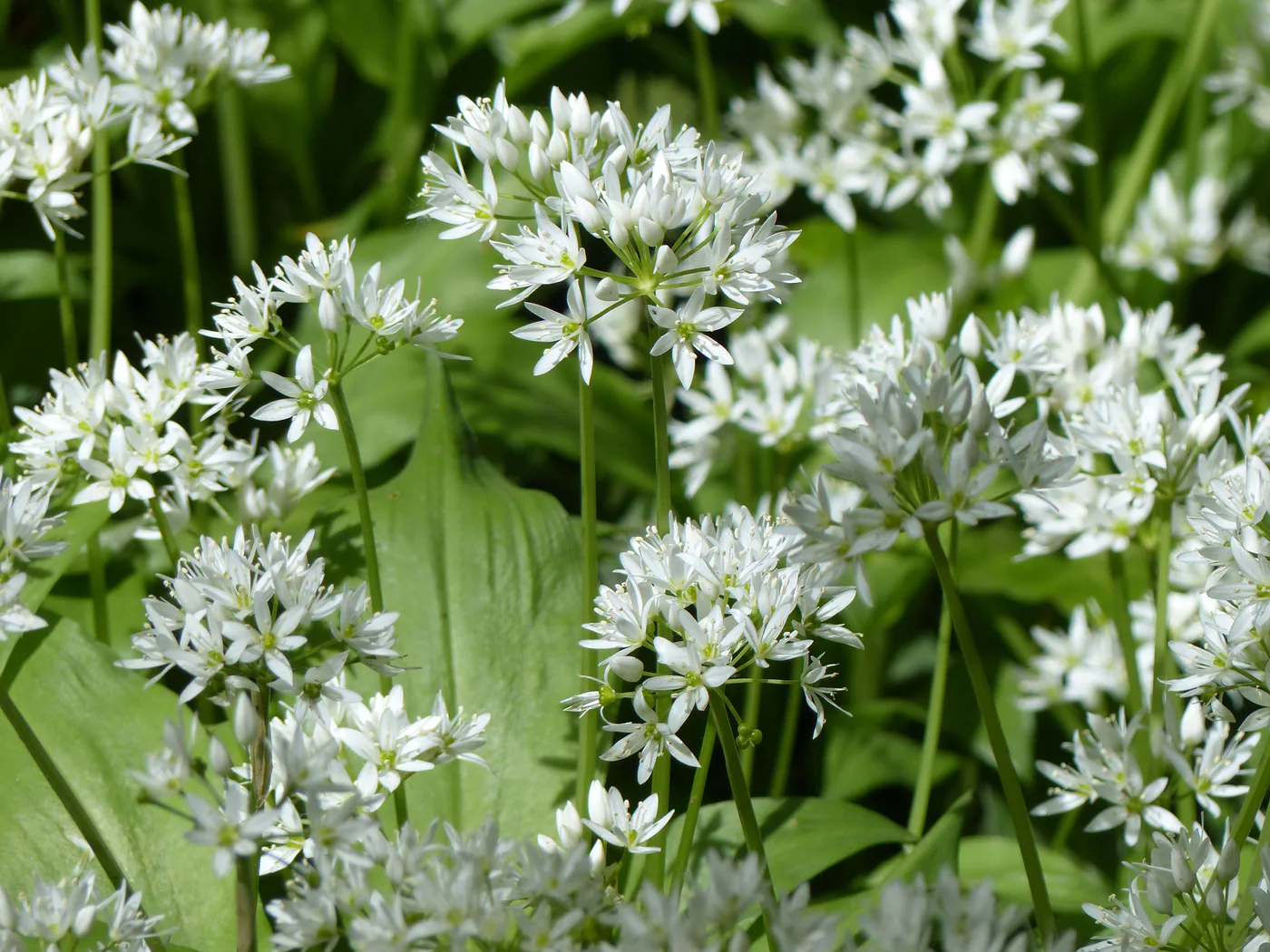
Clusters of small, white, star-shaped flowers form a rounded umbel. Leaves are broad and garlic-scented; the ovary is superior.
Amaryllidaceae in its modern sense includes groups once treated as separate families. Wild Garlic may appear under Alliaceae in older guides, whereas daffodils and snowdrops have long been associated with Amaryllidaceae.
The contrast between the daffodil’s trumpet, the snowdrop’s unequal tepals and Wild Garlic’s white umbel makes this a particularly good family for learning how related plants can differ.
Wild Garlic can superficially resemble other broad-leaved woodland monocots before it flowers. Lily-of-the-valley is currently placed in Asparagaceae, while Wild Garlic is in Amaryllidaceae. Flower structure and leaf arrangement help separate them once you know what to look for.
Bluebell is another useful comparison. Both are bulbous woodland monocots with six-parted flowers, but Bluebell carries bell-shaped flowers in a nodding raceme rather than white star-shaped flowers in an umbel.
Explore the individual flower pages for more photographs and identification details.