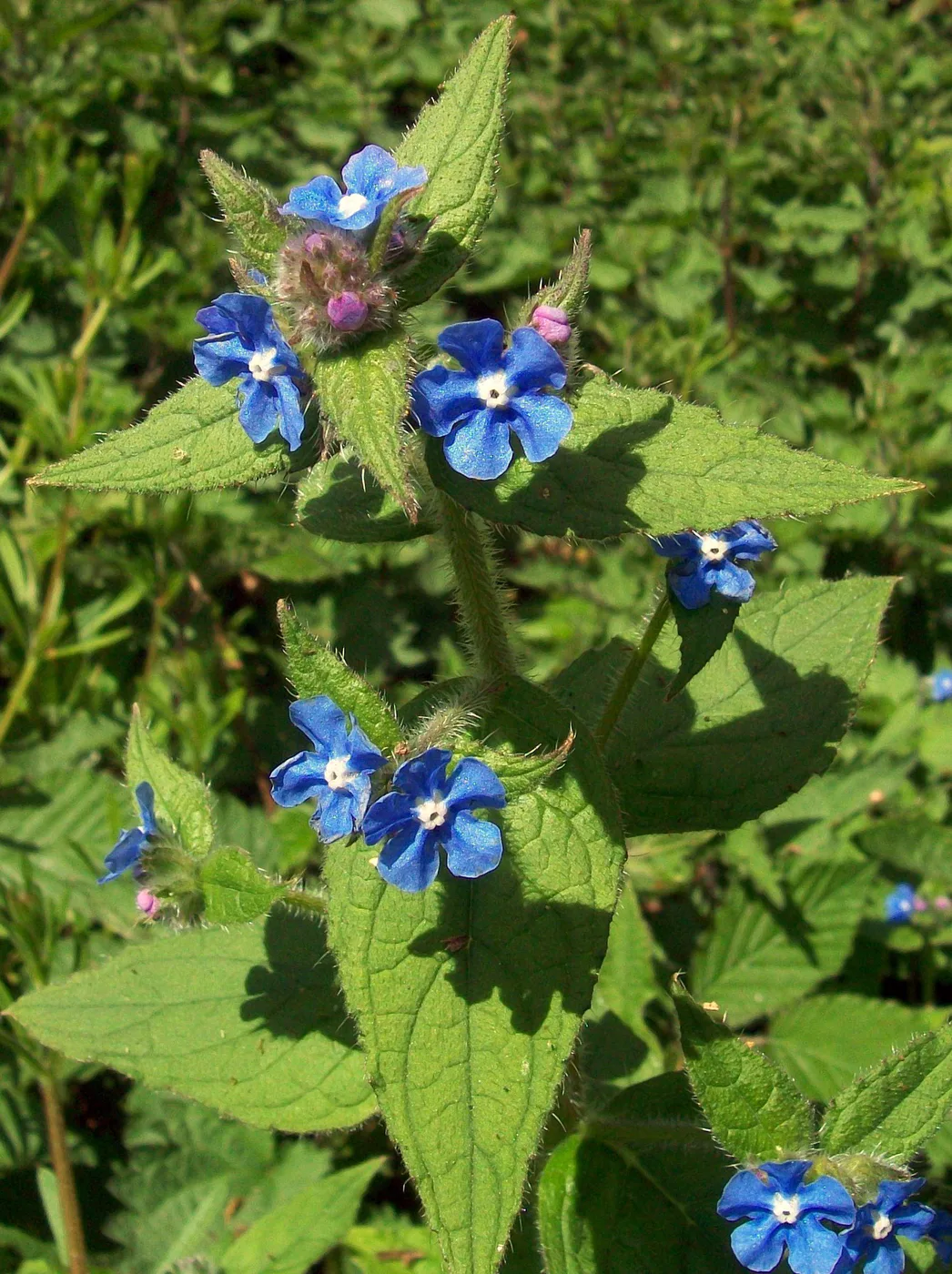
Rough, hairy leaves
The large, tapering leaves have stiff hairs and conspicuous veins. Many upper leaf bases extend down the stem, forming narrow green wings.
The borage family
Plant family guide
Common Comfrey (Symphytum officinale) is a familiar British member of the borage family. Its coarse, hairy leaves, drooping tubular flowers and curling flower clusters make it a useful introduction to Boraginaceae.
Other British members include forget-me-nots and Viper's-bugloss. Their flowers vary considerably in size and colour, but many share the family's distinctive bristly foliage and coiled flower clusters.
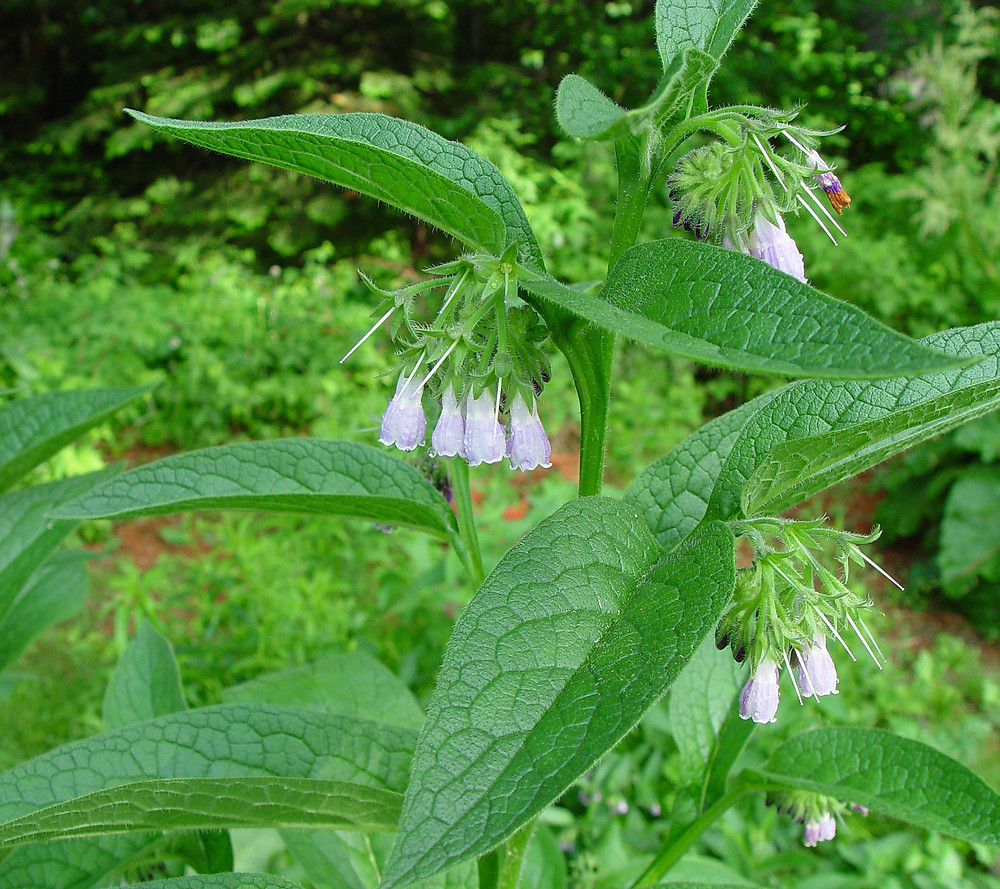
The large, tapering leaves have stiff hairs and conspicuous veins. Many upper leaf bases extend down the stem, forming narrow green wings.
The bell-shaped flowers hang downwards in clusters and may be purple, pink or creamy white. Their five petals are joined into a tube.
Young flower clusters are tightly coiled. They gradually uncurl as successive flowers open — a characteristic pattern in many members of the borage family.
Forget-me-nots (Myosotis) have much smaller flowers, often blue with a yellow or white eye. Viper's-bugloss (Echium vulgare) is strikingly bristly, with blue flowers and stamens projecting beyond the corolla. These are useful reminders that not every borage-family flower hangs like Comfrey.
The tubular flowers of Comfrey might at first suggest some members of Plantaginaceae, but the combination of rough leaves, coiled cymes and nutlet fruits points towards Boraginaceae. Look at several features together rather than flower colour alone.
Explore the individual flower pages for more photographs and identification details.