Numerous stamens
Many members have a generous ring of stamens. In Wood Anemone, the small yellow anthers are visible around the centre. The stamens are separate from one another.
The buttercup family
Plant family guide
The buttercup family includes more than yellow buttercups. The white spring flowers of Wood Anemone belong here too. Its flower centre is a useful place to start: many pollen-bearing stamens surround a cluster of separate female structures.
Ranunculaceae is a varied family of mostly herbaceous plants, with some climbers such as clematis. Flower colour, leaf shape and the arrangement of the showy parts vary, so look for a combination of features.
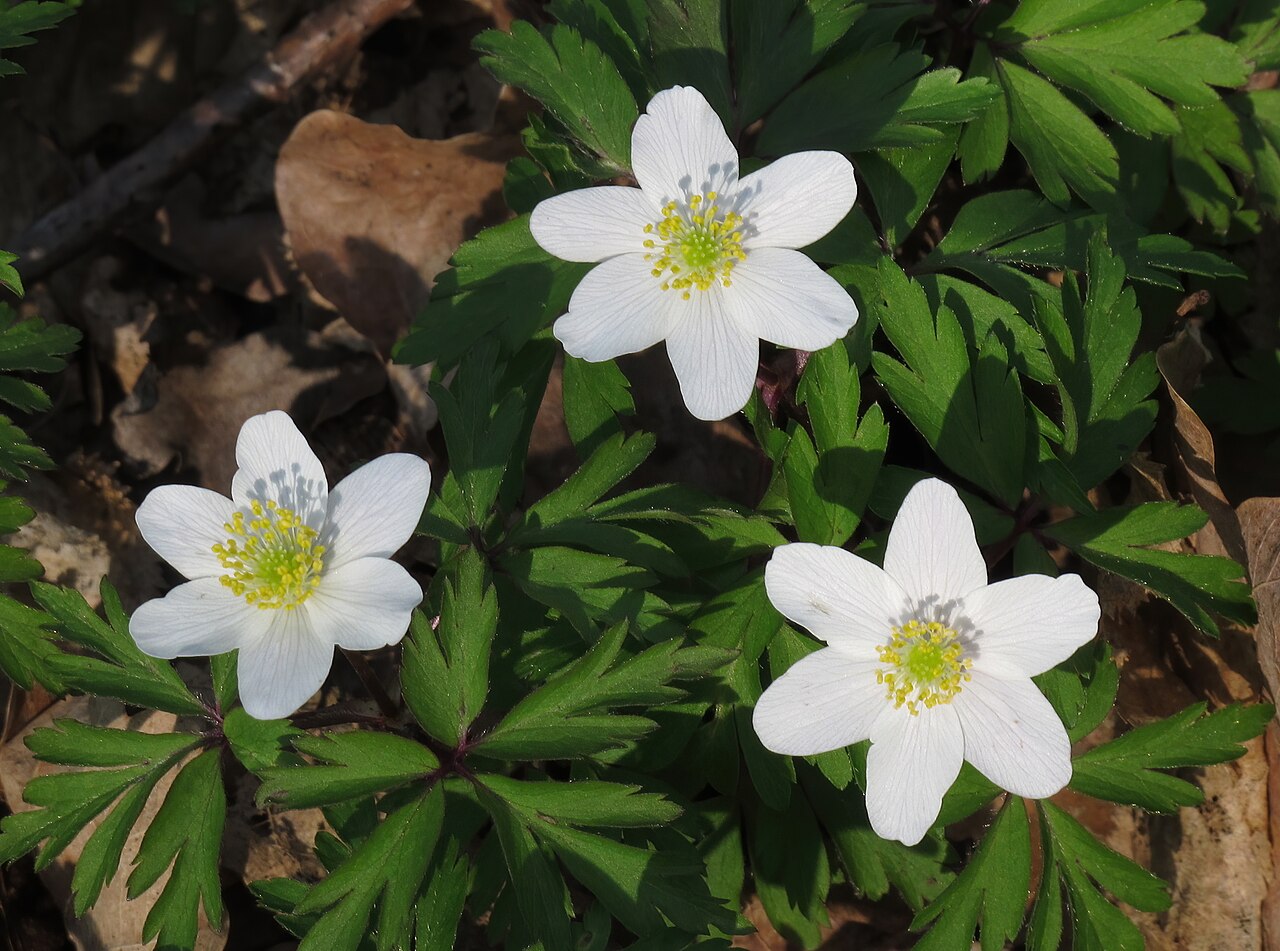
Many members have a generous ring of stamens. In Wood Anemone, the small yellow anthers are visible around the centre. The stamens are separate from one another.
A carpel is a female flower structure containing an ovary. In this family the carpels are usually separate, often forming a cluster. Wood Anemone later produces a head of small, dry, single-seeded fruits called achenes.
Some members have both petals and sepals; others have showy sepals without true petals. Wood Anemone is an example of the latter. Its white, petal-like sepals usually number six or seven, but the count varies.
Compare Wood Anemone with Oxeye Daisy. Both can look like a white flower with a yellow centre, but the daisy belongs to Asteraceae: its head is made of many tiny florets. Wood Anemone is one flower. This is a useful reminder to look at flower structure as well as colour.
Primrose, in Primulaceae, offers another comparison: its petal lobes open from a joined tube. Try identifying these different structures in the photographs on each flower page.
Explore the individual flower pages for more photographs and identification details.
