Feel the fleshy leaves
Many stonecrop-family plants have noticeably thick leaves, an adaptation for storing water when little moisture is available.
The stonecrop family
Plant family guide
Navelwort (Umbilicus rupestris) is an unusual member of the stonecrop family. Its fleshy, circular leaves have a central dimple where the stalk attaches underneath, and its small pale flowers hang in narrow spikes.
Crassulaceae includes native stonecrops, Navelwort and a wide variety of succulent plants. Many store water in their leaves and thrive in shallow soils, rock crevices or dry, exposed places.
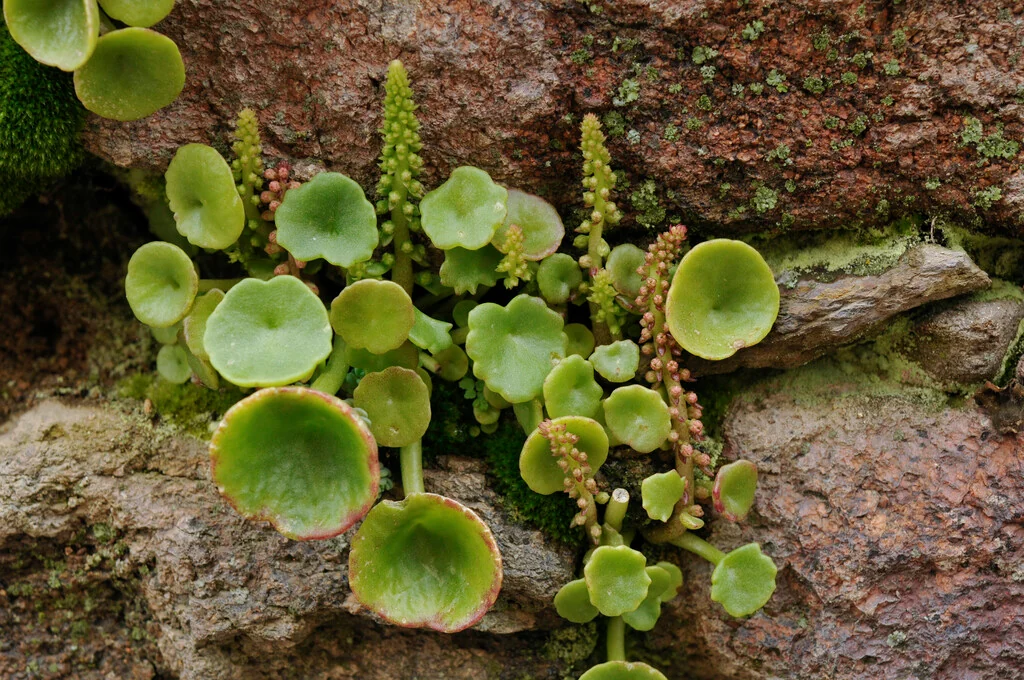
Many stonecrop-family plants have noticeably thick leaves, an adaptation for storing water when little moisture is available.
Count the petals or lobes and examine the stamens and separate carpels; these are useful clues to the family.
Wall cracks, rock ledges and shallow soils are common habitats. Navelwort especially favours sheltered, often damp western sites.
British stonecrop-family plants also include Biting Stonecrop (Sedum acre), with its mats of small fleshy leaves and bright yellow starry flowers, and English Stonecrop (Petrosedum anglicum), which has pale pink or whitish flowers. Both look very different from the coin-like leaves and drooping flower spikes of Navelwort.
Houseleeks (Sempervivum species) are familiar cultivated relatives, forming tight rosettes of succulent leaves.
Explore the individual flower pages for more photographs and identification details.