Count the petals
Each flower usually has five separate petals surrounding a showy spray of stamens. It is an individual flower, not a composite head like a daisy.
The st john's-wort family
Plant family guide
Perforate St John's-wort (Hypericum perforatum) is one of Britain's familiar members of the Hypericaceae. Its five golden petals, numerous stamens and leaves dotted with translucent glands are excellent features to study.
The family contains herbs, shrubs and trees, mostly in the genus Hypericum. While many are yellow-flowered, their leaf glands, stem shapes and fruits help separate the species.
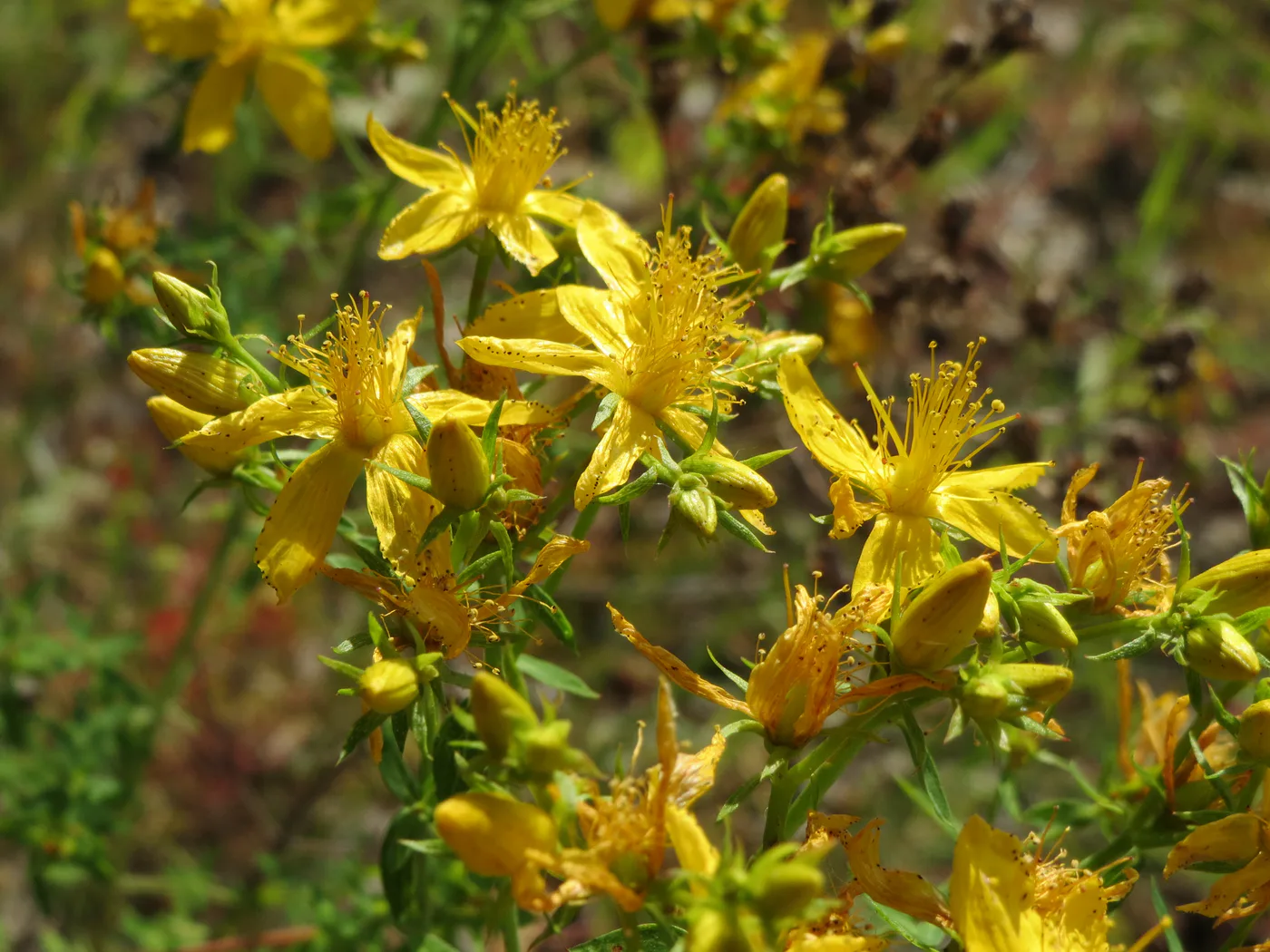
Each flower usually has five separate petals surrounding a showy spray of stamens. It is an individual flower, not a composite head like a daisy.
In Perforate St John's-wort, numerous translucent glands look like pinholes. Other species may show dark dots or lack the conspicuous clear spots.
Look for two fine raised ridges on Perforate St John's-wort. The number and shape of stem ridges or wings can help distinguish other British species.
A mass of stamens gives many Hypericum flowers their sunburst appearance. The stamens may be grouped into bundles, while the dark glands along petals and sepals offer further clues under a hand lens. Later, dry capsules containing numerous seeds replace the flowers in many species.
For close-up photographs of the petal dots, translucent leaves and two-ridged stem, visit the Perforate St John's-wort profile.
Explore the individual flower pages for more photographs and identification details.