Four pale, cross-shaped petals
Look at a single flower rather than the whole cluster. Four pale pink or lilac petals surround the yellowish anthers.
The cabbage family
Plant family guide
Cuckooflower (Cardamine pratensis), also called Lady's-smock, is a familiar member of the cabbage family. Its pale lilac-pink flowers each have four petals arranged in a cross — one of the family's strongest clues.
Brassicaceae is a large family that also includes mustards, cresses, cabbages, wallflowers and Honesty (Lunaria annua). Its members share a recognisable floral structure even though their leaves and fruits can look very different.
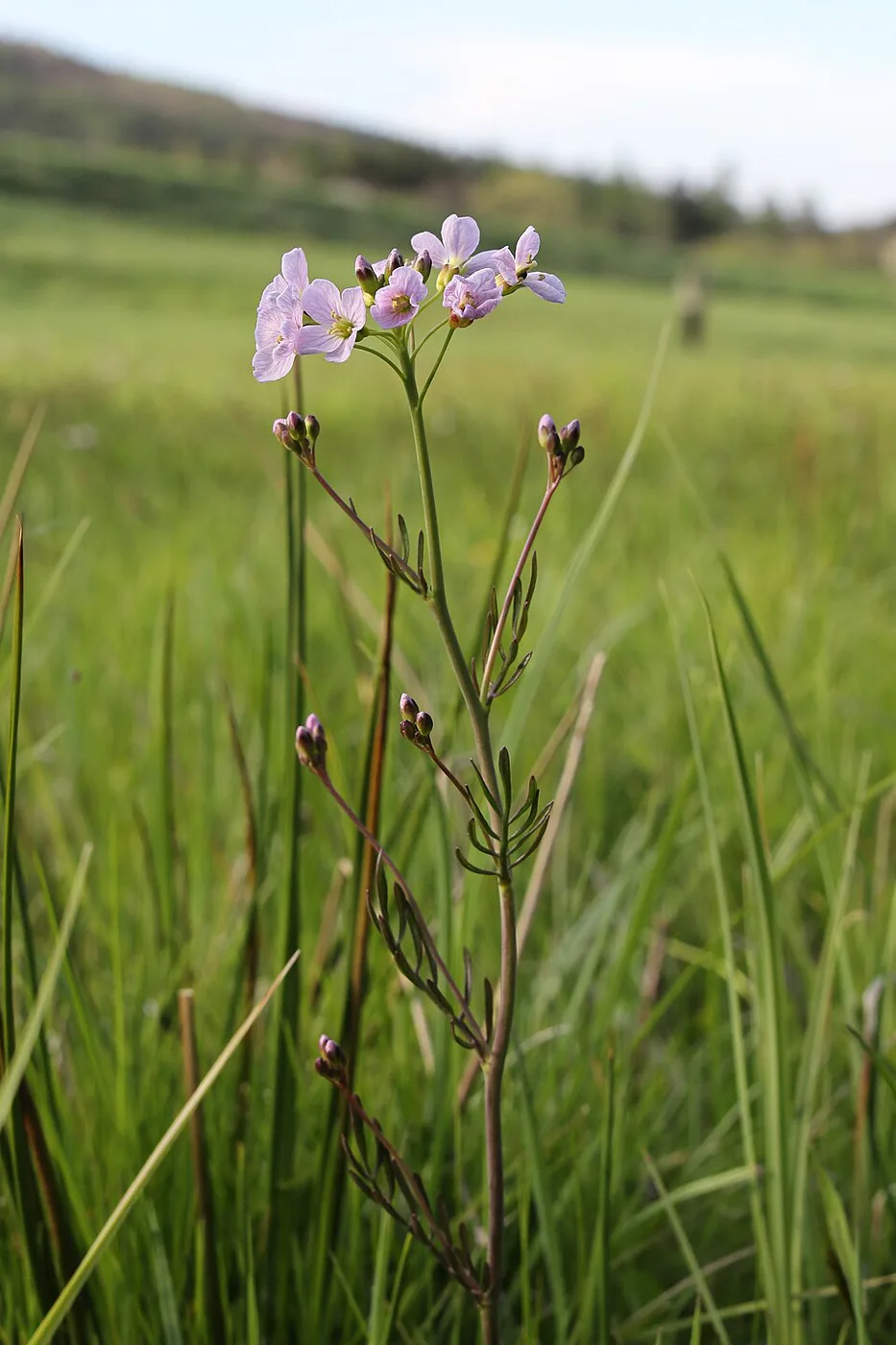
Look at a single flower rather than the whole cluster. Four pale pink or lilac petals surround the yellowish anthers.
Leaves near the base have rounded leaflets, while those higher up the flowering stem have long, narrow leaflets.
After flowering, slender upright pods develop along the lengthening flower cluster; they eventually split to release seeds.
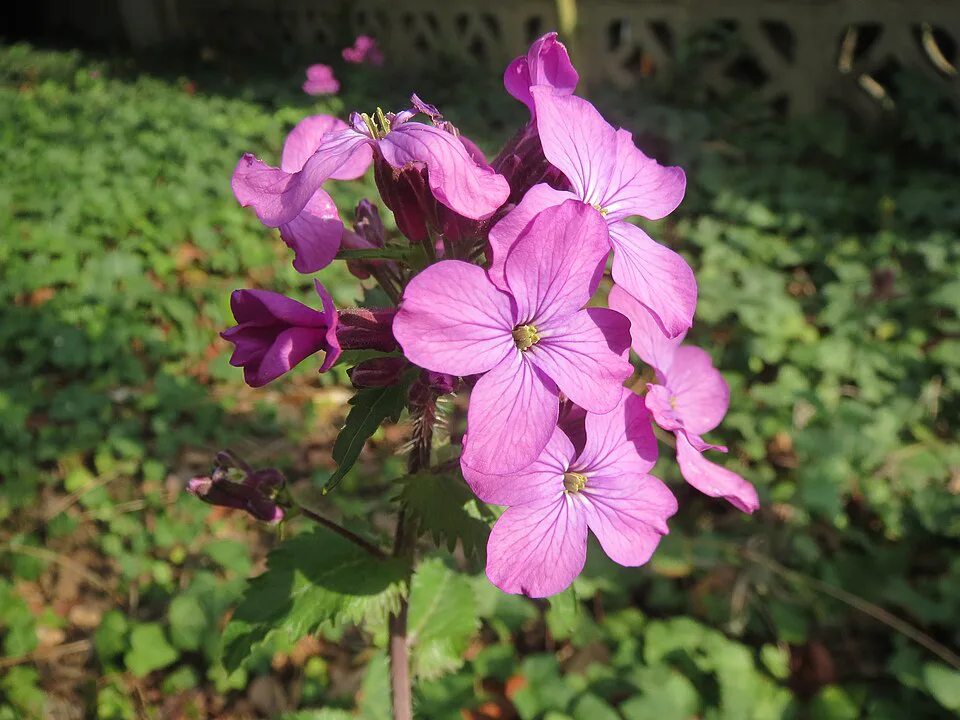
Honesty (Lunaria annua) has larger pinkish-purple, four-petalled flowers and broad, toothed leaves. Its most recognisable feature comes later: flat, round fruits whose outer walls and seeds fall away to leave a translucent, silvery central partition. Unlike Cuckooflower's long, narrow pods, Honesty's fruits are short and broad, known as silicles.
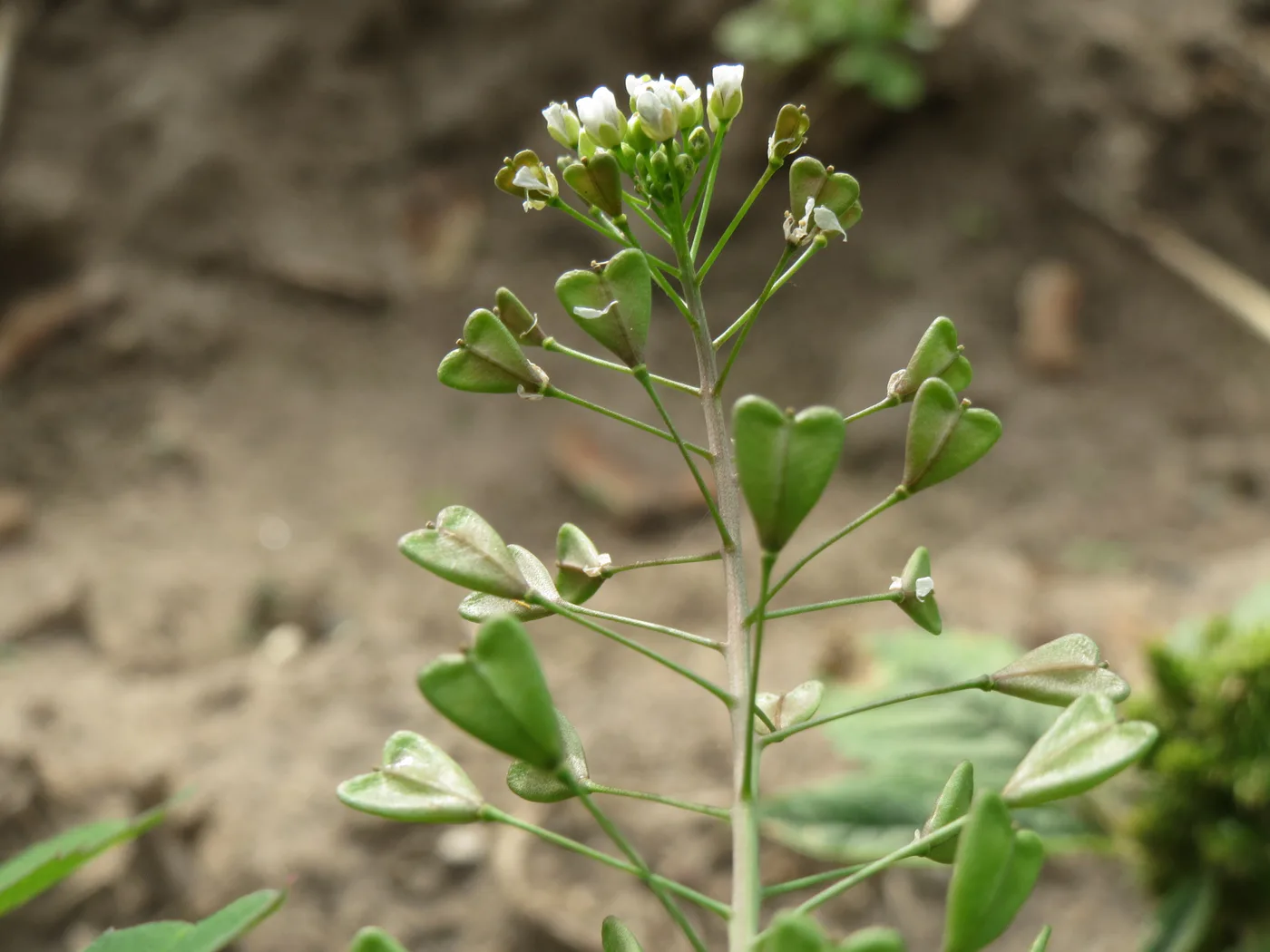
Shepherd's Purse (Capsella bursa-pastoris) is a small, usually annual plant with tiny white flowers and distinctive heart-shaped, notched seed pods. Those fruits are another kind of silicle, very different in appearance from Honesty's large, round fruits.
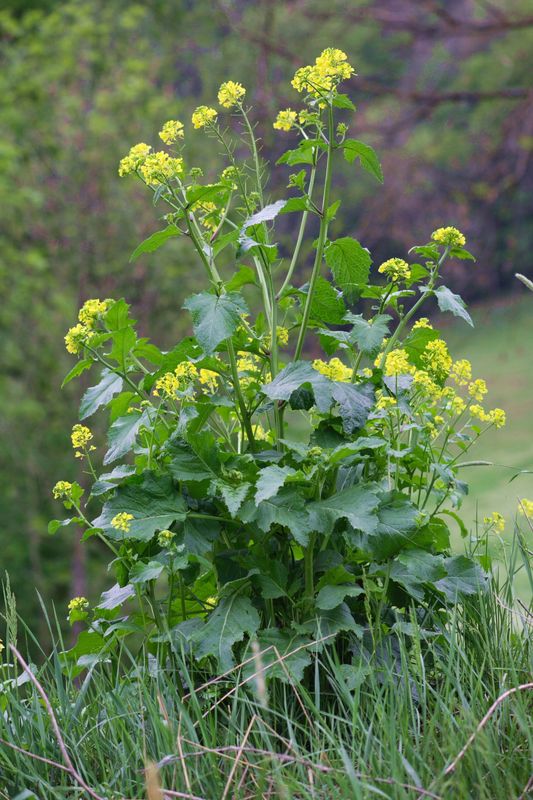
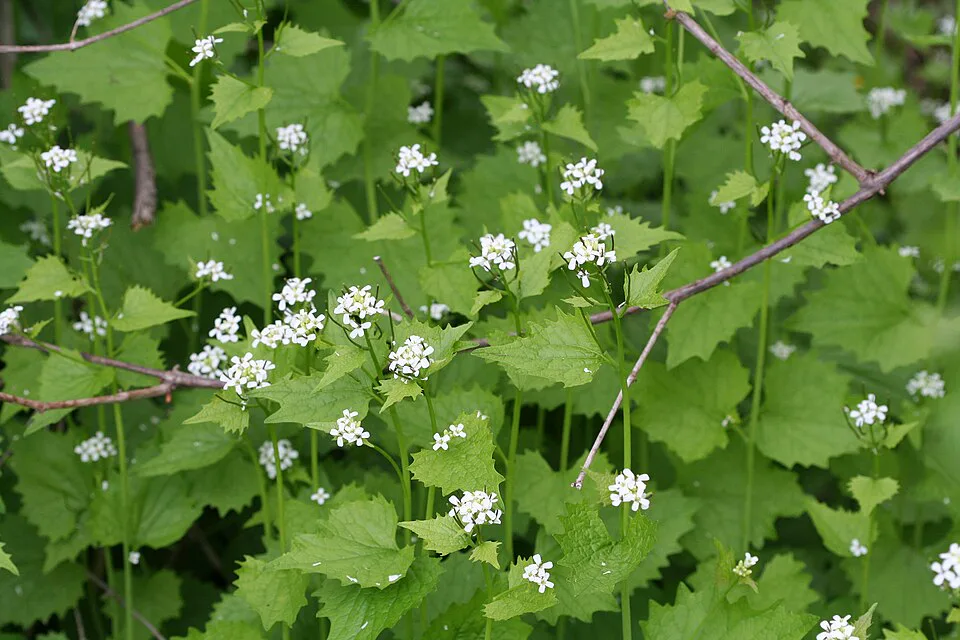
Garlic Mustard (Alliaria petiolata) has white flowers and broad, toothed leaves with a garlic smell when crushed. Hedge Mustard (Sisymbrium officinale) has small yellow flowers and narrow pods pressed close to its stems. Charlock (Field Mustard) (Sinapis arvensis) has larger yellow flowers, rough leaves and pointed, beaked seed pods.
Many everyday vegetables — cabbage, broccoli, kale and radish — are also members of Brassicaceae. The four-petalled flower is a useful starting point for recognising this broad and varied family.
Explore the individual flower pages for more photographs and identification details.
Sinapis arvensis
Family: Brassicaceae
Flowering: April, May, June, July, August, September, October
Cardamine pratensis
Family: Brassicaceae
Flowering: April, May, June
Alliaria petiolata
Family: Brassicaceae
Flowering: April, May, June
Lunaria annua
Family: Brassicaceae
Flowering: April, May, June
Capsella bursa-pastoris
Family: Brassicaceae
Flowering: All year round (mainly spring to autumn)