Unequal petals
Look for two upper petals, a pair at the sides and a lower petal that often carries darker nectar-guide markings.
The violet family
Plant family guide
Sweet Violet (Viola odorata) is a good introduction to the violet family. Its fragrant purple flowers have five unequal petals, with a small nectar spur hidden behind the lower petal. The plant makes a low clump of heart-shaped leaves and spreads by runners.
Other British members include Common Dog-violet, Early Dog-violet, Heath Dog-violet and Marsh Violet. Despite their similar flowers, their spurs, leaves and habitats give useful identification clues.
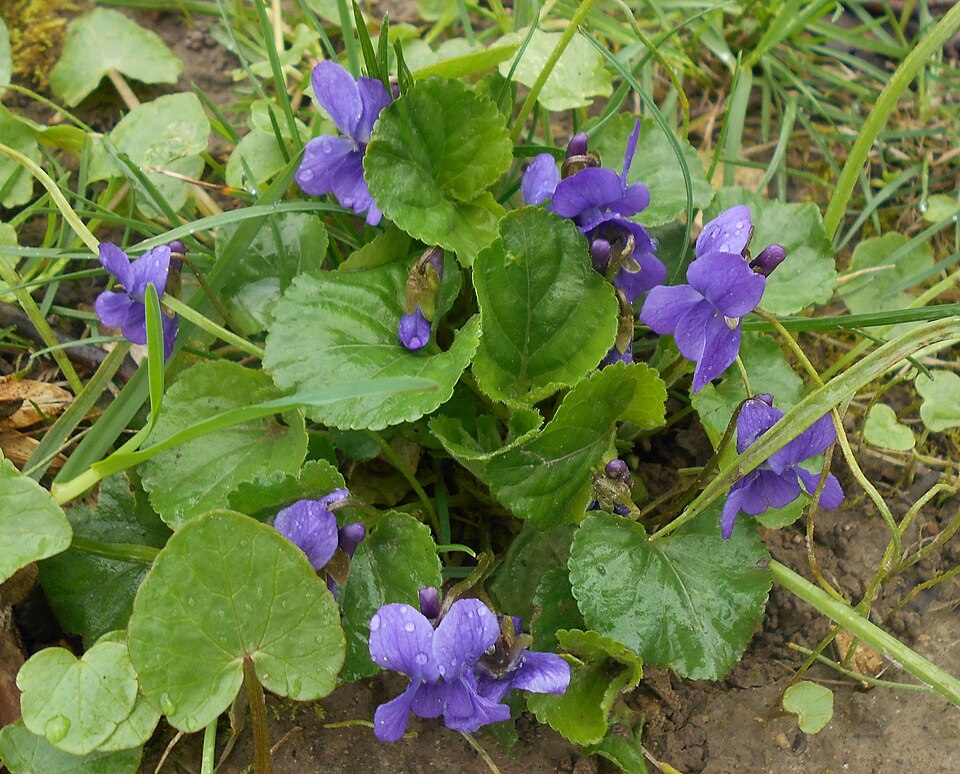
Look for two upper petals, a pair at the sides and a lower petal that often carries darker nectar-guide markings.
Turn your viewpoint to the side of the flower. The spur's length, shape and colour can help separate similar violet species.
Many British violets have rounded, heart-shaped leaves. Leaf shape alone is rarely enough, so also examine the flower and plant's growth habit.
Some violets, including Sweet Violet, produce showy open flowers in spring and smaller closed flowers later. These closed flowers can fertilise themselves without opening, a process called cleistogamy. The resulting capsules contain seeds that may be spread by ants, attracted by a nutrient-rich attachment on each seed.
Explore the individual flower pages for more photographs and identification details.