Five-part flowers
Flowers are usually regular and five-parted, with five petals and five stamens. The calyx is often tubular or funnel-shaped and can have a thin, papery texture.
The leadwort family
Plant family guide
Thrift (Armeria maritima) is one of the easiest British members of Plumbaginaceae to recognise. Its rounded pink flower heads rise above dense tufts of narrow leaves on sea cliffs, saltmarshes and other exposed coastal ground.
The family also includes the sea-lavenders (Limonium), which share a preference for saline habitats but have quite a different, branching flower arrangement.
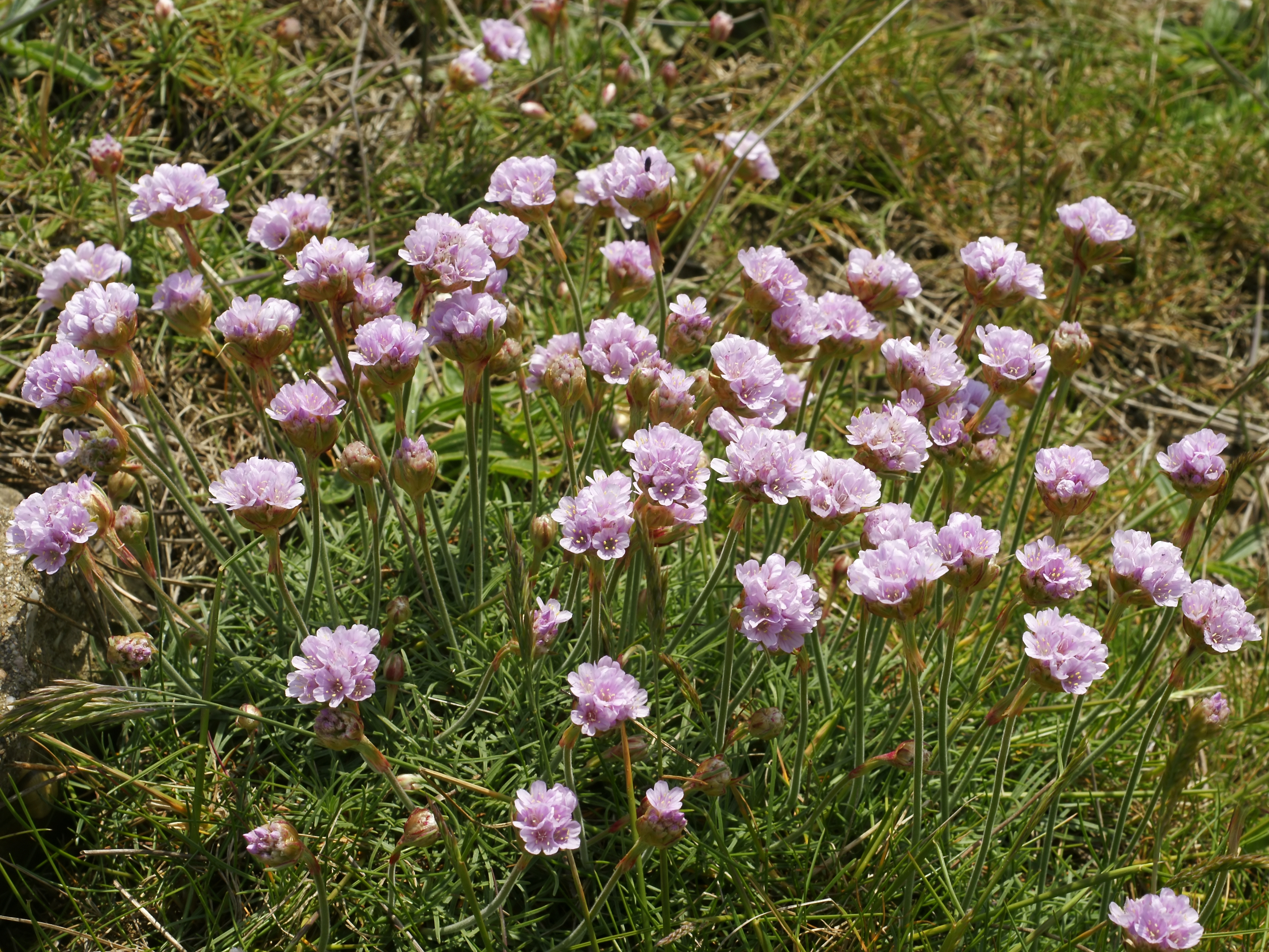
Flowers are usually regular and five-parted, with five petals and five stamens. The calyx is often tubular or funnel-shaped and can have a thin, papery texture.
Leaves are simple and lack stipules. In Thrift they are narrow and gathered into a dense basal rosette; other members of the family may have broader leaves.
Many members of Plumbaginaceae occur in coastal, dry or saline habitats. Salt-excreting glands are common within the family, helping some species tolerate challenging conditions.
Plumbaginaceae is distributed around the world, but many of its species are particularly characteristic of maritime, salty, dry or exposed habitats. In Britain, Thrift is a familiar cliff-top flower, while several sea-lavenders are specialists of saltmarshes and sea cliffs.
Explore the individual flower pages for more photographs and identification details.