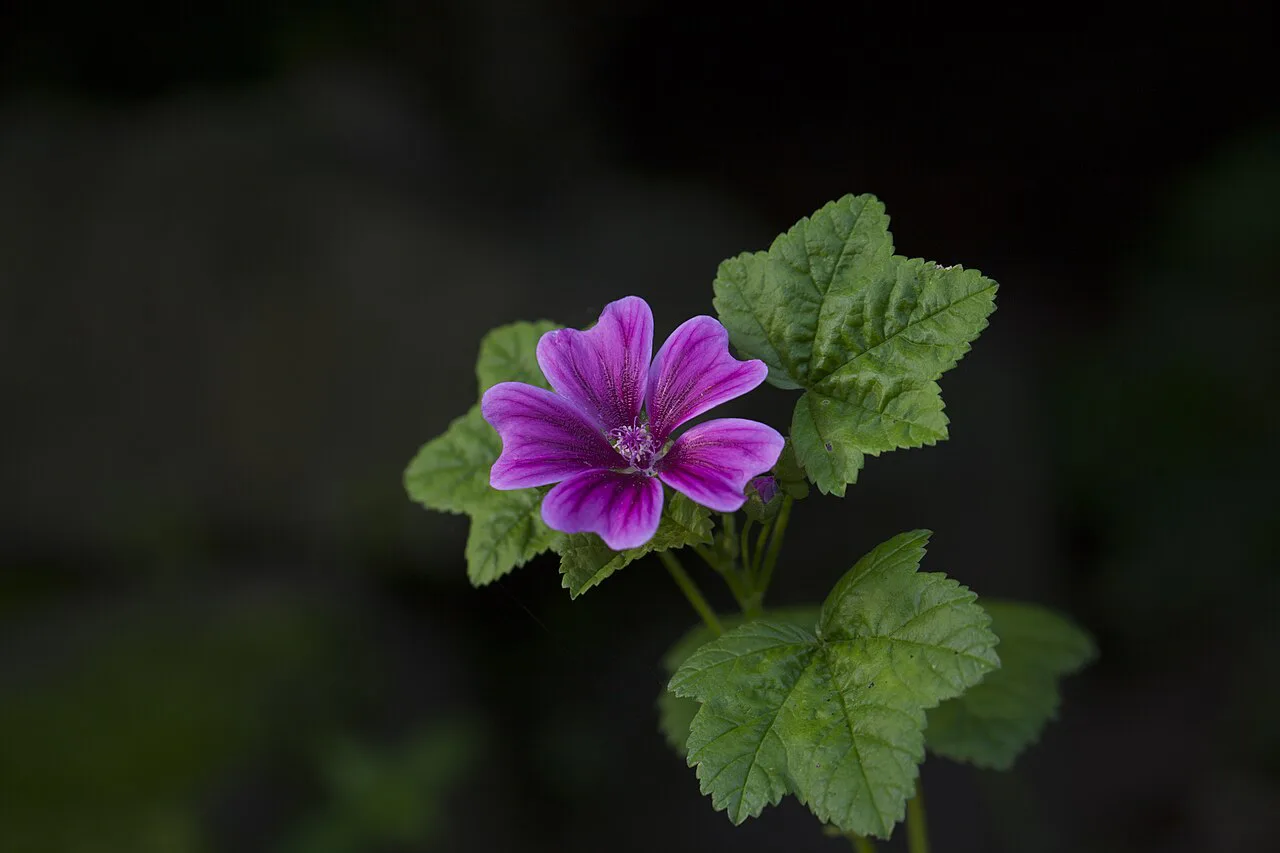
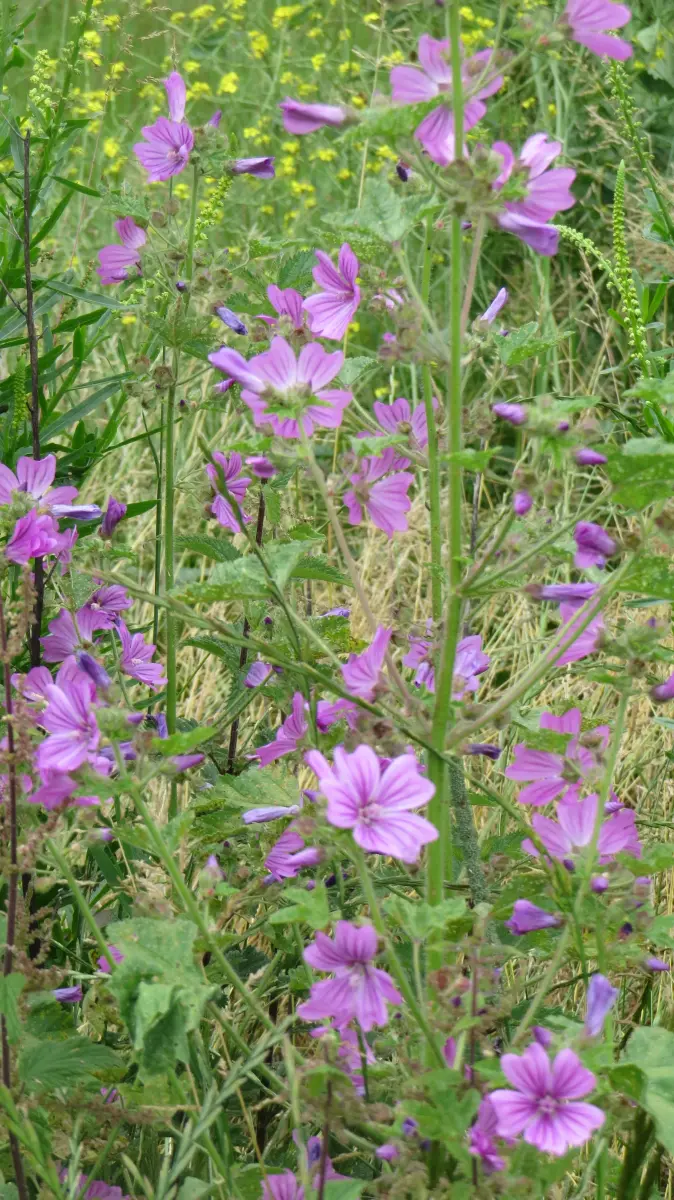
Common Mallow is a handsome wildflower of hedgerows, roadside verges and rough ground. Its open, mauve-pink flowers have fine, dark purple veins that seem to lead the eye towards the centre. Rounded leaves and distinctive circular fruits make it recognisable even when it is not in full flower. It belongs to Malvaceae, the mallow family.
Identification
- Flowers usually 3–5 cm across, each with five pink or mauve petals carrying conspicuous darker purple stripes.
- The petals are generally notched at their tips and form a broad, open, shallow funnel.
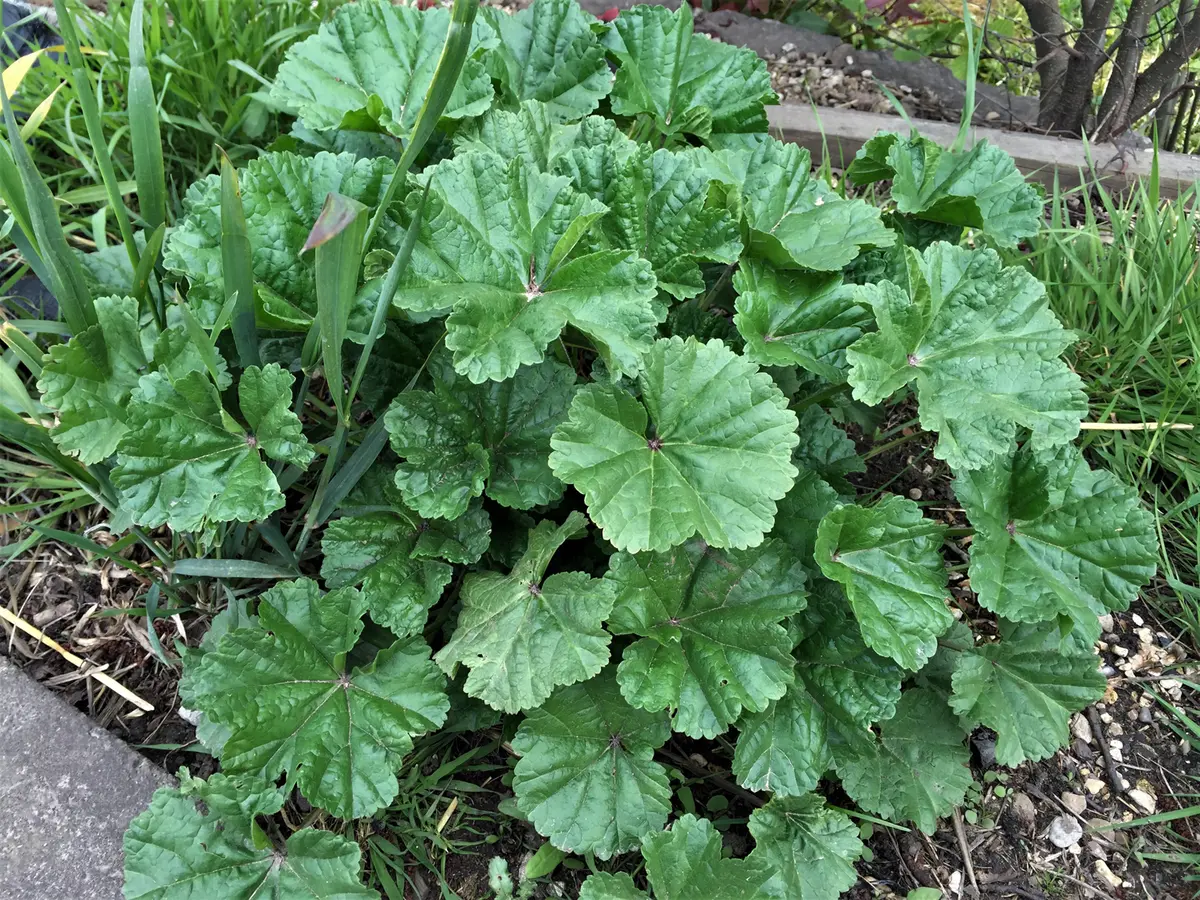
- Rounded leaves with five to seven shallow lobes, toothed edges and veins spreading out from near the stalk attachment.
- A branching, often rather sprawling or upright stem, commonly with fine hairs.
- Flowers occur in small clusters at the leaf axils, where the leaf stalk joins the stem.
- After flowering, round, flattened fruits develop, divided into segments like a miniature wheel of cheese.
The combination of strongly veined petals and the segmented round fruit is particularly useful for distinguishing Common Mallow from similar wildflowers.
Flower structure
Each flower has five petals and five green sepals. Immediately below the sepals are three smaller, separate bract-like parts that form an epicalyx, a characteristic feature of many mallows.
The numerous stamens are joined by their filaments into a staminal column around the female flower parts. The styles extend through this column and end in several stigmas. The dark lines on the petals are particularly conspicuous as you look into the flower.
Once fertilised, the flower forms a flattened circular fruit made up of many one-seeded segments, or mericarps, arranged around a central axis. This is the source of the traditional name cheeses.
Leaves and stems
The leaves are carried alternately along the stem on long stalks. They are often almost circular in outline, with five to seven rounded or slightly pointed lobes and scalloped or toothed margins. Their veins radiate from the attachment point in a broadly palmate pattern.
Lower leaves are generally rounder, while leaves higher up the stem may be more clearly divided. Both stems and leaves can have fine hairs. Common Mallow is typically a biennial or short-lived perennial, although its habit varies with growing conditions.
Habitat
Common Mallow is frequent in sunny or lightly shaded, nutrient-rich places: roadsides, field edges, waste ground, hedgerows, coastal paths and gardens. It is particularly familiar in southern Britain and Wales but is found across much of the UK.
It is a long-established plant in Britain, commonly considered introduced and naturalised rather than strictly native. It often appears where the ground has been disturbed.
Flowering period
Common Mallow generally flowers from June to October, with the main display through summer and early autumn. The flowers provide nectar and pollen for visiting insects.
Similar species
- Musk Mallow (Malva moschata): usually has much more finely cut upper leaves, often with narrow finger-like divisions. Its flowers are commonly a paler pink.
- Dwarf Mallow (Malva neglecta): usually a lower, spreading plant, with smaller, paler flowers and less conspicuous petal veining.
- Tree Mallow (Malva arborea): a larger, often coastal plant with a woody base, greyish leaves and purple flowers.
When the flowers are absent, examine the leaf divisions and the flattened segmented fruits to help distinguish these relatives.
Where the names come from
Mallow is an old English name descended through earlier European names for this group of plants. Common Mallow is also called Cheeses, because its round, segmented fruits look like tiny cheese wheels.
Malva is the Latin name for mallow; the modern word ‘mauve’ is related through French. Sylvestris means ‘of the woods’ or ‘woodland-growing’, although Common Mallow is also very familiar on roadsides and waste ground.
Folklore & history
Children once picked and ate Common Mallow’s rounded fruits as a wayside snack.
Mallows were familiar to the ancient Greeks and Romans as vegetables and herbal plants. Their leaves and flowers contain a slippery substance called mucilage, which gave mallow a long history in traditional preparations for soothing irritated skin and throats. The plant’s old association with food and domestic remedies helped keep it close to cottages and gardens.
Wildlife
Bees, hoverflies and other pollinating insects visit the conspicuous open flowers. Common Mallow also supports the larvae of some moths and other insects. Its long flowering season makes it useful in gardens and along verges where wild plants are allowed to flower and set seed.