Hemp-agrimony is a tall, native perennial of damp places, particularly riverbanks, ditches, wet meadows and woodland edges. In late summer its reddish stems carry broad, soft-looking heads of dusty pink flowers, often visited by butterflies. The plant belongs to Asteraceae, the daisy family, although its flowers look very different from the familiar white-and-yellow daisy.
Identification
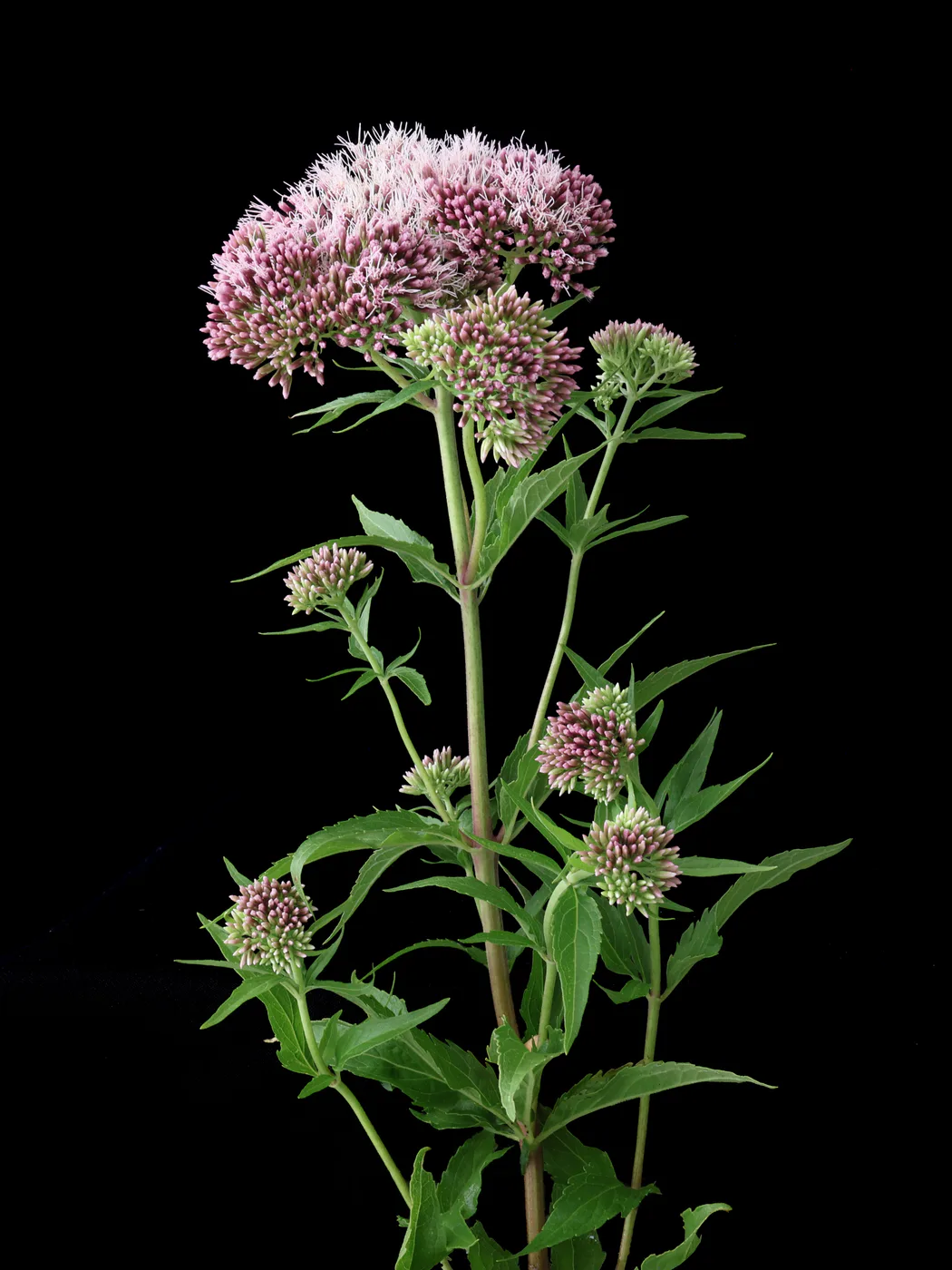
- A robust, upright perennial, commonly 60–150 cm tall, often forming substantial clumps.
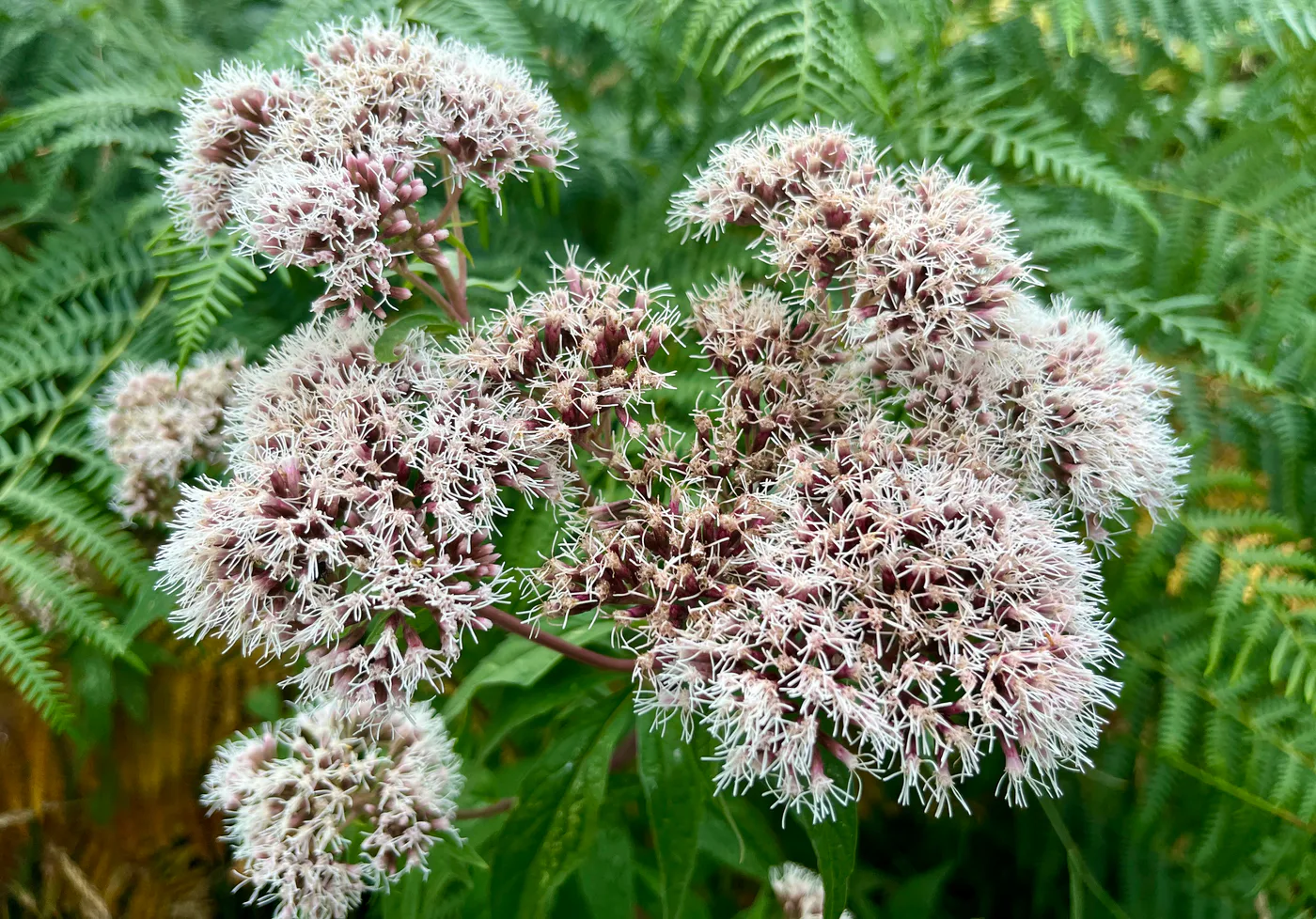
- Broad, somewhat domed clusters of small pink to pinkish-mauve flower heads at the stem tips.
- Each tiny flower head contains only a few tubular flowers, giving the clusters a softly tufted appearance.
- Usually reddish or purplish, slightly downy stems, branching towards the top.
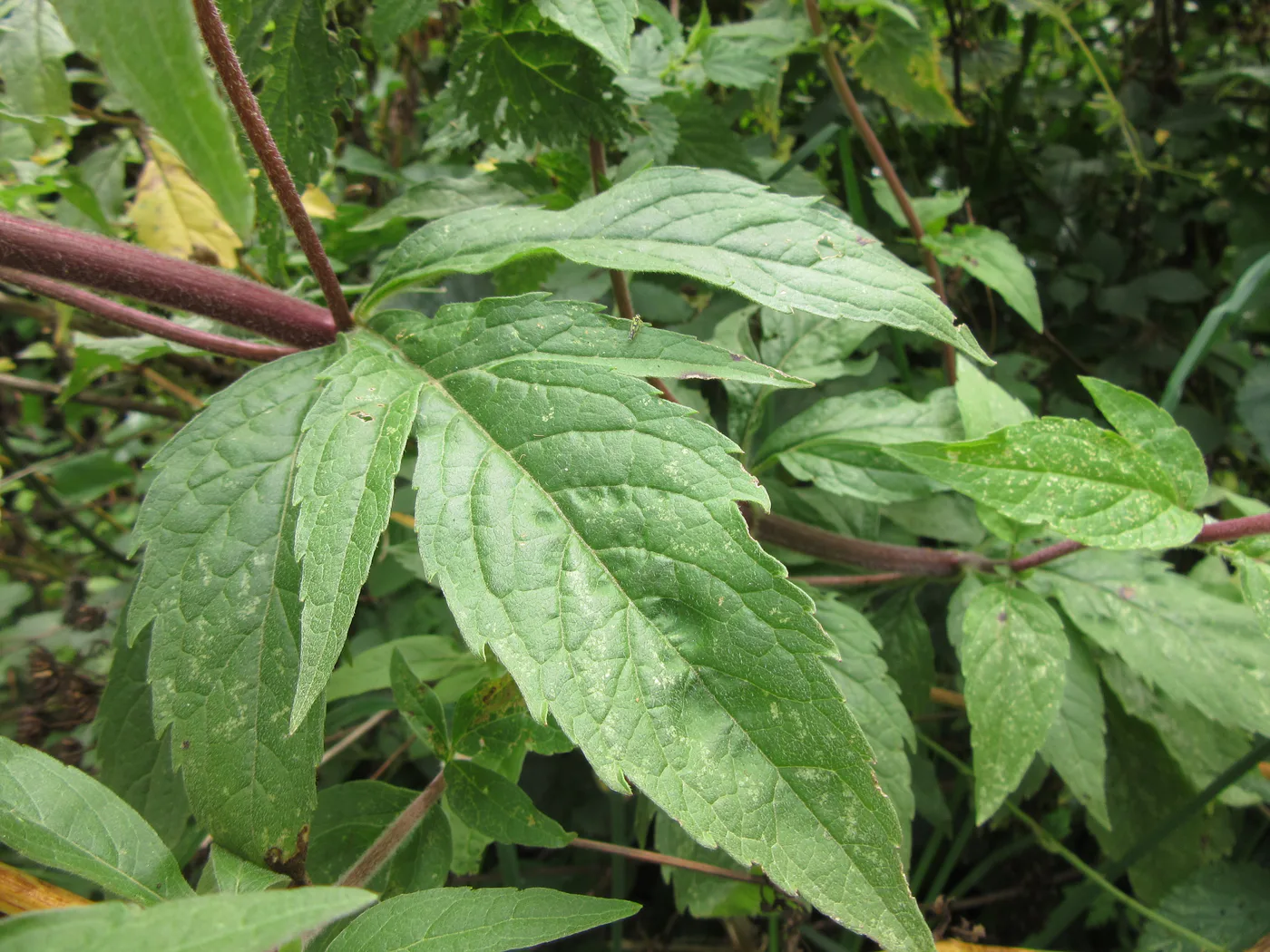
- Leaves arranged in opposite pairs, commonly divided into three narrow, sharply toothed lobes, occasionally five.
- Frequent in moist ground, including ditches, river margins, marshes and damp woodland.
The combination of fluffy pinkish flower clusters, reddish stems and deeply divided, hemp-like leaves makes Hemp-agrimony distinctive, especially when growing in damp places.
Flower structure
Hemp-agrimony is a member of the daisy family, so each tiny flower head is a capitulum made up of several individual florets. Each head usually contains five or six small, tubular pinkish flowers and has no outer ray florets. Many of these heads are crowded together into a much larger, fairly flat-topped or domed cluster.
The individual florets have slender tubes and protruding pale styles, which give an open cluster its feathery, almost fuzzy appearance. Small bracts surround each head, forming an involucre.
After flowering, each fertile floret forms a small, dry fruit with a pappus of fine hairs. These hairs help the fruits disperse on the wind.
Leaves and stems
The leaves grow in opposite pairs along the stem. Most are deeply divided into three long, narrow, pointed lobes, sometimes five, each with a distinctly serrated edge. The central lobe is often the longest. Their shape resembles the foliage of hemp, but the two plants are unrelated.
The stems are upright, often tinged reddish-purple and sometimes softly hairy. They branch towards the top to support the many flower heads. Established plants develop a spreading underground rootstock and can form sizeable clumps.
Habitat
Look for Hemp-agrimony beside streams, rivers and drainage ditches, in marshes, fens, damp grasslands and at the edges of wet woodland. It grows in full sun or partial shade, generally favouring moist, reasonably fertile ground.
It is found across Britain, particularly in England and Wales, and is often conspicuous among taller vegetation in late summer. The plant may also grow beside garden ponds or in wildlife gardens.
Flowering period
Hemp-agrimony generally flowers from July to September. Its pale pink or mauve heads are especially noticeable during late summer, and the fluffy seed-bearing heads may persist into autumn.
Similar species
- Common Valerian (Valeriana officinalis) also has airy, pale pink flower clusters and grows in damp places, but its leaves are divided into many more leaflets and its flowers are not arranged into daisy-family heads.
- Hemp-nettle (Galeopsis tetrahit) has toothed leaves and may occur in similar rough vegetation, but its flowers are larger, two-lipped and arranged in whorls rather than fluffy, domed clusters.
- Garden-grown Joe-Pye weeds (Eutrochium species) can resemble Hemp-agrimony, but are often taller, with larger flower clusters and leaves frequently arranged in whorls.
Where the names come from
The word hemp refers to the divided leaves, which resemble those of hemp (Cannabis sativa), although Hemp-agrimony is not related to that plant. The name agrimony reflects an older herbal classification rather than a close relationship with true agrimony (Agrimonia eupatoria), which belongs to the rose family.
The species name cannabinum is Latin for ‘hemp-like’. The genus name Eupatorium is traditionally associated with Mithridates VI Eupator, an ancient king of Pontus remembered in accounts of medicinal plants and antidotes.
Folklore & history
Hemp-agrimony has long appeared in European herbal traditions. Old names include Ague Weed, reflecting its use in remedies for feverish illnesses, and Holy Rope. Herbal writers also described preparations made from its leaves, stems and roots for digestive troubles and wounds.
The plant was sometimes called Raspberries and Cream, a name inspired by the contrast between its dark pink buds and the pale, almost whitish flowers as they open. This is a particularly apt description when some heads are still in bud while others are fully flowering.
Wildlife
Hemp-agrimony is an important late-summer nectar source for butterflies, including Red Admirals, Small Tortoiseshells and Peacocks. Bees, hoverflies and other insects also visit the flower clusters.
Its height and dense growth provide cover among waterside and woodland-edge vegetation. Leaving the flowering stems standing into autumn allows the fluffy fruits to disperse naturally and provides structure for insects in the cooler months.