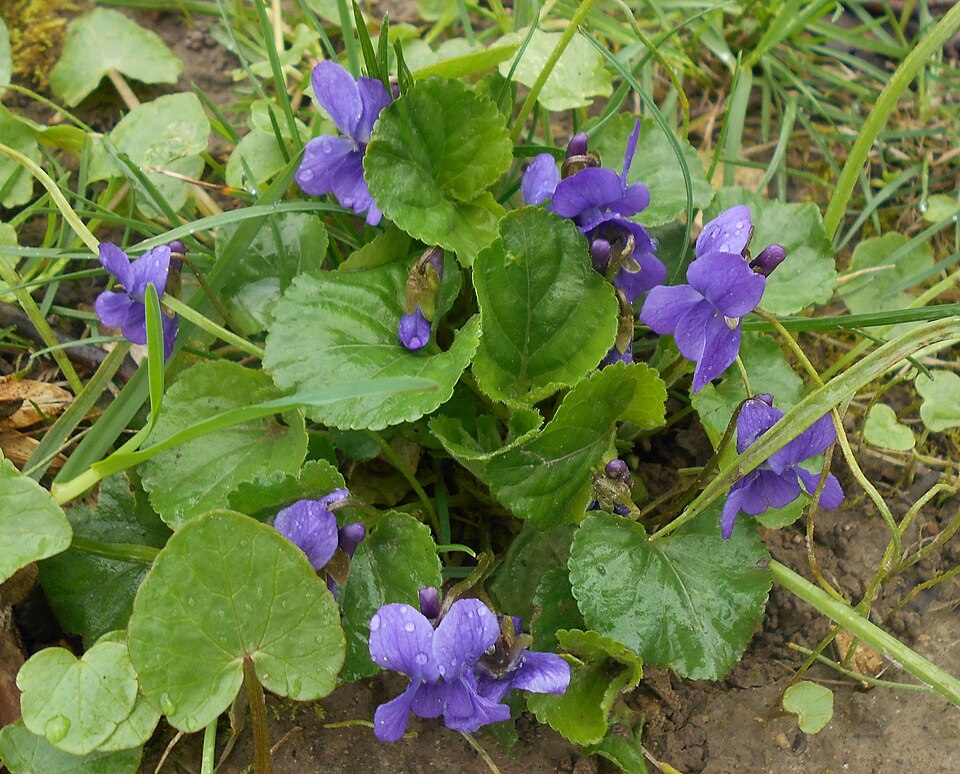
Sweet Violet is a low-growing native perennial of woodland edges, hedgerows and shady banks. Its small blue-violet flowers are famous for their sweet scent, while rounded, heart-shaped leaves form a low carpet. It belongs to Violaceae, the violet family.
Identification
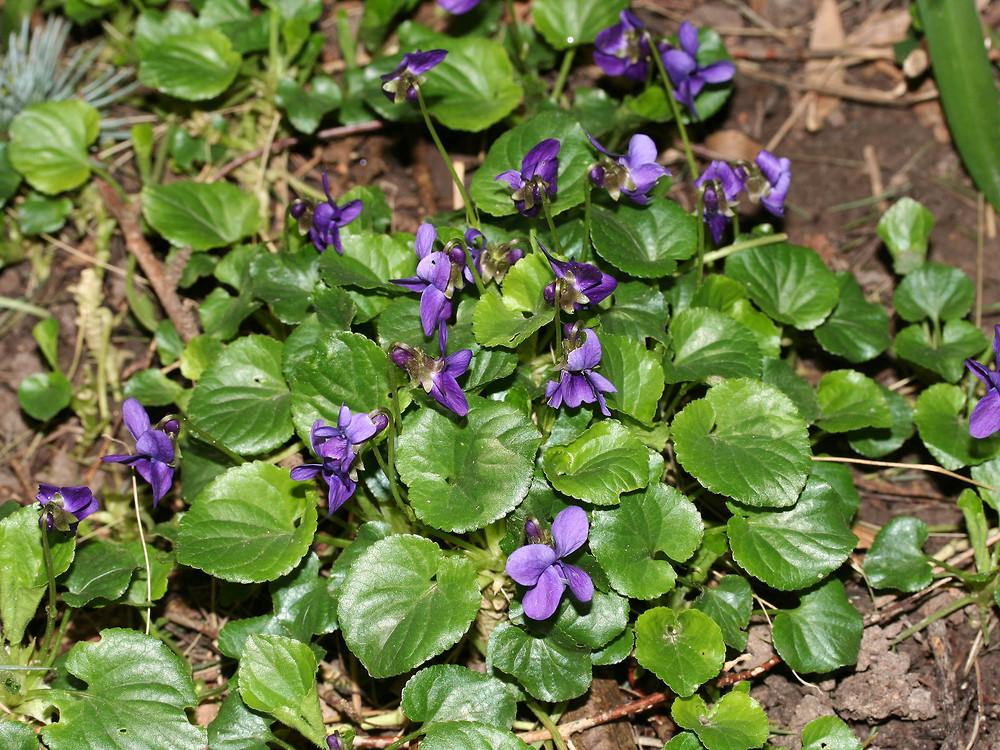
- Usually 5–15 cm tall, often forming spreading patches close to the ground.
- Fragrant violet-blue flowers, sometimes pale lilac or white, each carried on its own slender stalk.
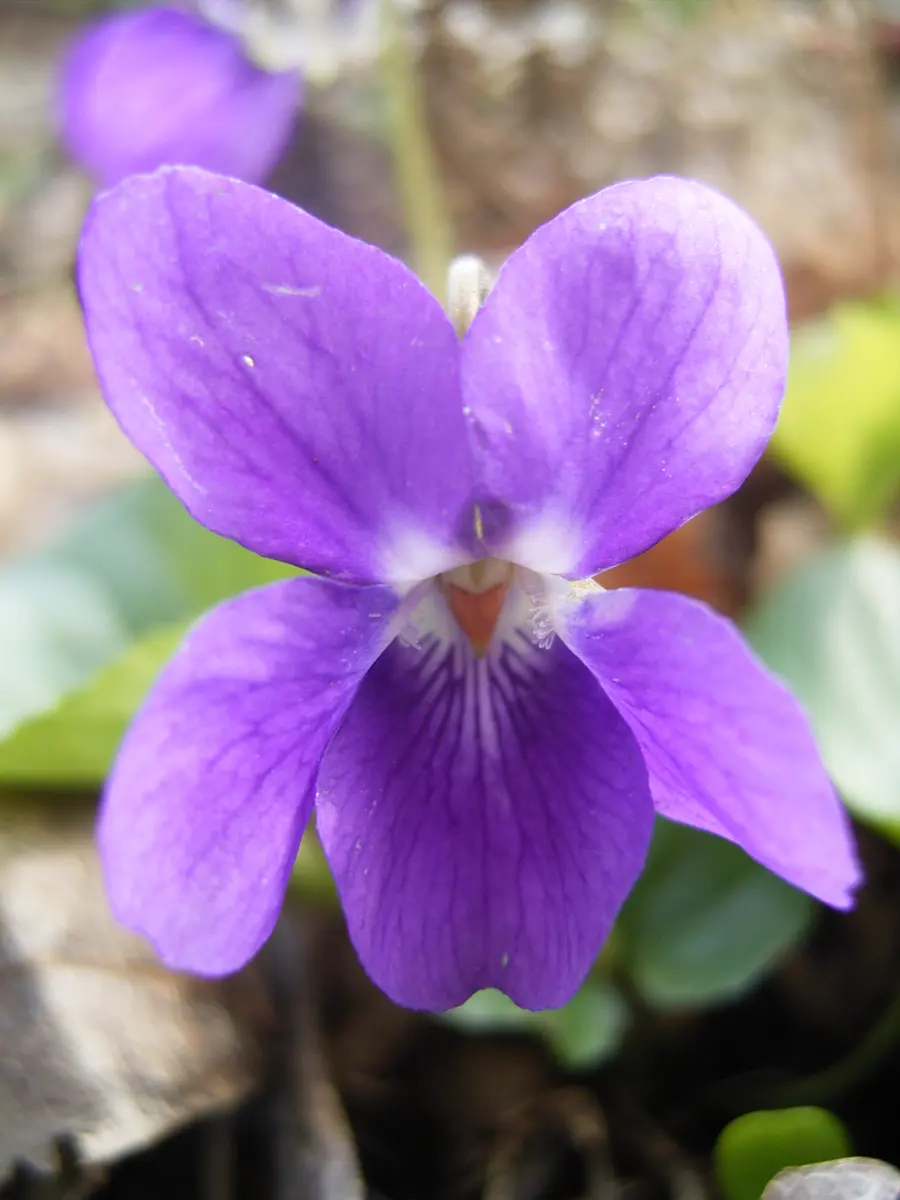
- Five unequal petals, with the lower petal pointing downwards and bearing a short spur behind the flower.
- Rounded to heart-shaped leaves with gently scalloped margins and fine hairs.
- Creeping, rooting runners that help the plant spread into neighbouring patches.
The fragrance is a helpful clue, but check the leaves and runners as well: the scent can be difficult to detect outdoors, especially in cold weather.
Flower structure
Each bloom is a single flower, rather than a head of tiny florets. It has five petals, arranged with two above, one on each side and a broader lower petal. The petals give the flower its characteristic two-sided shape, rather than a perfectly circular outline.
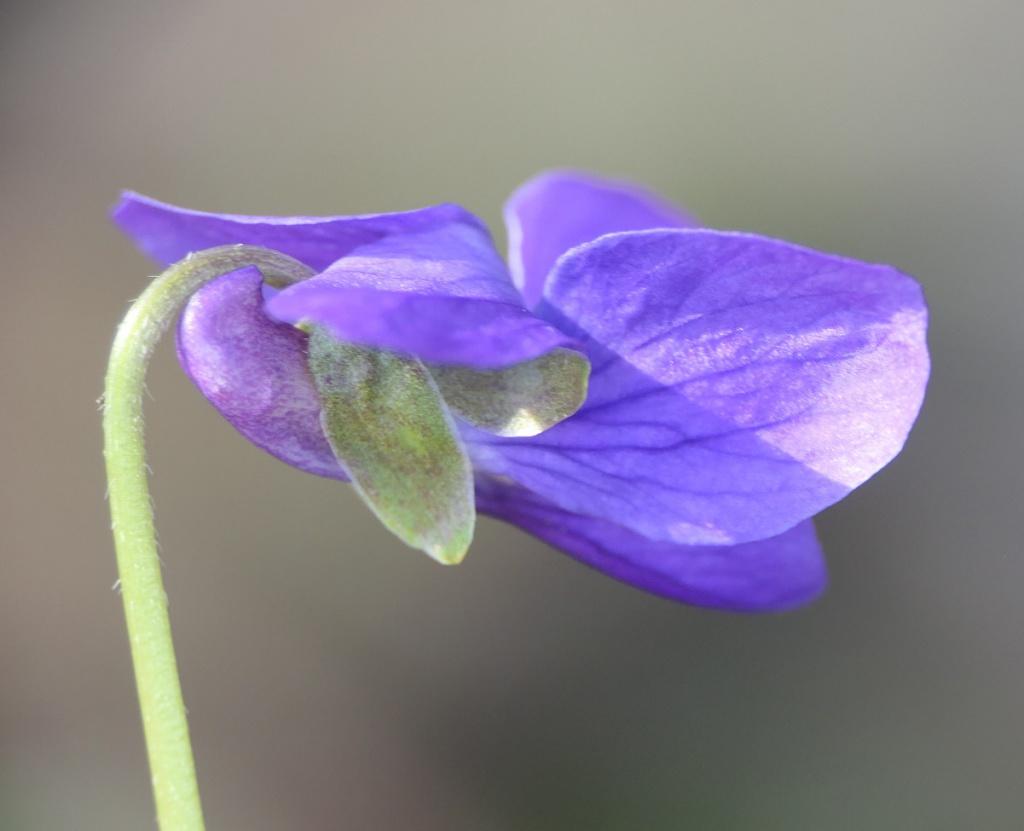
The lower petal extends backwards into a short spur, which stores nectar. Darker lines near the centre help guide visiting insects towards it. There are five sepals behind the petals and five stamens arranged around the female reproductive parts. Two of the stamens have nectar-producing appendages that extend towards the spur.
A side view is particularly useful for seeing the spur: it can be missed when looking directly into the flower.
Leaves and runners
The leaves grow on long stalks from a central tuft. They are usually heart-shaped, with a rounded tip, a notch at the base and softly rounded teeth along the edge. They may look quite glossy, especially in spring, but fine hairs can be seen on the stalks and leaf surfaces.
Sweet Violet spreads by stolons — slender runners that creep along the ground and root to form new plants. This is a useful difference from several similar-looking wild violets.
Pollination, seeds and dispersal
The showy spring flowers attract insects searching for early nectar and pollen. Sweet Violet has another, less obvious way of producing seeds: later in the year it can form small flowers that remain closed and pollinate themselves. This is called cleistogamy.
Its dry capsules split open when mature, releasing seeds close to the parent plant. Many of the seeds have a small, oil-rich attachment that attracts ants. The ants carry the seeds away, helping them reach new places to grow.
Habitat
Look along shady hedgerows, woodland margins, old banks and lightly shaded grassland. Sweet Violet often grows in loose groups where the soil is reasonably fertile and not permanently waterlogged. It is widespread across much of England but less frequent in some northern and upland areas.
Flowering period
Usually March to May, sometimes beginning in February in mild weather. The conspicuous, scented flowers are one of the early signs of spring; the much smaller self-pollinating flowers may appear later.
Similar species
- Common Dog-violet (Viola riviniana): also has violet flowers and heart-shaped leaves, but is usually unscented and has a longer, often paler spur. It does not make the same conspicuous rooting runners.
- Early Dog-violet (Viola reichenbachiana): commonly found in woods, with an unscented flower and a relatively narrow, darker spur.
- Marsh Violet (Viola palustris): has pale lilac flowers and grows in wet, boggy ground rather than the drier banks favoured by Sweet Violet.
Several violet species grow together, so the scent, spur shape and presence of runners are best considered together.
Where the names come from
The English name violet comes through Old French violete from Latin viola, meaning a violet. The scientific genus name Viola has the same Latin origin. The species name odorata means ‘fragrant’ or ‘sweet-smelling’, referring to the flower’s distinctive perfume.
Folklore & history
Sweet Violets have long been associated with affection, modesty and faithfulness. They were gathered for posies and used to scent rooms, while the ancient Greeks made violet perfumes and the Romans flavoured wine with the flowers.
Violets also became popular in traditional confectionery: the flowers were crystallised in sugar and used to decorate cakes and sweets. Their perfume made them a favourite in fragrant gardens and flower arrangements.
Wildlife
The early flowers offer nectar to bees, bee-flies and other spring insects. The plant’s low leaves also provide cover close to the soil, and its seeds are dispersed in part by ants.