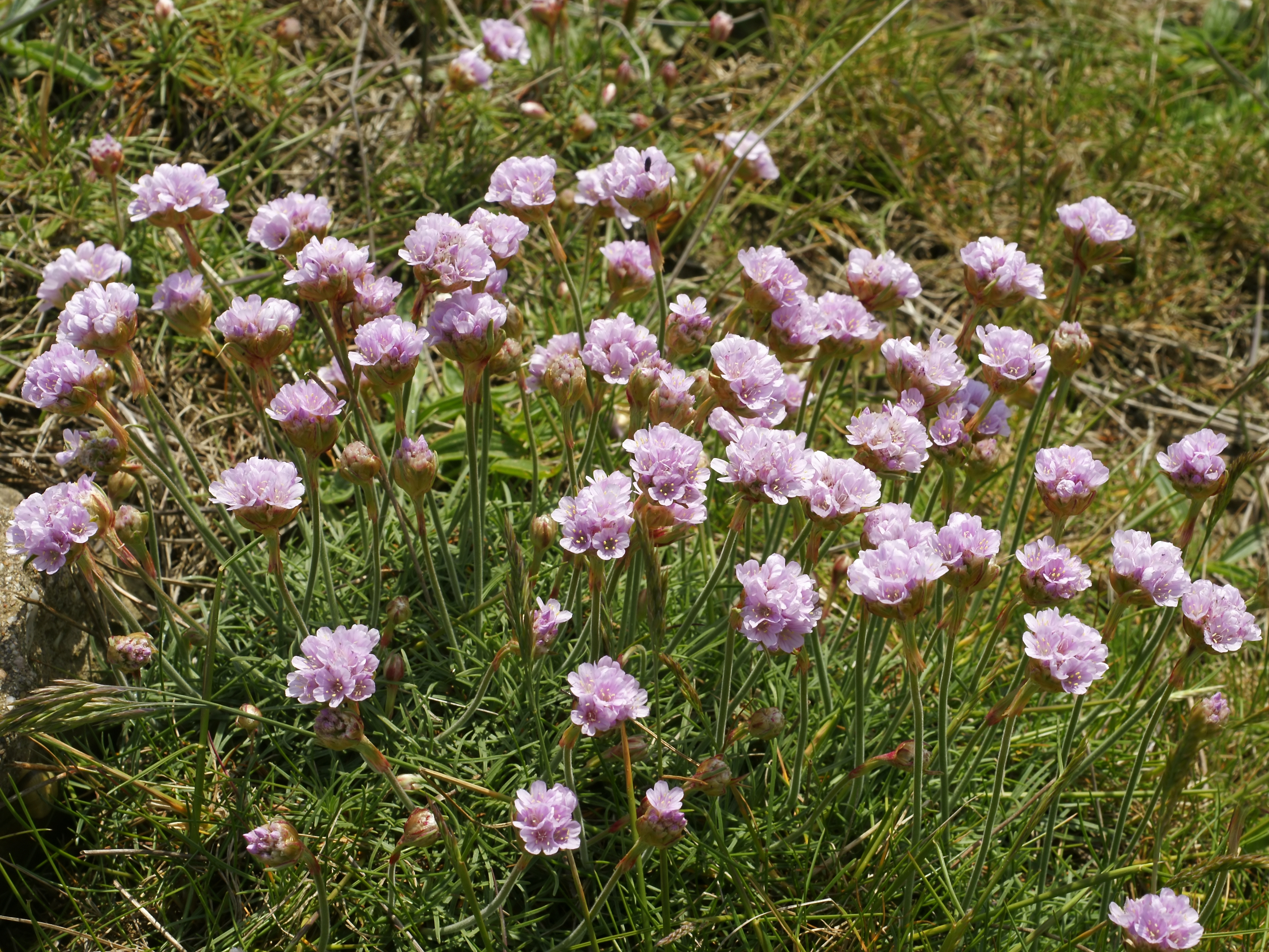


Thrift is one of the most distinctive wildflowers of the British coast. Its neat pink flower heads rise on slender stalks above dense cushions of narrow, grass-like leaves, often colouring cliff tops and rocky shorelines in late spring and early summer.
Also known as Sea Pink, Thrift belongs to Plumbaginaceae, the leadwort family. It is well adapted to exposed, salty places and is found around much of the UK coast.
Identification
- Usually around 5–30 cm tall.
- Rounded heads of pink flowers held on long, leafless stalks.
- Narrow, dark green leaves packed into dense basal tufts or cushions.
- Flower heads are surrounded at the base by papery overlapping bracts.
- Plants often grow together in conspicuous patches on cliffs, banks and saltmarshes.
The combination of grassy leaves and compact pink flower heads makes Thrift quite distinctive when it is in flower.
Flower structure
What looks like one rounded flower is actually a dense head containing many small individual flowers.
Each flower is five-parted, with five petals and five stamens. This five-part structure is typical of the Plumbaginaceae family.
The flower head is supported by a long stalk that rises above the leaves, helping the blooms stand clear of the low cushion of foliage.
Leaves
Thrift has narrow, linear leaves that arise from the base of the plant rather than being spaced along the flowering stem.
The leaves form dense evergreen or semi-evergreen cushions. Their tough, compact growth helps the plant cope with wind, salt spray and dry conditions on exposed coasts.
Habitat
Thrift is strongly associated with coastal places, including:
- rocky sea cliffs
- maritime grassland
- saltmarshes
- shingle beaches
- sand dunes
- rocky islands and headlands
It can also occasionally appear inland, particularly beside roads where winter salting creates conditions similar to naturally saline habitats.
Flowering period
Thrift flowers mainly from April to July. Individual plants can sometimes continue flowering later into summer or early autumn.
Similar species
Thrift is unlikely to be confused with many other British wildflowers once its leaves and growth habit are visible.
Sea-lavenders (Limonium species) belong to the same family and also favour salty coastal habitats, but their flowers are carried in branching sprays rather than compact rounded heads, and their leaves are broader.
Folklore & history
Thrift has been grown in gardens since at least the 16th century, but it remains best known as a flower of wild coastal landscapes.
Its alternative names include Sea Pink, Cliff Clover and Our Lady’s Cushion. Plantlife records the Gaelic name tonna chladaich, meaning beach wave, and the Welsh name clustog fair, meaning Mary’s pillow.
Thrift also appeared on the British threepenny coin from 1937 to 1953. Its selection was particularly apt because the word thrift can also mean careful saving or economy.
In the traditional Language of Flowers, Thrift has been associated with sympathy.
Wildlife
The flowers provide nectar for a range of visiting insects. On exposed coasts, patches of Thrift form part of a rich maritime plant community that can support many invertebrates.