Wild Thyme is a low, creeping native perennial that brings patches of pinkish-purple flowers to dry, sunny grassland and rocky banks. On a warm day its small leaves release a familiar thyme scent, especially when gently rubbed. It belongs to Lamiaceae, the mint family, alongside Self-heal, Betony and Yellow Archangel.
Identification
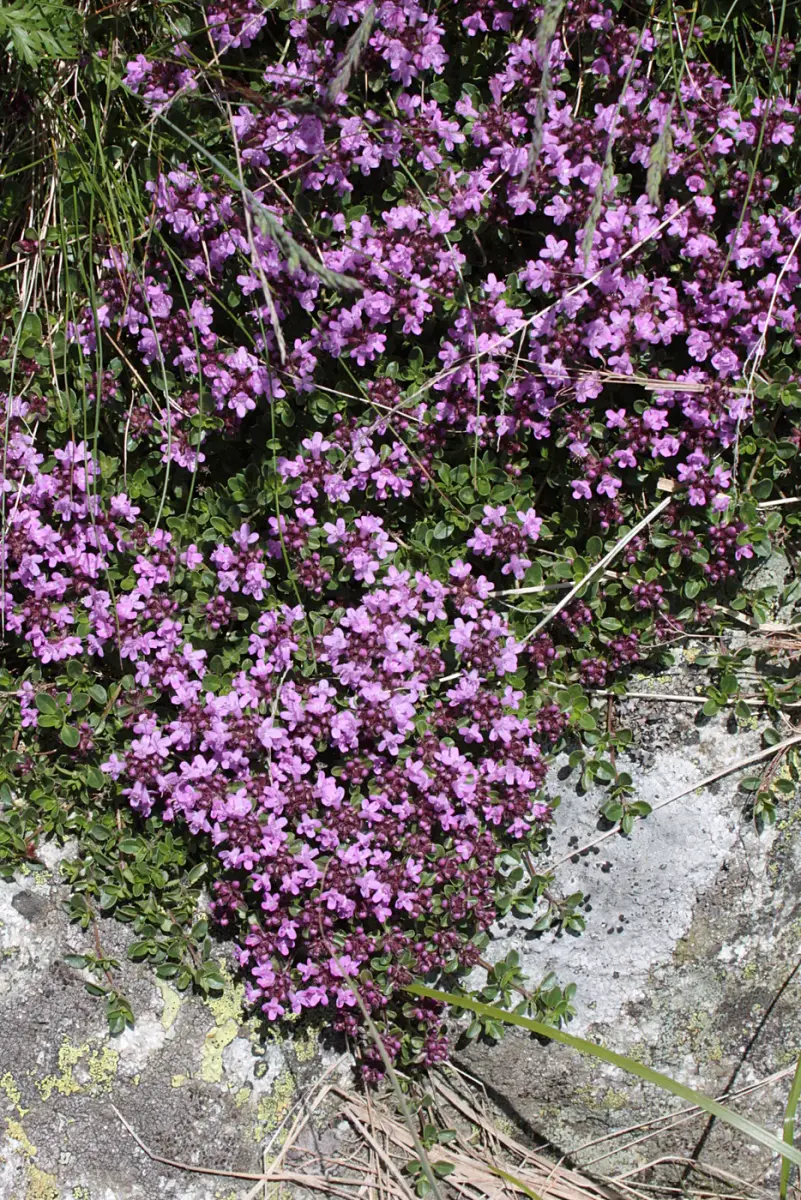
- A very low-growing plant, usually around 2–10 cm tall, spreading into loose mats across the ground.
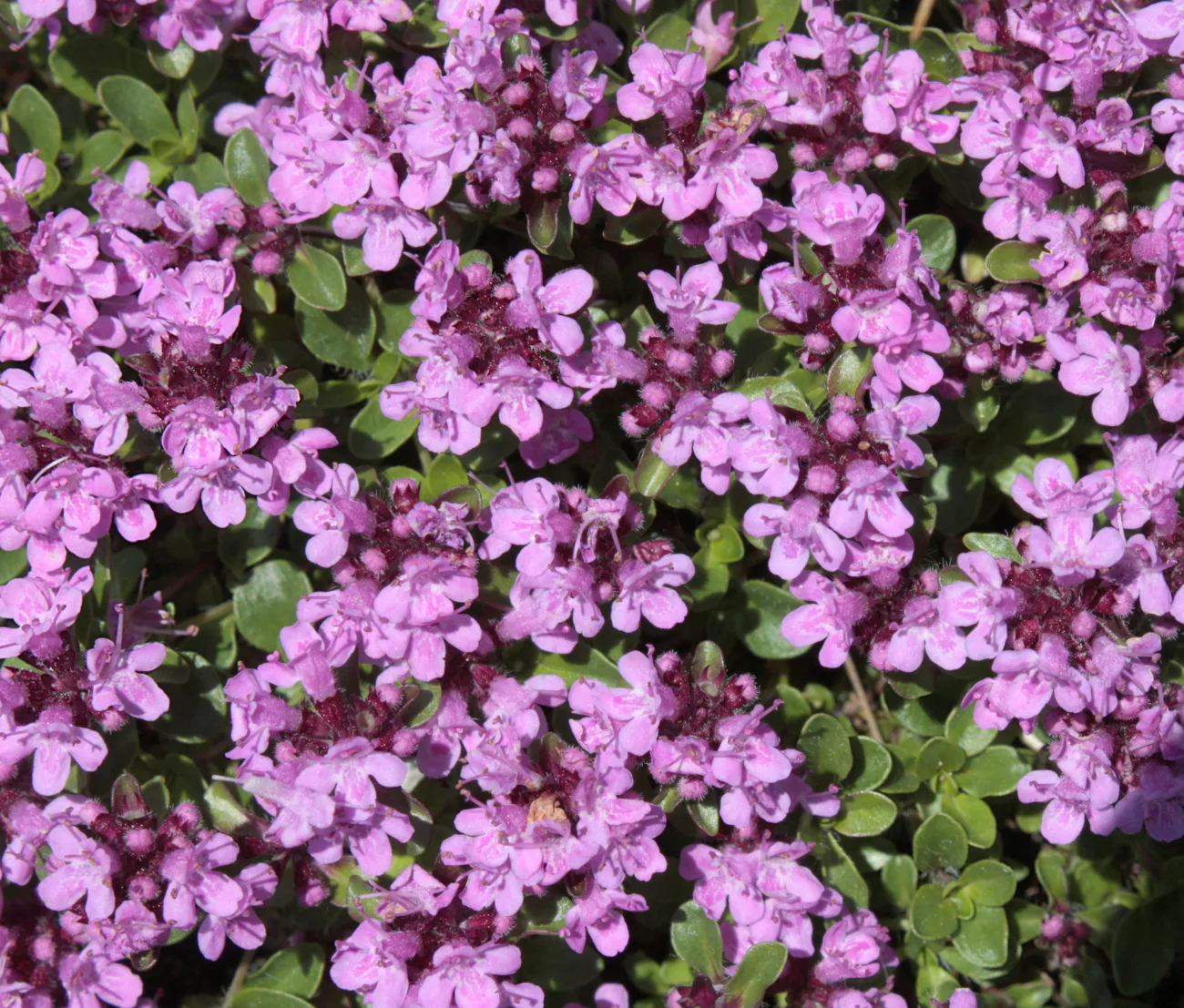
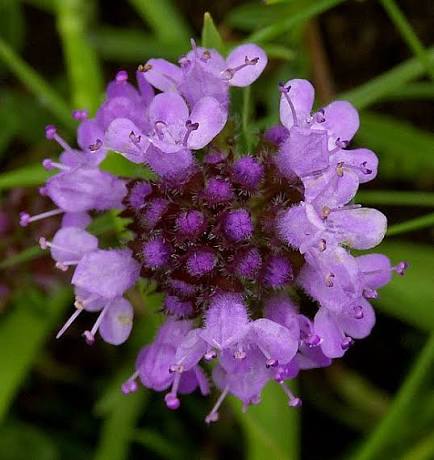
- Small, pink to purplish, two-lipped flowers crowded into rounded heads at the tips of short flowering stems.
- Tiny oval leaves growing in opposite pairs, with a distinctive aromatic scent when rubbed.
- Thin, creeping, somewhat woody stems, with short upright shoots carrying the flowers.
- Four-angled flowering stems, often noticeably hairy on two opposite faces and nearly hairless on the other two.
- Most often found in open, short vegetation on sunny, dry or well-drained ground.
The combination of tiny scented leaves, compact flower heads and a ground-hugging habit is a good clue. Looking closely at the hairs on the stems can help distinguish it from other wild thymes.
Flower structure
Each little flower has a tubular corolla formed from five fused petals. The upper lip has two small lobes, while the lower lip has three. Four stamens and the style often project beyond the flower, giving the heads a delicate, slightly untidy appearance when seen close up.
The flowers are gathered into crowded clusters of apparent whorls at the ends of short stems. A small, hairy, toothed calyx surrounds the base of each flower. After pollination, each fertile flower can produce up to four tiny nutlets, typical of the mint family.
Leaves and stems
The leaves are only a few millimetres long, oval to elliptic and arranged in opposite pairs. They may have a few tiny marginal teeth, and are dotted with minute oil glands that produce their characteristic fragrance. The leaves remain present for much of the year.
Many stems creep along the ground and develop a somewhat woody base. The short flowering shoots rise above these trailing stems. On a typical Wild Thyme flowering stem, two opposite faces carry long hairs while the other two are much less hairy — a useful feature when separating it from Large Thyme.
Habitat
Look for Wild Thyme in short, sunny grassland, particularly on chalk or limestone, and also on heaths, coastal cliffs, sandy banks, rock ledges and dry slopes. It grows well where the soil is thin and taller plants do not shade it out.
It is widely distributed in Britain, although its abundance varies considerably from place to place. It is especially associated with open, well-drained habitats rather than damp or heavily shaded ground.
Flowering period
Wild Thyme generally flowers from June to September. In summer, its small flowering patches can become strikingly pink against the surrounding grass or stone.
Similar species
- Large Thyme (Thymus pulegioides) is very similar, but often has a more open arrangement of flowers and stems with longer hairs mainly along their angles, rather than on two opposing faces. Some plants are difficult to separate without close examination.
- Breckland Thyme (Thymus serpyllum) is another low, creeping species, but in Britain it is much rarer and largely confined to sandy Breckland habitats in Norfolk and Suffolk.
- Garden Thyme (Thymus vulgaris) is the familiar culinary herb. It is generally bushier and more upright, with narrower leaves, although it may sometimes escape from gardens.
Where the names come from
The origin of Thymus is linked to ancient Greek words associated with fragrance or ritual offerings. The name polytrichus means ‘many-haired’, referring to the hairs on parts of the plant, particularly its stems.
Wild Thyme has also been known as Mother of Thyme, Hill Thyme and Brotherwort. The names reflect its long familiarity as a scented plant of open hillsides and banks.
Folklore & history
Thyme has long been associated with courage, protection and purification. In European tradition it was used to perfume rooms and clothing, burned as a fragrant herb and included in herbal preparations for coughs and digestive complaints. These traditions often refer to thyme generally rather than to one particular species.
Wild Thyme also has a strong place in the literary imagination. In Shakespeare’s A Midsummer Night’s Dream, Oberon describes a bank where wild thyme grows, placing the little scented plant in a landscape of fairies and enchantment.
Wildlife
The nectar-rich flowers attract bumblebees, solitary bees, hoverflies and butterflies. A sunlit patch of flowering Wild Thyme can be busy with insects despite the plant’s tiny size.
Wild Thyme is particularly important to the rare Large Blue butterfly. Its young caterpillars initially feed inside the flower heads, before being taken into the nests of certain red ants, where they complete their development. The butterfly’s survival depends on both Wild Thyme and suitable ant colonies occurring together in warm, short grassland.