Twining without tendrils
The stem itself winds around another plant for support. That makes it different from White Bryony, which climbs using tendrils.
The yam family
Plant family guide
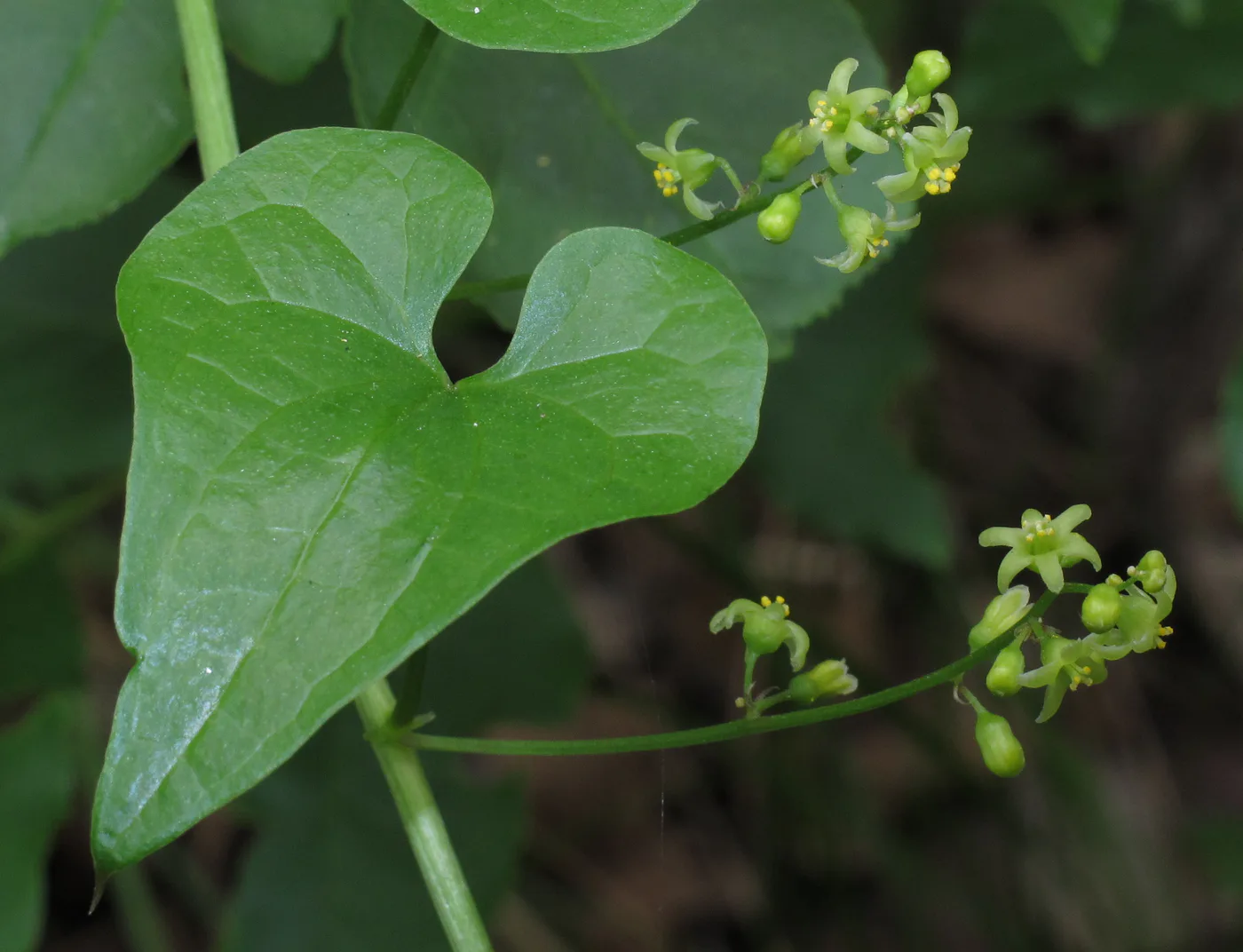
Black Bryony (Dioscorea communis) is Britain's native representative of the yam family. It winds its slender shoots through hedges and woodland edges, carrying shiny heart-shaped leaves and small greenish-yellow flowers, followed by bright red berries on female plants.
Dioscoreaceae is a family of mainly twining plants, including tropical yams. Black Bryony's leaves can look surprisingly unlike those of many familiar monocots: their veins form a network rather than simple parallel lines.
The stem itself winds around another plant for support. That makes it different from White Bryony, which climbs using tendrils.
Look closely at the tiny greenish-yellow flowers: the six tepals reflect the three-parted pattern common among monocots.
Only female Black Bryony plants develop the dangling strings of red berries. Unlike the berry spikes of Lords-and-ladies, these hang along a slender climbing stem.
The shared English name is misleading. White Bryony (Bryonia dioica) belongs to Cucurbitaceae, the cucumber family, not Dioscoreaceae. Its leaves are rougher and often lobed, its flowers are pale, and it climbs with tendrils.
For Black Bryony, check the glossy heart-shaped leaves, the slender twining stems without tendrils and the bright berries on female plants. The whole plant is more reliable for identification than the berries alone.
Explore the individual flower pages for more photographs and identification details.