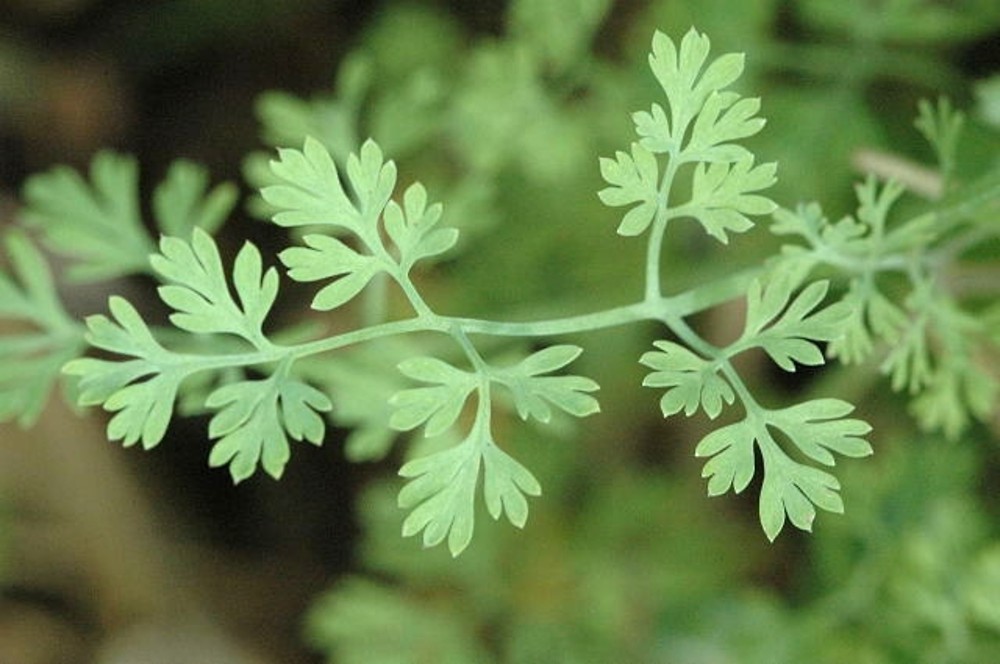
Common Fumitory (Fumaria officinalis) is a delicate, scrambling wildflower of cultivated and disturbed ground. Its airy grey-green foliage and small, pink flowers tipped with deep purple are often seen along field margins, in gardens and among crops. Despite looking very different from a poppy, it belongs to the poppy family (Papaveraceae).
Identification
- A slender, usually hairless annual, growing up to about 40 cm high, with branching stems that may stand upright or sprawl through nearby plants.
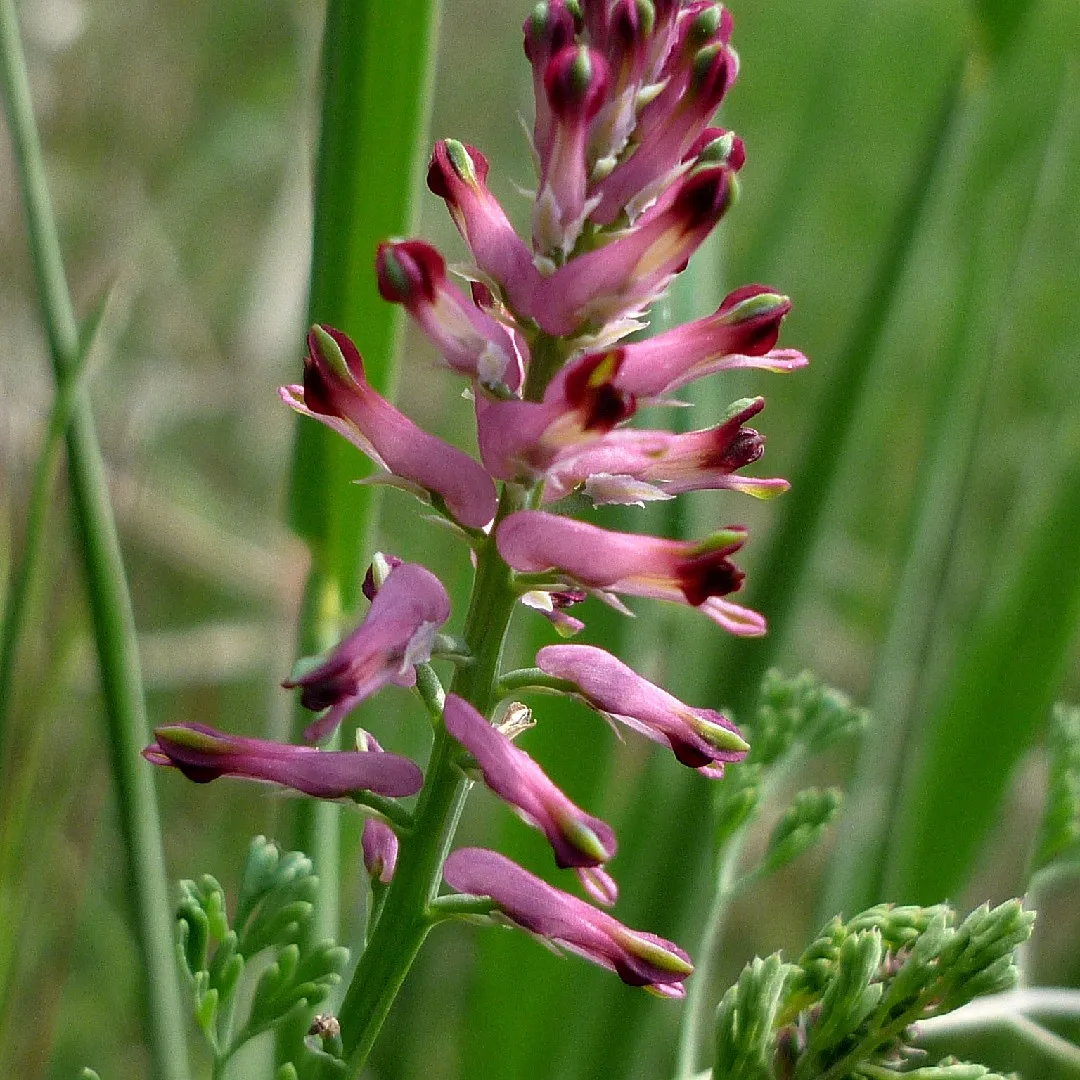
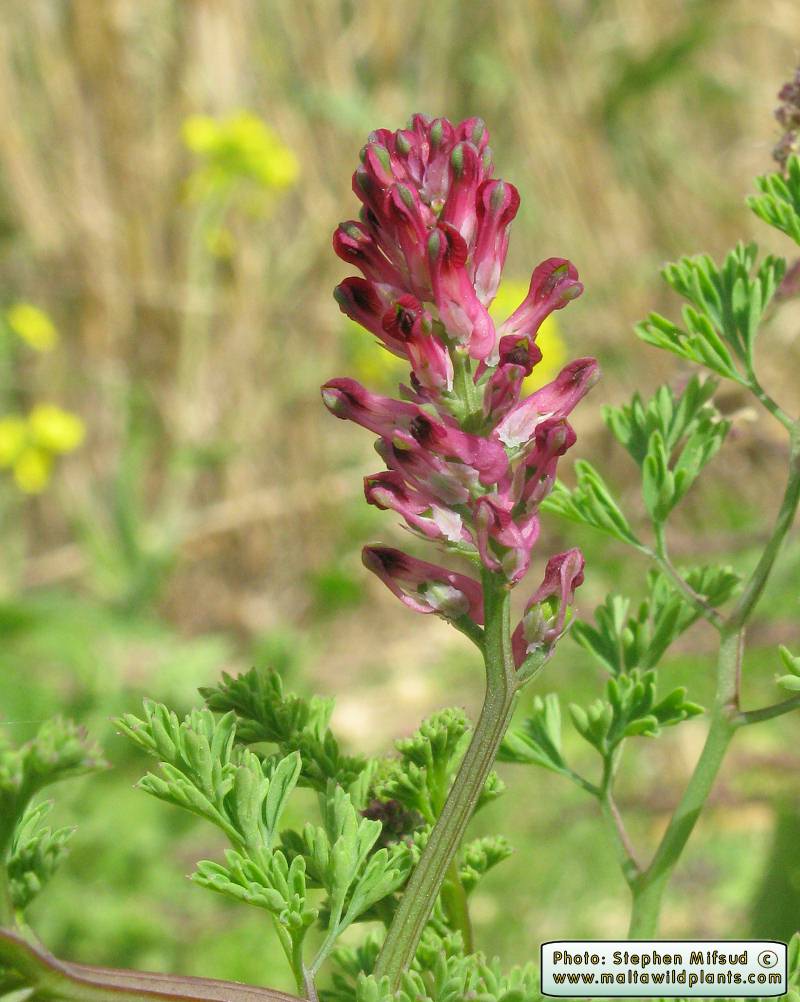
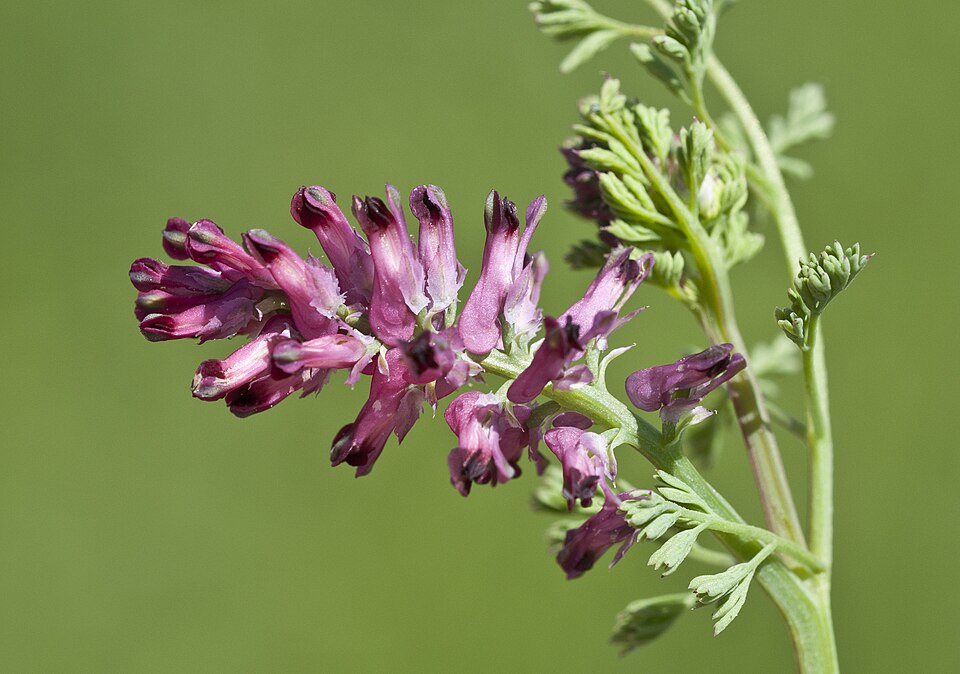
- Loose, upright flower clusters with numerous small, pink to purplish-pink flowers, generally around 7–9 mm long.
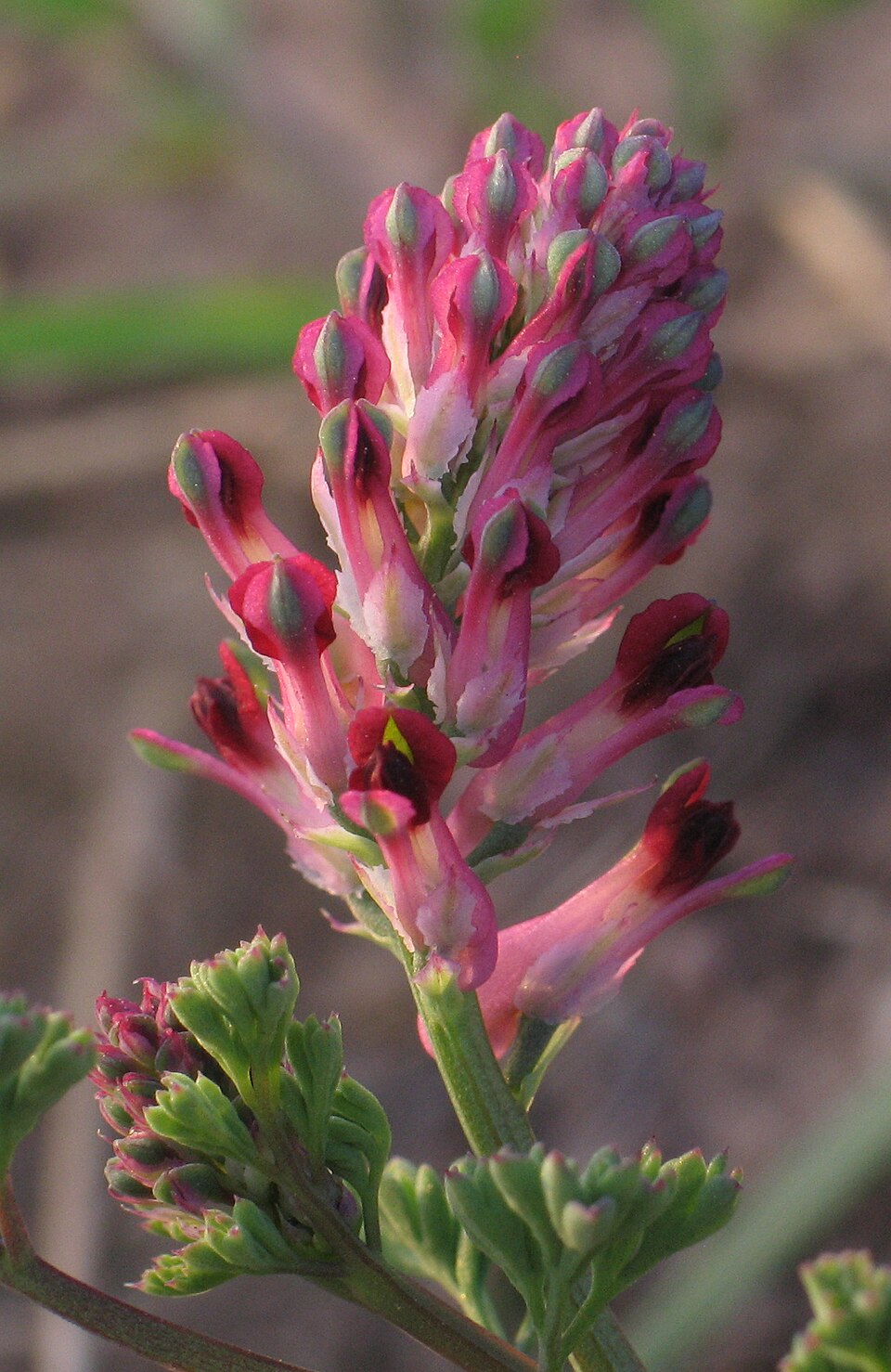
- Each flower is narrow and rather tubular, with a distinctly dark purple-red tip and a small backward-pointing spur.
- Soft-looking, grey-green leaves divided repeatedly into small, flat lobes, giving the foliage a feathery appearance.
- Small, rounded green fruits that are noticeably broader than they are long when mature.
- Often found in tilled soil, allotments, arable fields and other places where the ground has been disturbed.
A distant photograph can make several fumitory species look almost identical. For confident identification, the size and shape of the flowers, sepals, bracts and mature fruits should be examined together.
Flower structure
The flowers are carried in upright racemes, meaning that individual flowers are attached by short stalks along a central flowering stem. Young clusters are fairly compact, but they lengthen as the flowers mature and the fruits develop.
Each flower has four petals, but these do not spread out like the broad petals of Common Poppy. Instead they form a narrow, two-sided flower with a small spur at the back of the upper petal. The upper and side petals are often darker at the tips, making the flowers look pink with tiny crimson or purple caps.
Two small, toothed sepals are present at the base of each flower, together with a short bract. Inside the flower, the pollen-bearing parts are arranged in two groups rather than in the conspicuous ring of stamens seen in poppies. The structure helps explain why fumitories can look so different despite belonging to the same family.
Leaves and stems
The leaves are alternate and divided into numerous small lobes. Their grey-green colour and lacy outline can make a whole patch look almost smoky, particularly when seen across bare soil. The individual leaf segments are generally flat rather than thread-like.
The thin, branching stems are weak and may lean against neighbouring plants. Common Fumitory does not twine like a bindweed; it simply scrambles through surrounding vegetation. The plant is generally smooth and lacks the coarse hairs seen on many arable weeds.
Fruits and seeds
The developing fruits are small and green, becoming firmer as they ripen. Unlike the multi-seeded capsules of typical poppies, each fumitory fruit is a rounded, one-seeded nutlet that does not split open when ripe. In Common Fumitory, mature fruits tend to have a rather flattened or slightly indented top.
The species often produces large numbers of seeds, and dormant seeds can remain in cultivated soil for years. Digging or turning the ground may bring them close enough to the surface to germinate, allowing plants to reappear after an apparently long absence.
Habitat
Common Fumitory is widespread in lowland areas of the UK, especially on arable farmland, field edges, gardens, allotments, disturbed banks and waste ground. It is particularly associated with open, fertile soils, including chalky and loamy ground.
It is regarded as an ancient introduction to Britain, closely associated with farming and disturbed soil over many centuries. Its delicate stems can be overlooked among larger weeds or crops, but the pink flower spikes are surprisingly distinctive once noticed.
Flowering period
Common Fumitory usually flowers from spring into autumn, often between April and October. Flowering is generally most noticeable during the warmer months, although the exact season depends on when the seeds germinate and how the ground is managed.
Similar species
- Common Ramping-fumitory (Fumaria muralis) has generally larger, often paler pink and white flowers, with broader leaf segments and different sepal and fruit details.
- White Ramping-fumitory (Fumaria capreolata) has larger creamy-white flowers with dark tips, rather than the smaller pink flowers typical of Common Fumitory.
- Dense-flowered Fumitory (Fumaria densiflora) can have similarly sized flowers, but the pale flowers and relatively broad, wing-like sepals help distinguish it.
- Common Poppy (Papaver rhoeas) and Greater Celandine (Chelidonium majus) belong to the same family but have open, four-petalled flowers and very different fruits.
Fumitories are a difficult group. The colour of the flower alone is not always enough to distinguish closely related species, particularly on weak or unusually shaded plants.
Where the names come from
The name Fumitory comes from the medieval Latin fumus terrae, meaning ‘smoke of the earth’. One explanation is visual: its finely divided, pale grey-green foliage can resemble a thin haze rising from disturbed ground. The phrase eventually appeared in English in forms such as fumiterre and fumitory.
There was also an older belief that the plant arose from vapours emerging from the soil rather than from seed. This curious idea was repeated in writings about plant names, and it strengthened the association with earth and smoke. Another traditional explanation connected the name with the plant’s acrid juice, which was said to make the eyes water as smoke does.
The scientific genus name Fumaria preserves the same image of smoke. The species name officinalis comes from the Latin officina, a workshop or storeroom, and was commonly given to plants kept by apothecaries for medicinal use.
Among its more picturesque old English names is Wax Dolls. This name was recorded in Kent, where the little pink flowers with their dark tips were compared with miniature wax toys. Other traditional names include Fume-of-the-earth and Earth-smoke.
Folklore & history
Fumitory has a long association with traditional European herbal medicine. It was particularly familiar in the fields, vineyards and gardens where people gathered useful wild plants, and its unusual appearance made it easy to remember.
In John Gerard’s Herball of 1597, fumitory appears among the plants used for skin complaints, including scabs. Later herbal writers repeated its reputation as a cleansing herb and described preparations made from the fresh plant. These remedies formed part of the older herbal tradition in which plants were selected for their appearance, taste and supposed effects on the body’s internal balance.
The imagery of smoke also contributed to the plant’s folklore. The belief that fumitory emerged from vapour rising through the soil seems especially fitting for an annual that may suddenly appear in freshly turned ground and vanish again when the soil is left undisturbed.
Its name Wax Dolls offers a different glimpse of country life. The little hooded flowers, pale pink at the base and dark at the tips, were likened to the small wax figures familiar to children in the nineteenth century. It is a reminder that popular plant names often grew from ordinary objects and observations rather than formal botany.
Wildlife
Small bees, flies and other insects may visit the flowers for nectar, although Common Fumitory is also capable of self-pollination. The plant provides low, branching cover in disturbed places and contributes to the diversity of flowering plants at the margins of cultivated land.
Its seeds are part of the wider food supply available in arable habitats, and the species can persist where regular soil disturbance allows new seedlings to establish.