Common Rock-rose is a low-growing native perennial of sunny chalk and limestone grassland. Its golden-yellow flowers shine above a spreading mat of small leaves and wiry stems. Although the flowers resemble little wild roses, this plant belongs to Cistaceae, the rock-rose family, not the rose family.
Identification
- Usually a low, creeping plant, often only 10–30 cm high, but sometimes reaching around 40 cm.
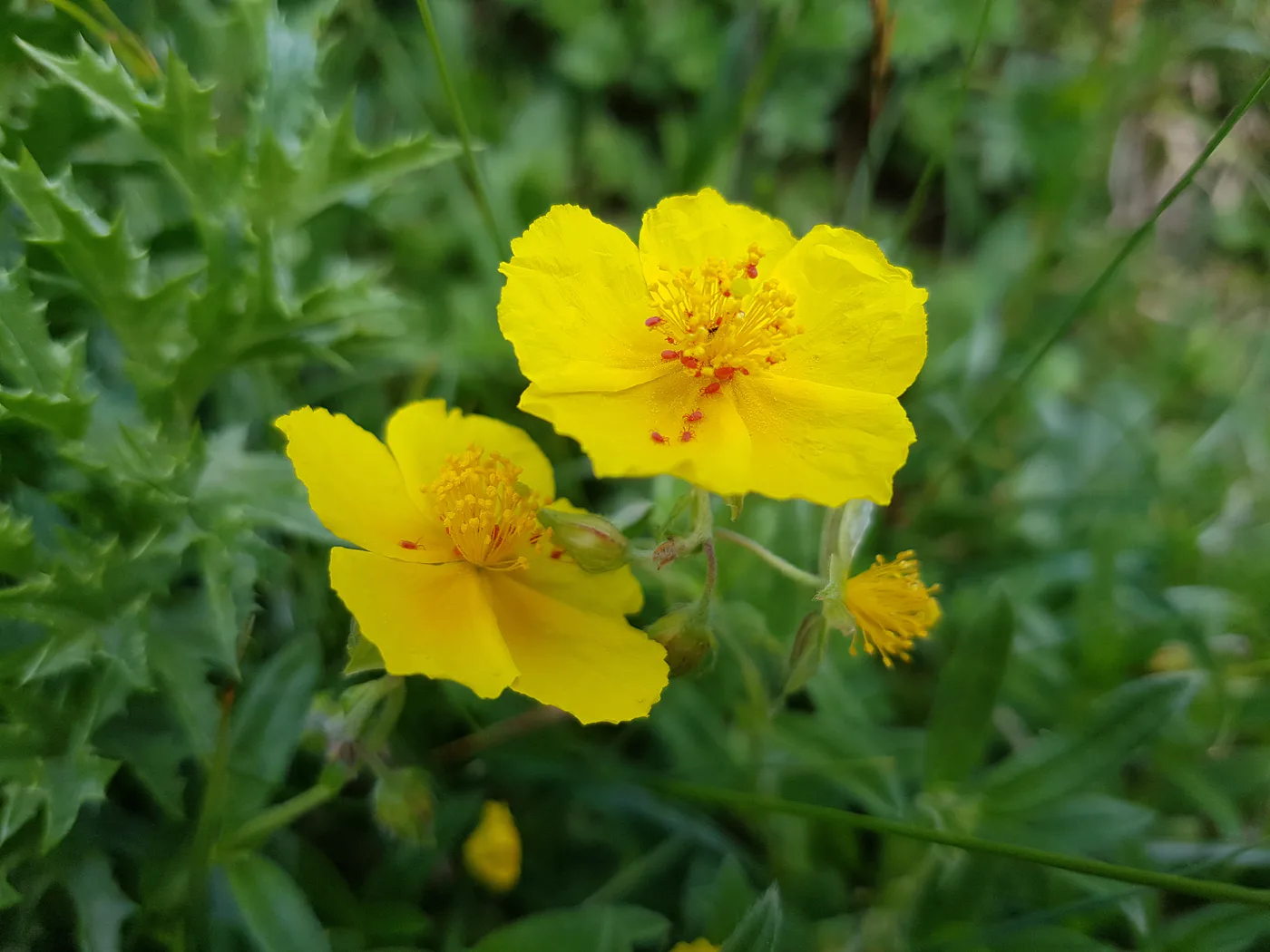
- Five bright yellow petals, often looking slightly crumpled, surround a cluster of yellow-orange stamens.
- The flowers are generally about 1.5–2.5 cm across and open most fully in bright sunshine.
- Slender, spreading stems become woody towards the base, so the plant is a small evergreen shrub rather than a typical soft-stemmed herb.
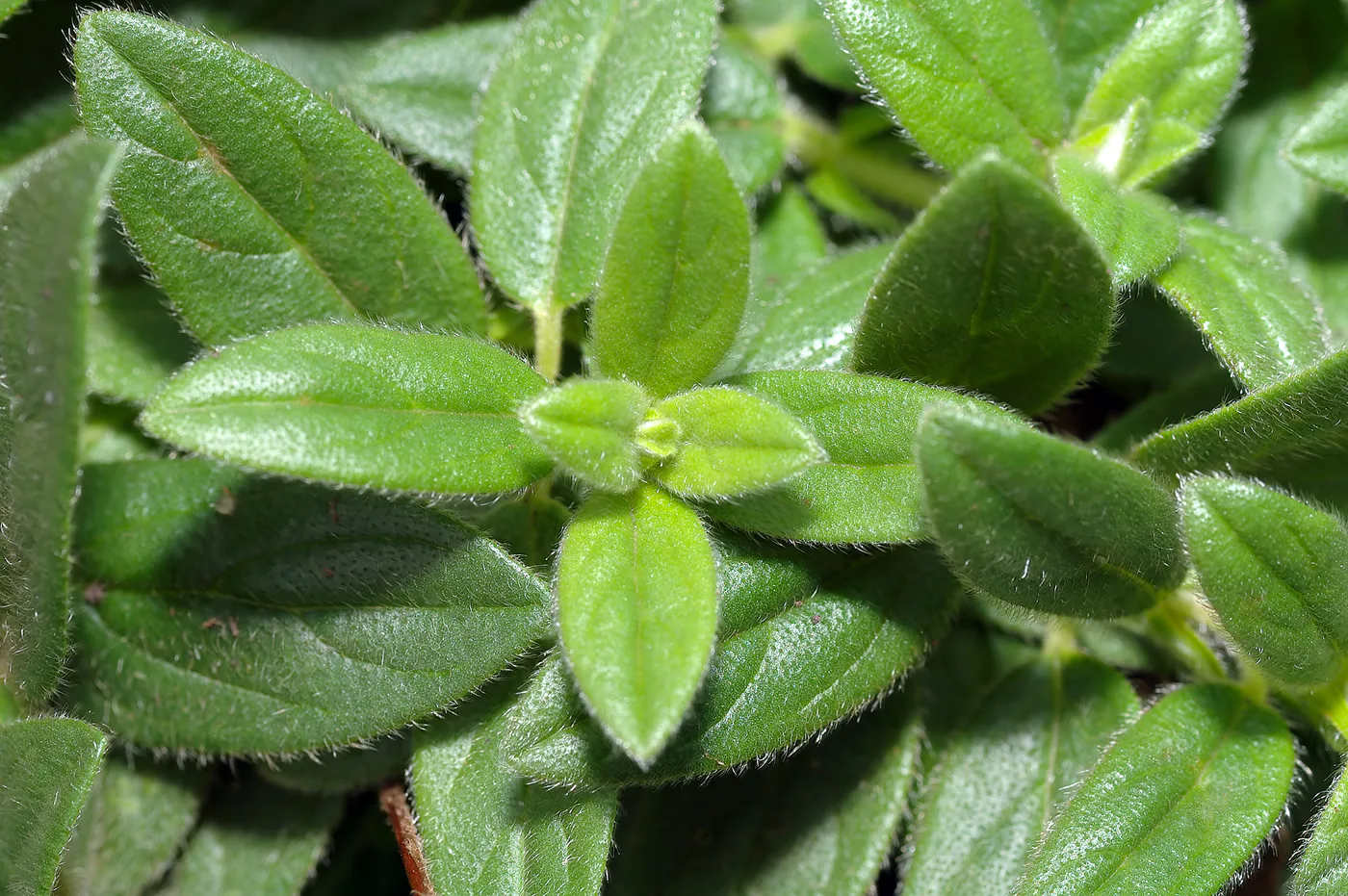
- Small, narrow to oval leaves grow in opposite pairs and are often green above but pale and hairy beneath.
- Tiny leaf-like stipules are present beside the leaves at the points where they join the stem.
- Flower buds often nod downwards before opening, with green sepals surrounding them.
The combination of yellow, crinkled flowers, small opposite leaves and low woody stems is a useful starting point. The stipules provide an especially good clue when separating it from Hoary Rock-rose.
Flower structure
Each flower has five separate, delicate yellow petals, with numerous stamens clustered around the central reproductive parts. Unlike a dandelion or daisy, this is a single flower, not a head made up of many small florets.
The calyx has three larger inner sepals and two much smaller outer ones. The larger sepals are often marked by conspicuous veins, especially on the nodding buds. After pollination, the ovary develops into a small dry capsule containing seeds.
The flowers are short-lived, but new ones open in succession. They respond to sunshine, opening in bright conditions and closing as light fades.
Leaves and stems
Common Rock-rose has narrow, oval to lance-shaped leaves arranged in opposite pairs along its stems. The upper surfaces are usually green, while the undersides often look greyish or whitish because of their covering of fine hairs. The leaf edges may curl slightly downwards.
Look closely where a leaf joins its stem: there are usually two very small stipules, leaf-like appendages that help distinguish this species from Hoary Rock-rose, which lacks them.
The stems creep or spread across the ground and become woody with age. This evergreen growth allows the plant to remain visible as a low mat outside the flowering season.
Habitat
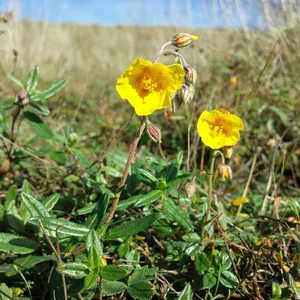
Look for Common Rock-rose in short, open chalk and limestone grasslands, on sunny slopes, rocky outcrops, cliff tops and thin soils over lime-rich rock. It thrives where the grass stays relatively short and competing vegetation does not shade it.
In suitable places it can grow in spreading patches, sometimes making whole banks look golden in summer. It occurs in parts of Britain wherever suitable habitat survives, particularly in areas with chalk or limestone.
Flowering period
Common Rock-rose usually flowers from June to September, although the first flowers may appear in late May during warm springs. Individual flowers do not last long, but the plant continues to produce new buds over several weeks.
Similar species
- Hoary Rock-rose (Helianthemum oelandicum) also grows on limestone and has yellow flowers, but its leaves lack the little stipules found on Common Rock-rose. It is generally a smaller, more local plant.
- White Rock-rose (Helianthemum apenninum) has pale, usually white petals and is much less widespread in Britain.
- Creeping Cinquefoil (Potentilla reptans) also has five yellow petals, but it has five separate leaflets rather than the simple opposite leaves of Common Rock-rose. It belongs to the rose family.
Where the names come from
Helianthemum comes from the Greek helios, meaning sun, and anthemon, meaning flower. It reflects the plant’s bright golden flowers and their habit of opening in sunshine.
The species name nummularium comes from a Latin word associated with a small coin, referring to the rounded, coin-like appearance of parts of the plant. The English name Rock-rose combines its fondness for rocky ground with the resemblance of its five-petalled flowers to small wild roses.
Folklore & history
Older botanical books sometimes called this plant Sun-rose or Sun-daisy. The names capture a familiar observation: its delicate flowers unfold in sunshine and tend to close when the light fades. This close association with summer light gave the plant a particularly evocative place among the wildflowers of open hillsides.
Rock-roses have also been grown in gardens for centuries, especially in sunny rockeries where their low woody growth and succession of colourful flowers are prized. The British native species is golden yellow, while cultivated rock-rose varieties can have flowers in shades of orange, pink, red or white.
Wildlife
Common Rock-rose is especially important for butterflies on chalk and limestone grasslands. It is a larval food plant for the Brown Argus and Green Hairstreak butterflies; the rare Silver-studded Blue also uses it in some habitats. Caterpillars feed on its leaves, while adults and other visiting insects make use of the flowers.
Its open flowers are visited by bees and other pollinators. Keeping grassland sunny, lightly grazed or otherwise carefully managed helps this low-growing plant survive alongside the insects that depend on it.