Common Sorrel is a familiar native perennial of Britain’s meadows, grassy banks and roadside verges. Its arrow-shaped leaves and reddish flowering stems are useful identification features, especially in late spring. It belongs to Polygonaceae, the dock and knotweed family.
Identification
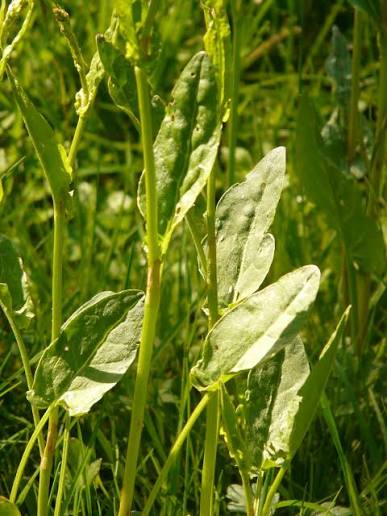
- Narrow, oblong to arrow-shaped green leaves, with two pointed lobes at the base directed back towards the stalk.
- Lower leaves have long stalks; those higher up are smaller and often clasp the stem.
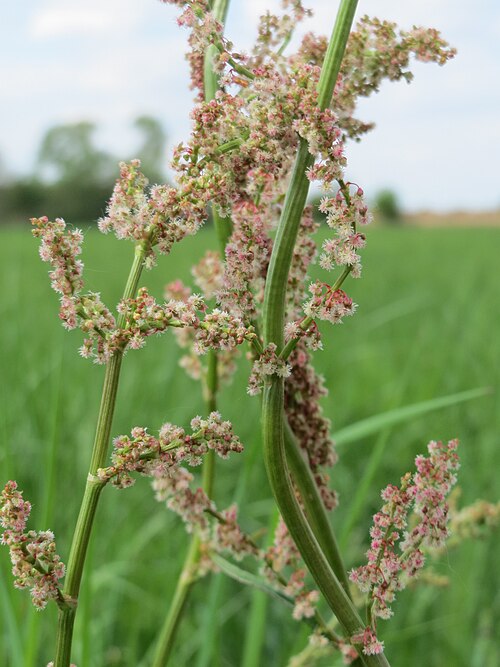
- Upright, sometimes reddish stems supporting open, branching sprays of tiny greenish or red-tinged flowers.
- Male and female flowers grow on separate plants, a condition called dioecious.
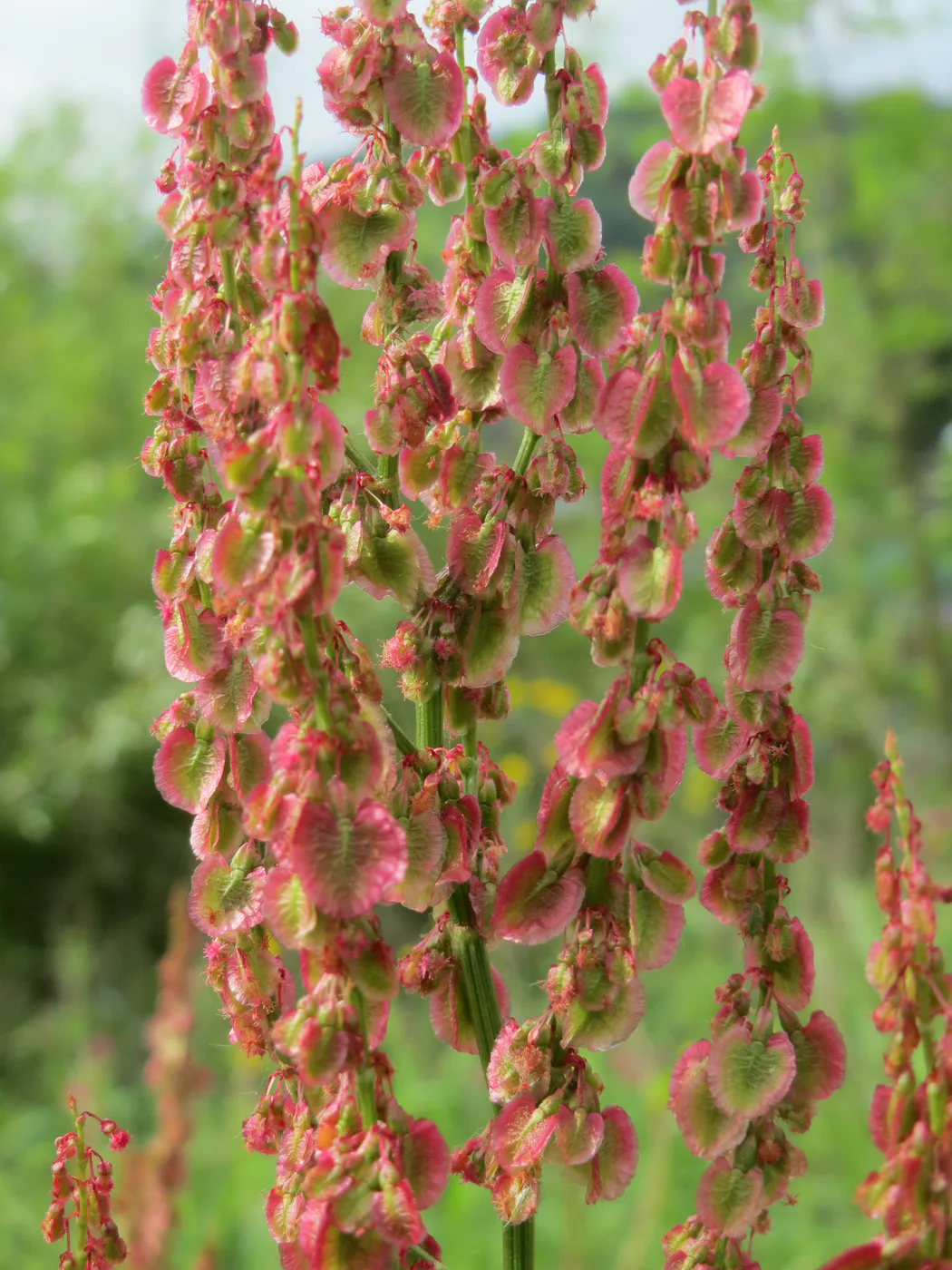
- Female plants develop conspicuous reddish or greenish, papery, wing-like fruits after flowering.
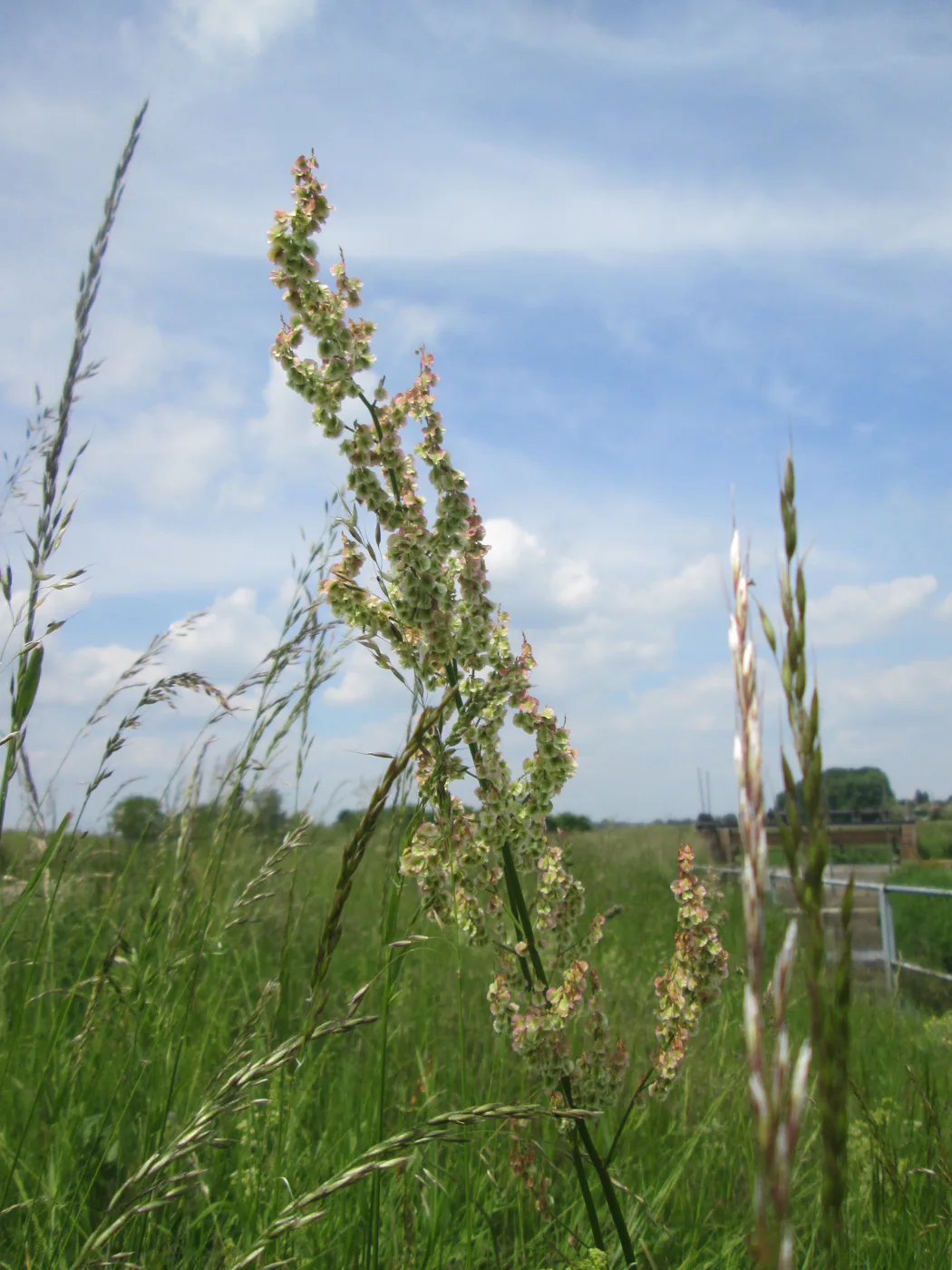
- Found among grasses in meadows, pastures and grassy roadside places.
The leaf base is one of the best clues: look for the two sharp, backward-pointing lobes that give the leaf its distinctive arrow shape.
Flower structure
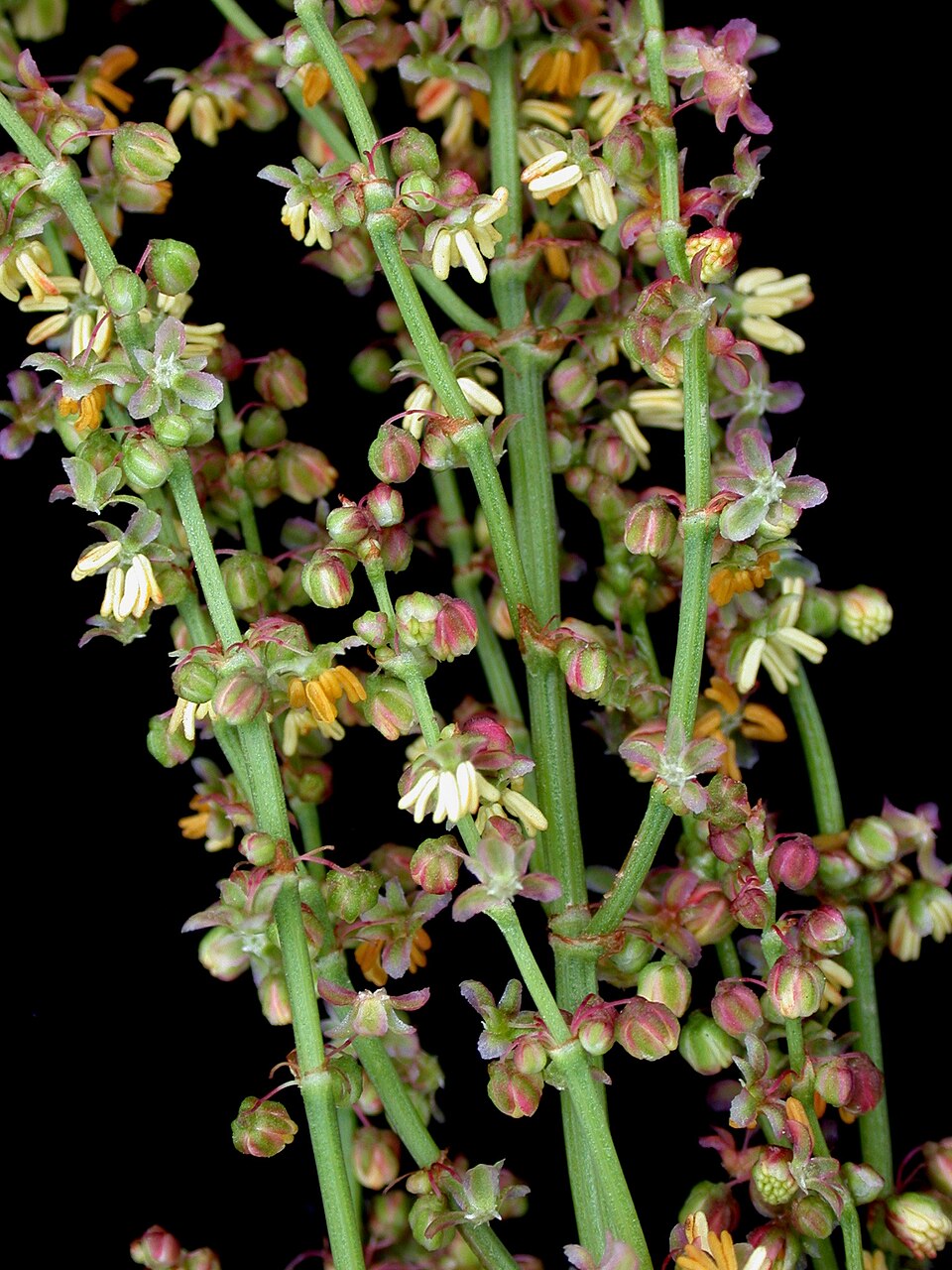
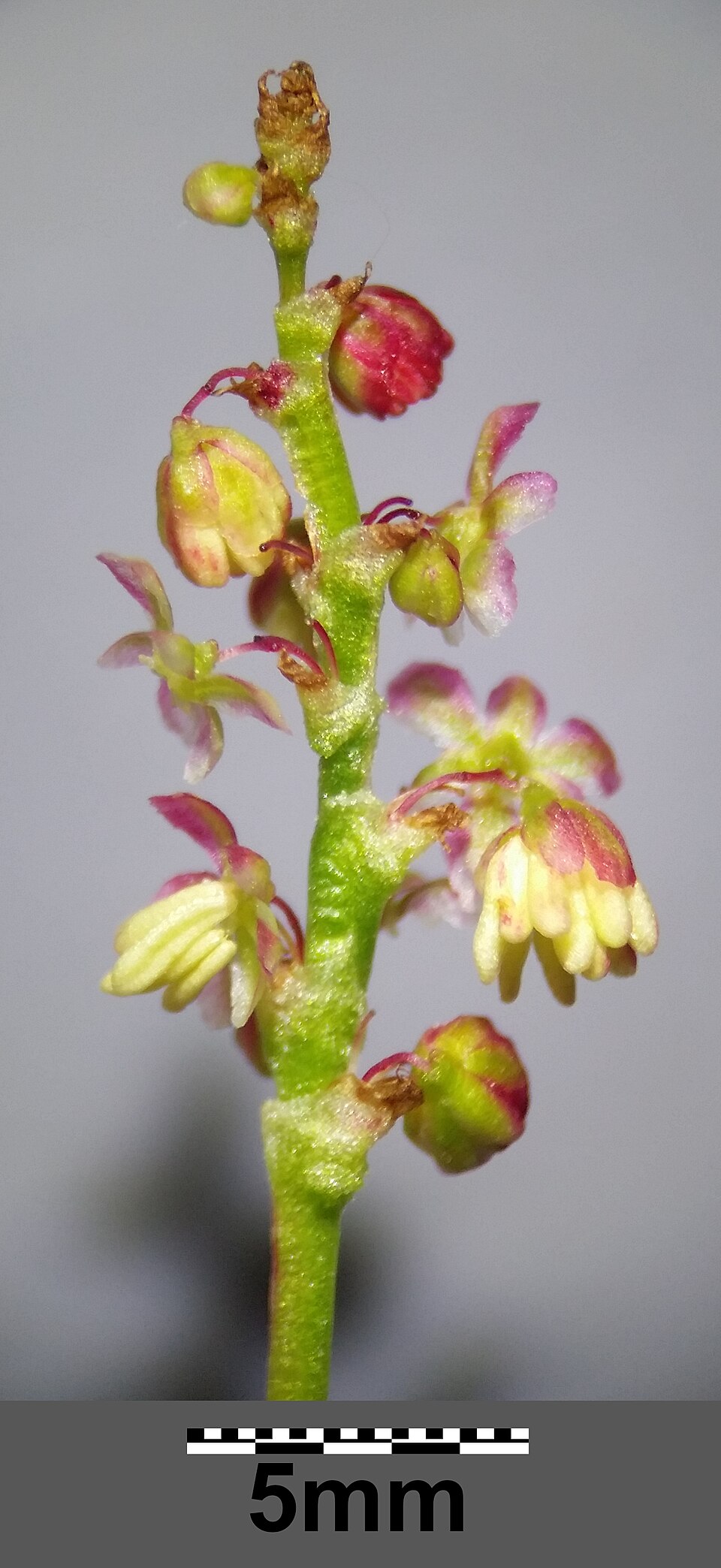
The numerous small flowers are grouped in loose panicles, which are branching flower clusters towards the ends of the stems. They are mostly wind-pollinated, so they have no large, colourful petals to attract insects.
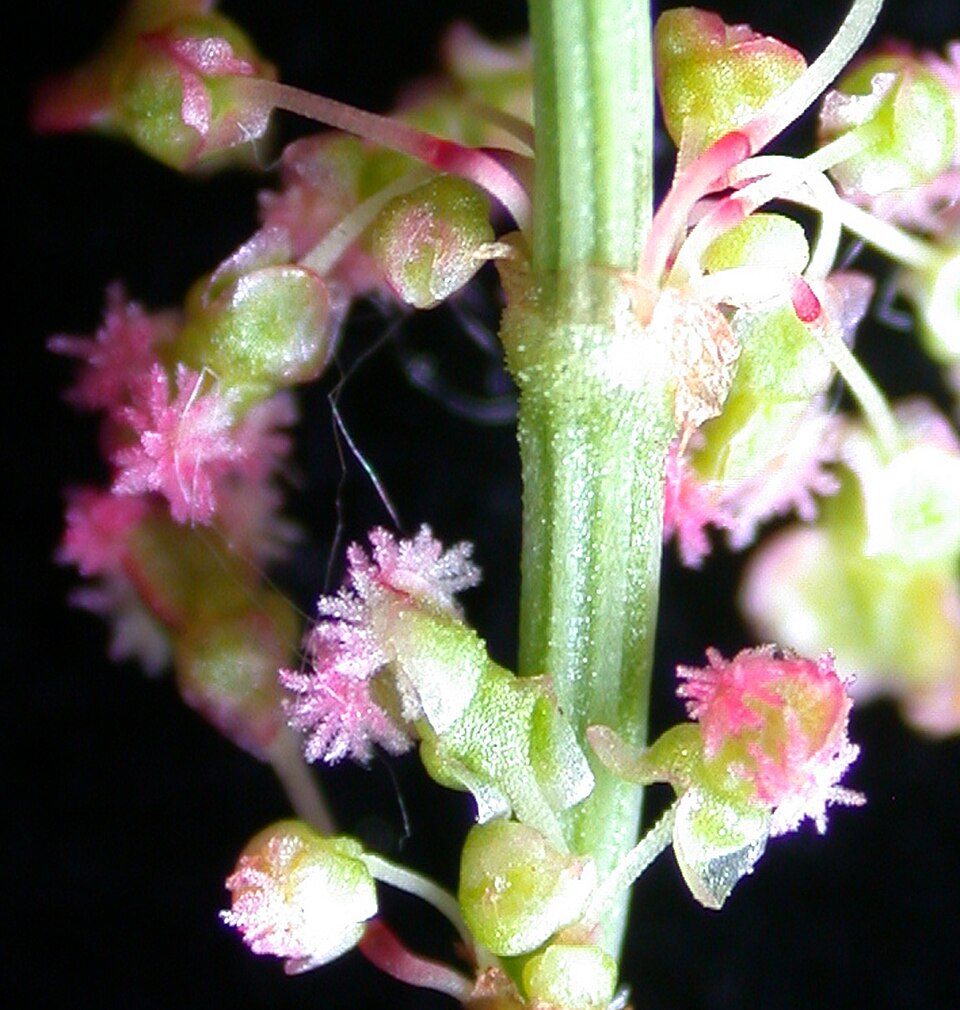
Common Sorrel is dioecious, meaning that male and female flowers are usually found on separate plants. Each flower has six tepals arranged in two groups of three, rather than distinct petals and sepals. Male flowers bear six stamens which release pollen; female flowers have a central ovary and three feathery stigmas to catch airborne pollen.
The female flower clusters often continue to lengthen as the fruits develop, and can become particularly striking when their papery parts turn red.
Leaves and stems
The lower leaves are long-stalked and typically hastate: narrow to broadly oblong above, with a pair of sharply pointed basal lobes. These lobes point backwards alongside the leaf stalk. The leaf margins are usually smooth or only slightly wavy.
Upper leaves become progressively smaller and have shorter stalks; some clasp the flowering stem. Leaves are arranged alternately. At the stem nodes there is a thin, membranous ochrea, a sheath formed from fused stipules that is characteristic of the family.
The plant grows again each year from a persistent underground rootstock, with flowering stems commonly reaching about 60–100 cm.
Fruits and seed dispersal
After pollination, the three inner tepals of each female flower enlarge and become thin, rounded, papery wings, often turning pink, crimson or reddish-brown. These surround a small, three-sided achene, a dry fruit containing one seed.
The winged fruits are carried on the branching stems and can be moved by the wind. Their colour and shape make Common Sorrel conspicuous even after the tiny flowers have faded.
Habitat
Common Sorrel grows in meadows, pastures, grassy banks, open woodland edges, gardens and roadside verges. It is especially characteristic of long-established grassland and is widespread throughout the UK.
It tolerates a range of soils, often doing well in neutral to mildly acidic conditions. In summer, the red-tinged flowering stems can be seen rising above the surrounding grass.
Flowering period
The main flowering season is May and June, with flowers sometimes continuing through July and August. The most colourful reddish fruiting sprays often appear as the summer progresses.
Similar species
- Sheep’s Sorrel (Rumex acetosella) is usually a smaller, more slender plant. Its leaves are narrower and have basal lobes that commonly stick out sideways, or curve forwards, rather than pointing neatly back towards the stalk. Its upper leaves do not clasp the stem in the same way.
- Broad-leaved Dock (Rumex obtusifolius) and Curled Dock (Rumex crispus) also have small reddish-green flowers and papery fruits. Their leaves, however, lack Common Sorrel’s characteristic pair of long, backward-pointing basal lobes. Curled Dock has especially wavy leaf edges, while Broad-leaved Dock has much wider leaves.
Where the names come from
The name Sorrel is associated with the plant’s noticeably sour leaves. The scientific name Rumex was used in Latin for docks and related plants, while acetosa means sour or acidic, referring to the sharp, lemon-like taste of its leaves.
Other traditional names include Sour Dock, Sour Ducks and Sour Grass.
Folklore & history
Sorrel has been gathered and cultivated as a vegetable and herb for centuries. Its pleasantly sharp leaves were added to soups, sauces and salads, particularly in spring. Sorrel sauce was traditionally served with fish and other dishes, and the plant was once grown in kitchen gardens for this purpose.
The sour taste comes from oxalic acid in the leaves. In folk medicine, Sorrel was used as a cooling herb and in preparations intended to ease thirst and fever. Its acidic juice was also used to help lift stains from linen.
Wildlife
Common Sorrel is a food plant for the caterpillars of the Small Copper butterfly and several moths, including the Blood-vein. Its seeds also contribute to the food available in grassland habitats.
As a familiar component of older meadows and pastures, it is part of the varied plant community on which many grassland insects depend.