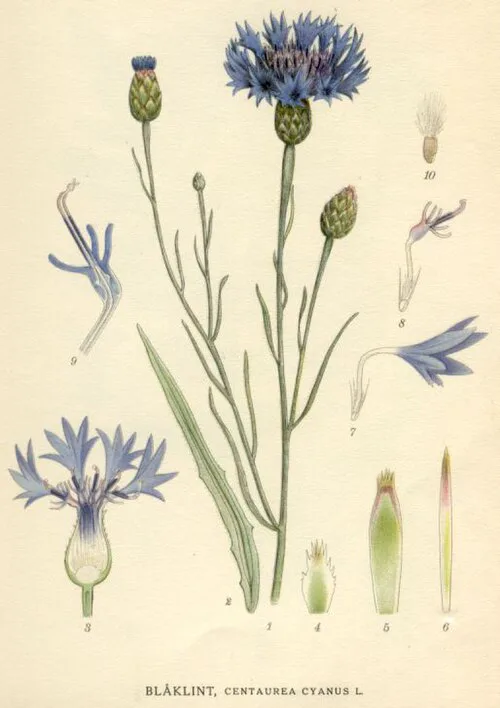
Few wildflowers have a colour quite like Cornflower. Its bright, almost electric-blue heads once appeared among ripening wheat and barley, often alongside poppies and corn marigolds. It is much less frequent as a wild arable plant today, although familiar again in sown wildflower displays and gardens. Cornflower belongs to Asteraceae, the daisy family, and its apparently single flower is really a tightly packed collection of small flowers.
Identification
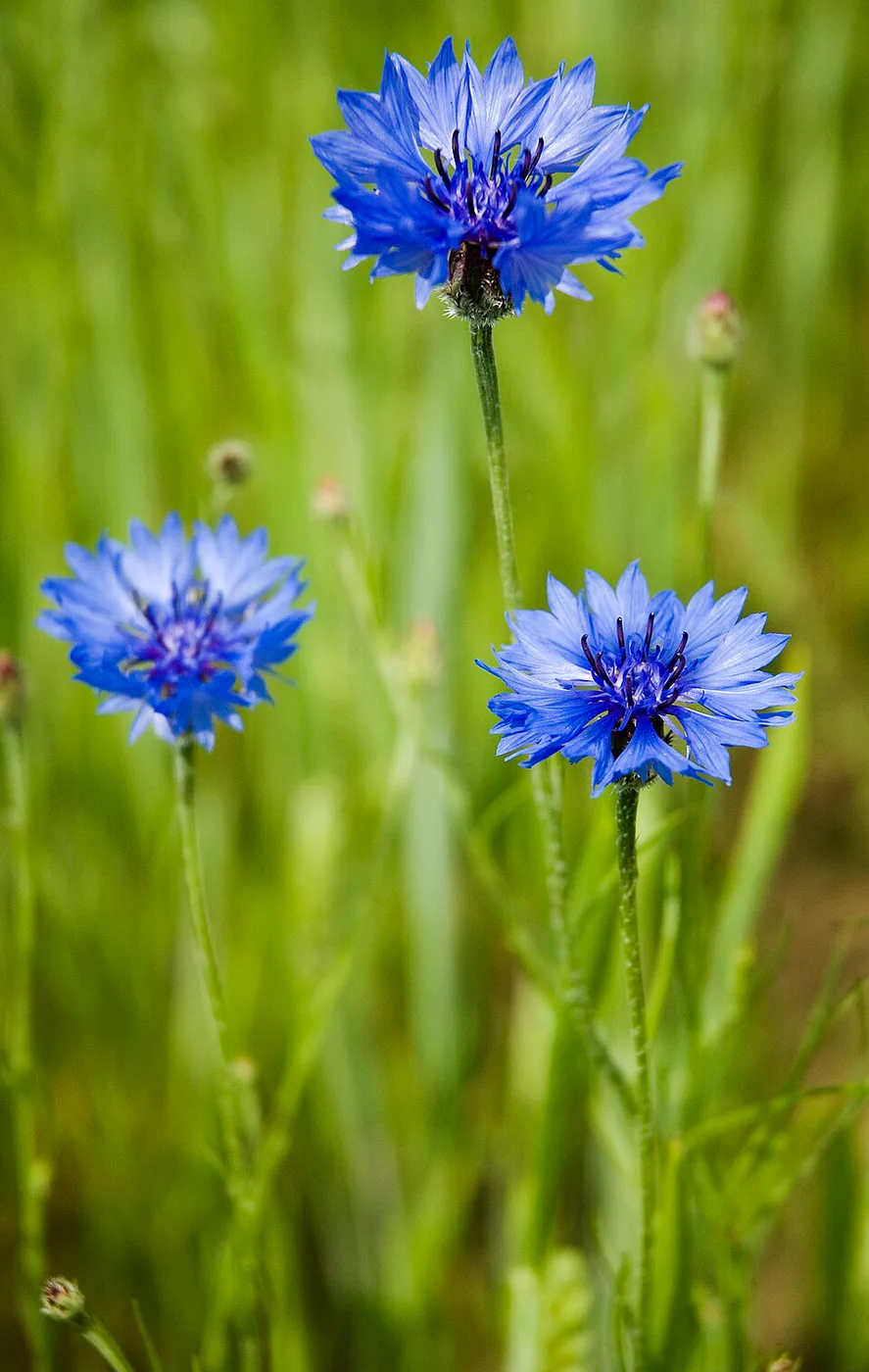
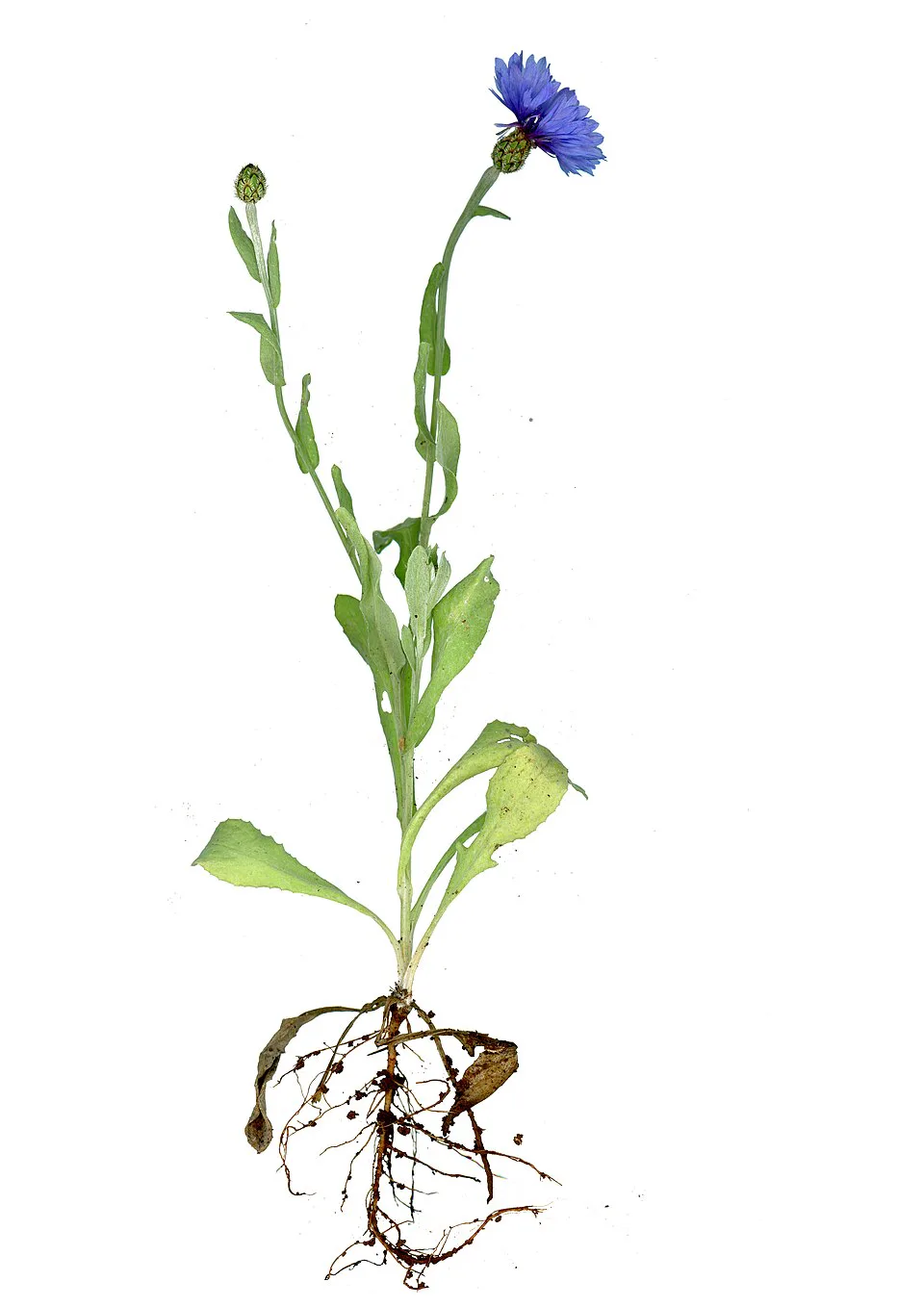
- A slender, upright annual usually growing 30–80 cm tall, sometimes taller in good conditions.
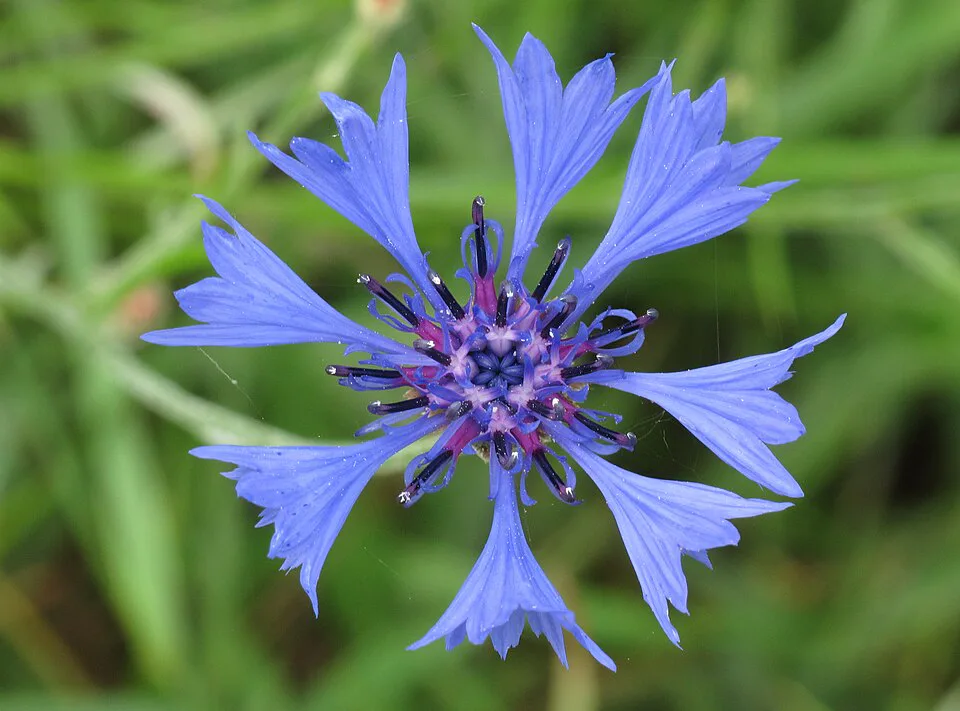
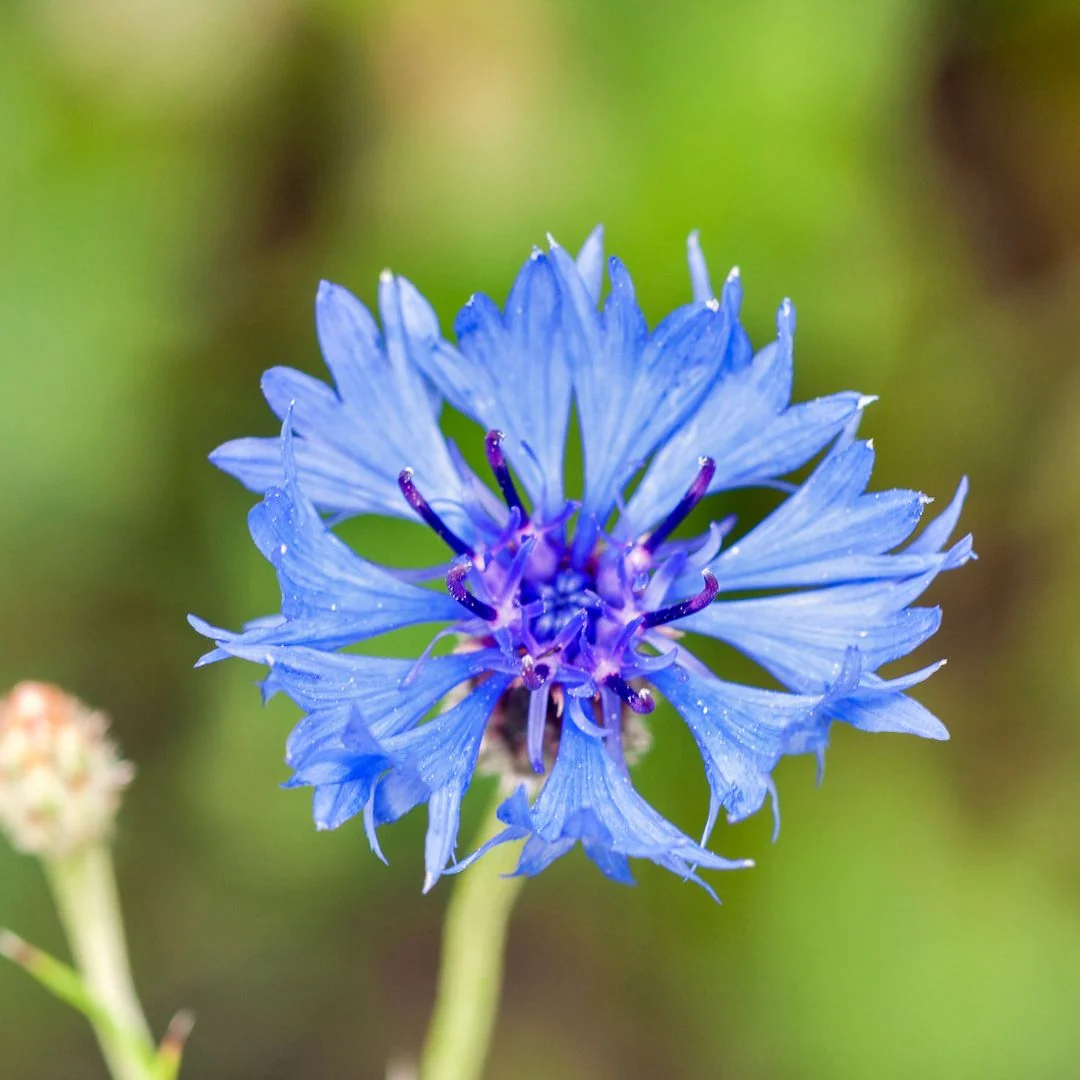
- Flower heads typically 3–4 cm across, with conspicuous, bright blue outer florets arranged like the points of a star.
- Much smaller, tubular, often deeper violet-blue florets form the centre of each head.
- Narrow, grey-green leaves, often with a slightly woolly or softly hairy surface, arranged alternately along the stems.
- Upright, branching stems, sometimes with a fine covering of pale hairs.
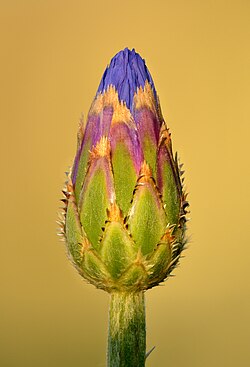
- Narrow, overlapping bracts forming the cup beneath the florets; the bract tips have dark, finely fringed margins.
The intense blue heads, slim foliage and dark-fringed bracts are a particularly useful combination for identification.
Flower structure
A Cornflower head is a capitulum: many tiny individual florets clustered on a shared base, rather than one flower with a ring of petals. It is a lovely example of the variety within the daisy family.
Around the outside sit the enlarged, funnel-shaped blue florets, each opening into several pointed or deeply lobed tips. These showy outer florets are normally sterile, serving mainly to attract pollinating insects. They resemble petals from a distance, but each is actually a whole modified flower.
The central disc florets are smaller, tubular and fertile, producing pollen and eventually seeds. Their dark blue or purplish colour makes the middle of the head appear deeper than the bright outer ring.
Underneath sits an involucre of overlapping bracts, often with brownish-black, comb-like fringes. Turn a flower head sideways and these patterned bracts become much easier to see.
Leaves and stems
Cornflower leaves are much less conspicuous than its flower heads. They are narrow, green to grey-green, and may have a soft, pale covering of hairs. The lower leaves are generally broader and may be slightly lobed, while those higher up the stem are narrow and usually unlobed.
The leaves alternate along branching, upright stems. Looking at the foliage helps separate Cornflower from plants with similarly coloured flowers but broader or more divided leaves.
Fruits and seeds
After flowering, the fertile central florets develop into small dry, one-seeded fruits called achenes. Each carries a short fringe of stiff bristles called a pappus. The fruits mature within the drying flower head and are released as it breaks apart.
Like other annual cornfield plants, Cornflower relies on its seeds to return the following year. Disturbance of the soil helps create the open conditions in which seedlings can establish.
Habitat and distribution
Cornflower was once a well-known companion of cereal crops in Britain, growing in lightly worked fields and along arable margins. Changes in farming, including cleaner seed, more effective weed control and more intensive field management, caused a steep decline in wild populations.
Today it is more commonly seen in deliberately sown wildflower strips, gardens, disturbed ground, roadside verges and occasional arable fields. A colourful patch beside a road or in a meadow mixture may therefore be planted rather than the remnant of an old wild population.
Cornflower is an ancient arable introduction to Britain rather than a typical native grassland perennial. Its long association with traditional cornfields nevertheless makes it one of the most evocative flowers of the British agricultural landscape.
Flowering period
Cornflower normally flowers from June to August, although plants in gardens and sown mixtures can bloom for longer. Autumn-germinating seedlings may survive winter and produce flowers the following summer.
The nectar and pollen of its central florets attract bees, butterflies, hoverflies and other flower-visiting insects.
Similar species
- Common Knapweed (Centaurea nigra) is a relative, but has rounded purple heads and conspicuously dark, fringed bracts. It is usually a perennial of grassland rather than a cornfield annual.
- Greater Knapweed (Centaurea scabiosa) also has enlarged outer florets, but its flowers are normally purple-pink and its leaves are much more deeply divided.
- Garden Cornflowers are often pink, white, maroon or double-flowered cultivars of the same species. Those colours do not necessarily indicate a different species.
Where the names come from
The name Cornflower reflects the plant’s old home among fields of grain. In older British usage, corn meant cereal crops such as wheat, barley and oats rather than maize. Another traditional name, Bluebottle, refers to its vivid blue flower heads.
Centaurea is traditionally connected with the centaur Chiron in Greek legend, who was associated with the healing properties of plants. The species name cyanus comes from Greek kyanos, meaning a deep or dark blue — a particularly fitting name for this flower.
Folklore & history
Cornflower has carried many meanings beyond the cornfield. Under the name Bachelor’s Button, it was traditionally worn as a small flower in a buttonhole, often associated with courtship and affection. Its remarkably clear blue colour also made it a favourite subject for artists and decorative designs.
In France the bleuet became a flower of remembrance for those lost in war, much as the red poppy is used in Britain. The symbol is still known as the Bleuet de France.
Cornflowers are also part of a much older story. Dried blue flowers were found among the floral arrangements associated with the tomb of Tutankhamun, showing how long the plant has been admired for its colour. Its place in cornfields, bouquets and remembrance traditions has given this modest annual a surprisingly rich cultural history.
Wildlife
The showy outer florets act as a visual invitation to insects. Bees and other pollinators visit the fertile central florets for nectar and pollen, helping the plant set seed. In a sown field margin, Cornflower can add colour and a useful summer feeding resource alongside other nectar-rich species.