Groundsel is one of the most familiar little plants of bare and disturbed ground, although it is often overlooked. It can appear in vegetable beds, pavement cracks, field edges and waste ground, producing small yellow flower heads followed by soft, white seed tufts. Unlike most conspicuous daisies, its flower heads have no showy ring of petals. It belongs to the daisy family, Asteraceae.
Identification
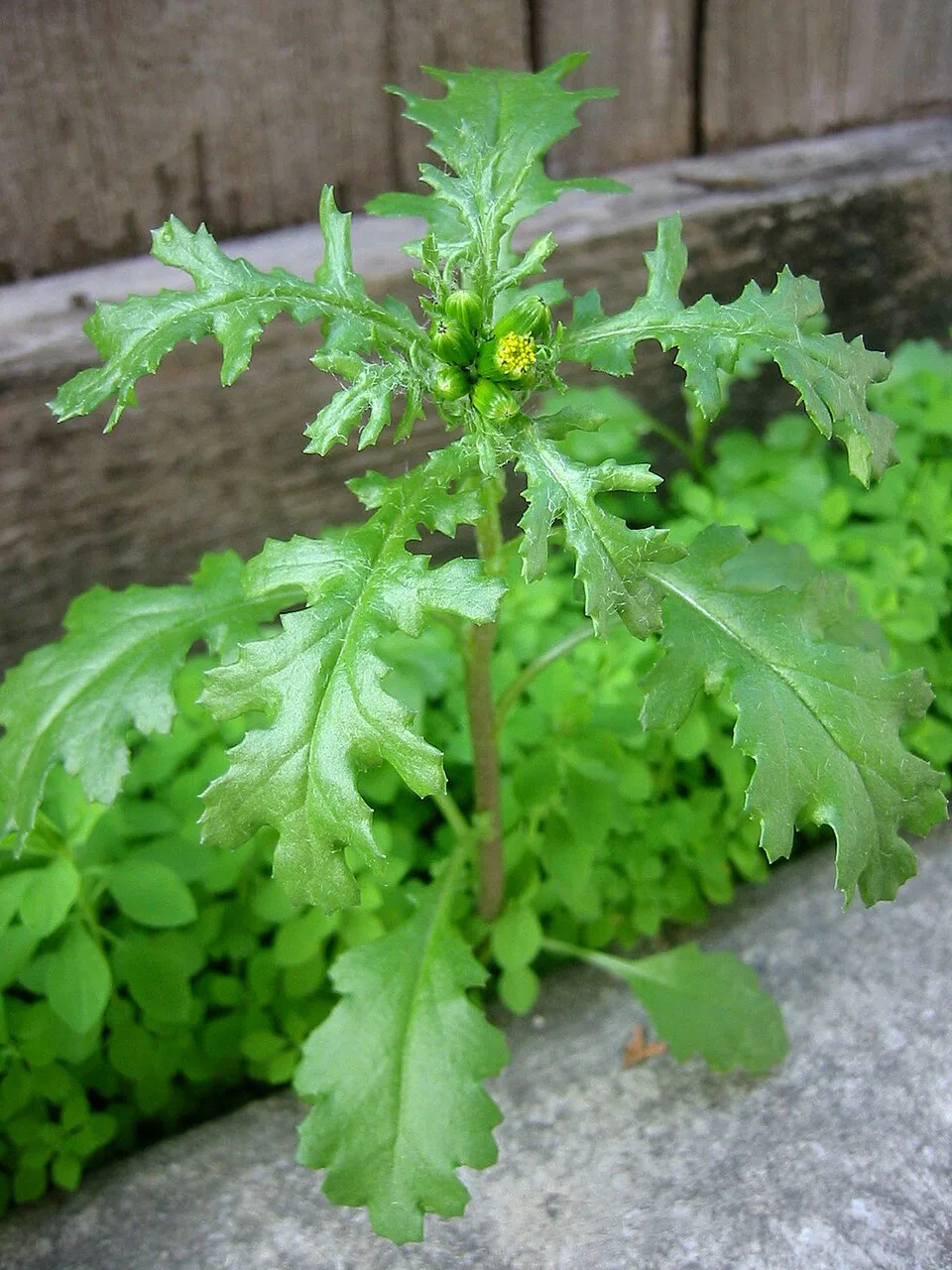
- A small, fast-growing annual, often around 10–40 cm tall, with upright or branching stems.
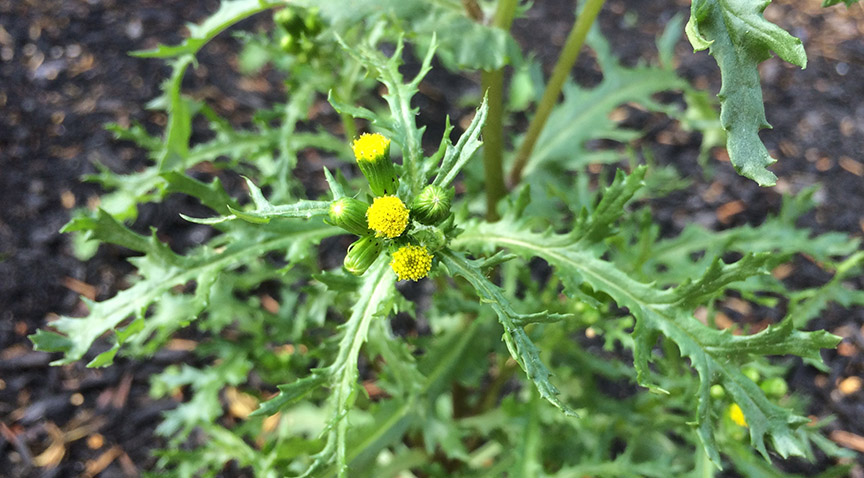
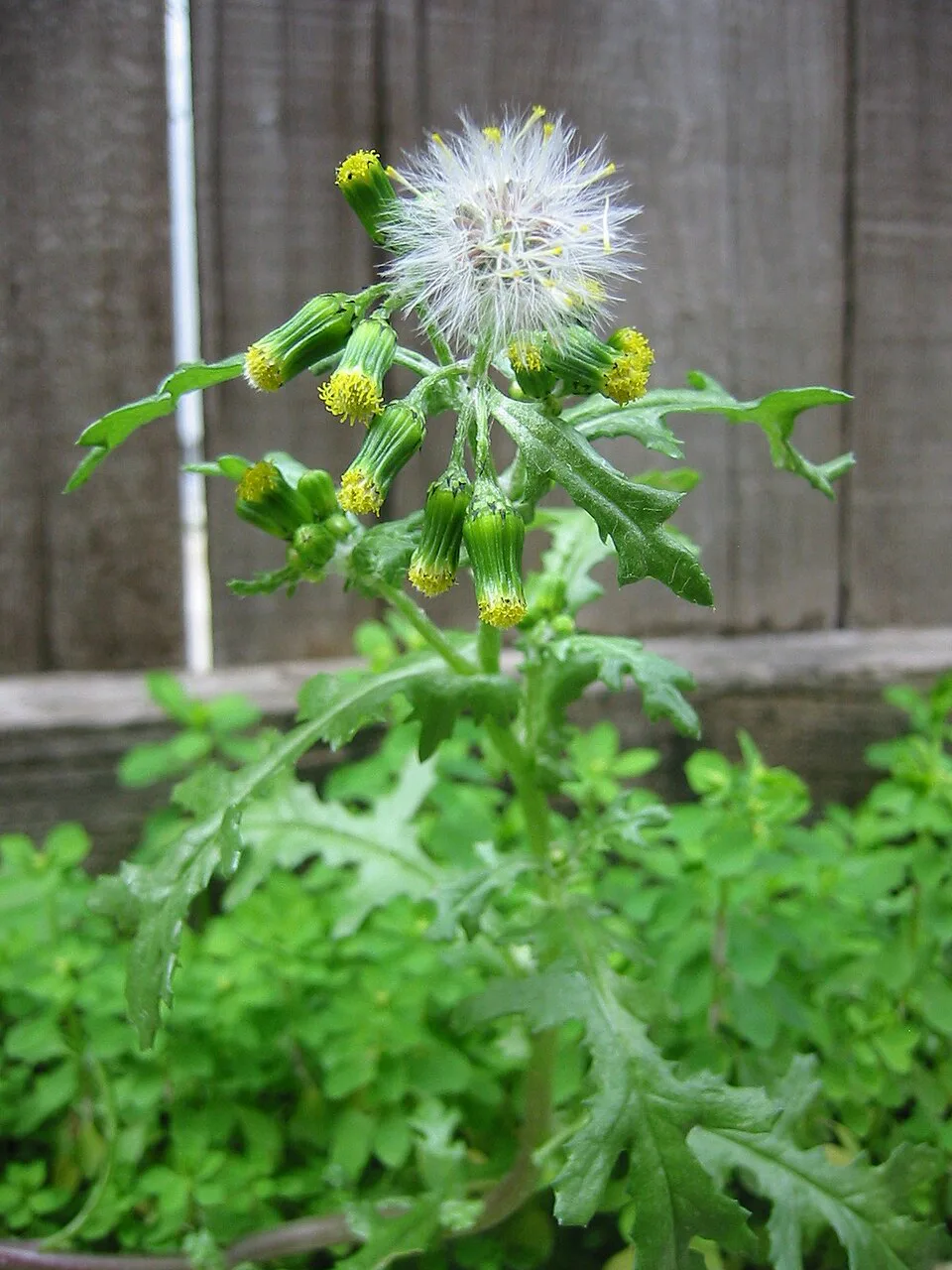
- Narrow, cylindrical yellow flower heads, grouped loosely near the ends of the branches. The yellow florets barely extend beyond the surrounding green bracts.
- No conspicuous outer ray florets, giving the flower heads a rather closed or unfinished appearance.
- Small green bracts around each head, frequently with dark or blackish tips; a shorter outer row is also present.
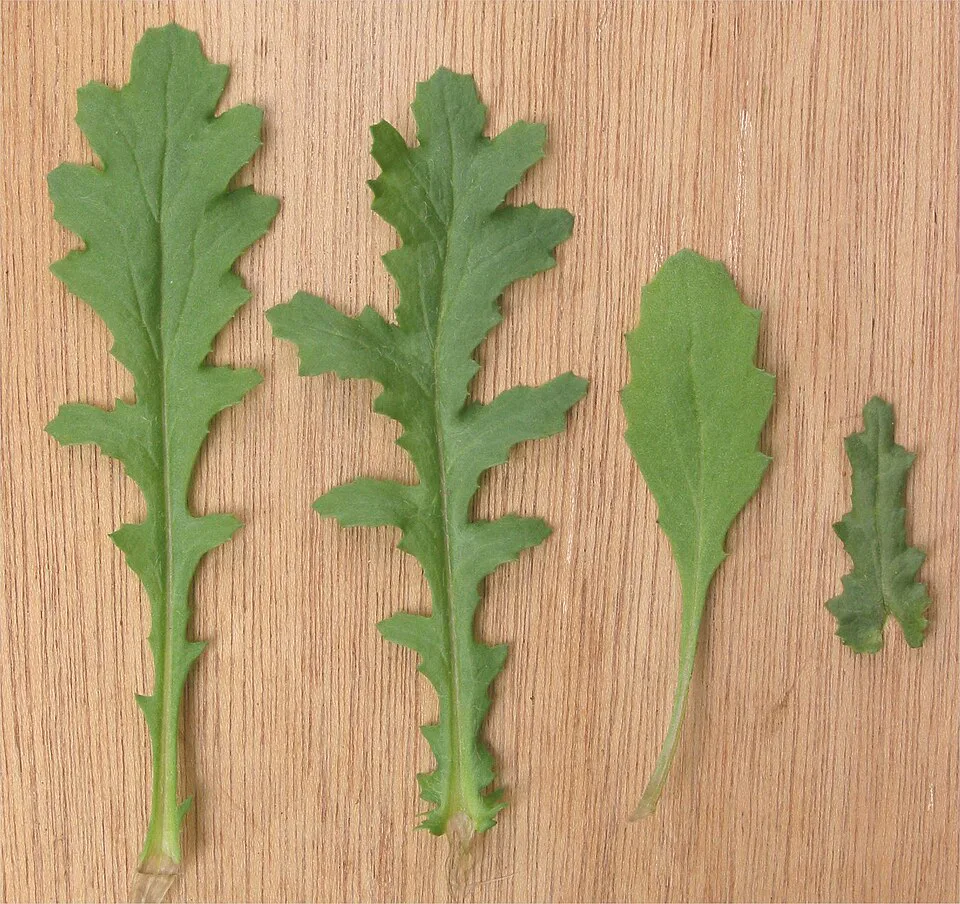
- Green, irregularly lobed and toothed leaves that have a noticeably ragged outline.
- White, fluffy seed heads, resembling miniature dandelion clocks.
The combination of small rayless heads, dark-tipped bracts and deeply lobed foliage is particularly useful for recognising Groundsel.
Flower structure
As in other members of Asteraceae, what looks like one flower is a capitulum: a head of many tiny individual flowers, called florets.
Groundsel’s florets are yellow, tubular disc florets. The ordinary form has no obvious strap-shaped ray florets, unlike an Oxeye Daisy or Common Ragwort. Several slim heads may be carried on the same branched stem.
The florets are enclosed by an involucre of narrow green bracts, often with dark tips. As the heads mature, they open to reveal numerous tiny dry fruits, each attached to a pappus of silky white hairs. These hairs catch the wind and help the fruits disperse.
Leaves and stems
The leaves are alternate along the stem, with deeply cut, uneven lobes and toothed edges. Their shape can vary quite a lot even on the same plant.
Lower leaves usually narrow into a short stalk; upper leaves are generally sessile, meaning they lack a distinct stalk, and may partly clasp the stem. The stems are often soft, hollow and slightly hairy, sometimes tinged reddish-purple.
Habitat
Groundsel favours open, recently disturbed soil. Look for it in gardens, allotments, cultivated fields, roadside edges, construction sites, waste ground and cracks in paving. It is widespread throughout Britain and Ireland.
Because it grows and sets seed rapidly, several generations can appear in one year, particularly in mild conditions.
Flowering period
Groundsel can flower in every month of the year, even during mild winter spells. Flowering is generally more noticeable from spring to autumn.
Its life cycle can be very short: a plant may flower and produce seed only a few weeks after germinating when conditions are favourable.
Similar species
- Common Ragwort (Jacobaea vulgaris): usually a taller plant with larger, open yellow heads and obvious ray florets; its leaf shape can look superficially similar.
- Heath Groundsel (Senecio sylvaticus): another species with small yellow heads, often more leafy and associated with woodland clearings, sandy ground and disturbed heathland.
- Sticky Groundsel (Senecio viscosus): a glandular, noticeably sticky plant with an often unpleasant smell, typically occurring on disturbed ground.
Where the names come from
The common name Groundsel comes from Old English grundeswilige, often interpreted as “ground-swallower”. It is an apt name for a plant that can quickly colonise bare ground and spread across a garden or field.
Senecio comes from Latin senex, meaning “old man”. The white-haired seed heads were likened to an old man’s hair; after the seeds blow away, the remaining head can look rather bald. The species name vulgaris is Latin for “common”, referring to its widespread and familiar occurrence.
Folklore & history
Groundsel was once a useful everyday plant rather than merely a garden weed. Its fresh foliage and seed heads were gathered to feed caged birds, especially finches and canaries. In nineteenth-century London, sellers even carried bunches of Groundsel through the streets for bird-keepers.
Old British herbal traditions also record Groundsel in poultices and lotions, particularly in connection with swellings and bruises. These uses belong to its history as a common plant gathered close to home.
Wildlife
Groundsel’s seeds are eaten by small birds, and its leaves are used by some moth caterpillars. Although its flower heads are much less showy than those of many daisies, they still contribute to the range of flowering plants found in gardens, field margins and disturbed habitats.
Its wind-borne fruits help it reach newly exposed soil, often allowing it to establish before larger plants take over.