Common Ivy is a native, evergreen woody climber, familiar on tree trunks, walls and woodland floors throughout Britain. Although it is usually noticed for its glossy, lobed leaves, its late flowers and winter berries make it one of the most valuable plants for wildlife at the end of the year. It belongs to Araliaceae, the ivy family.
Identification
- A vigorous, woody perennial, trailing over the ground or climbing trees, fences and walls using small clinging roots.
- Glossy, leathery, dark-green leaves, commonly marked with paler veins, remaining on the plant throughout winter.
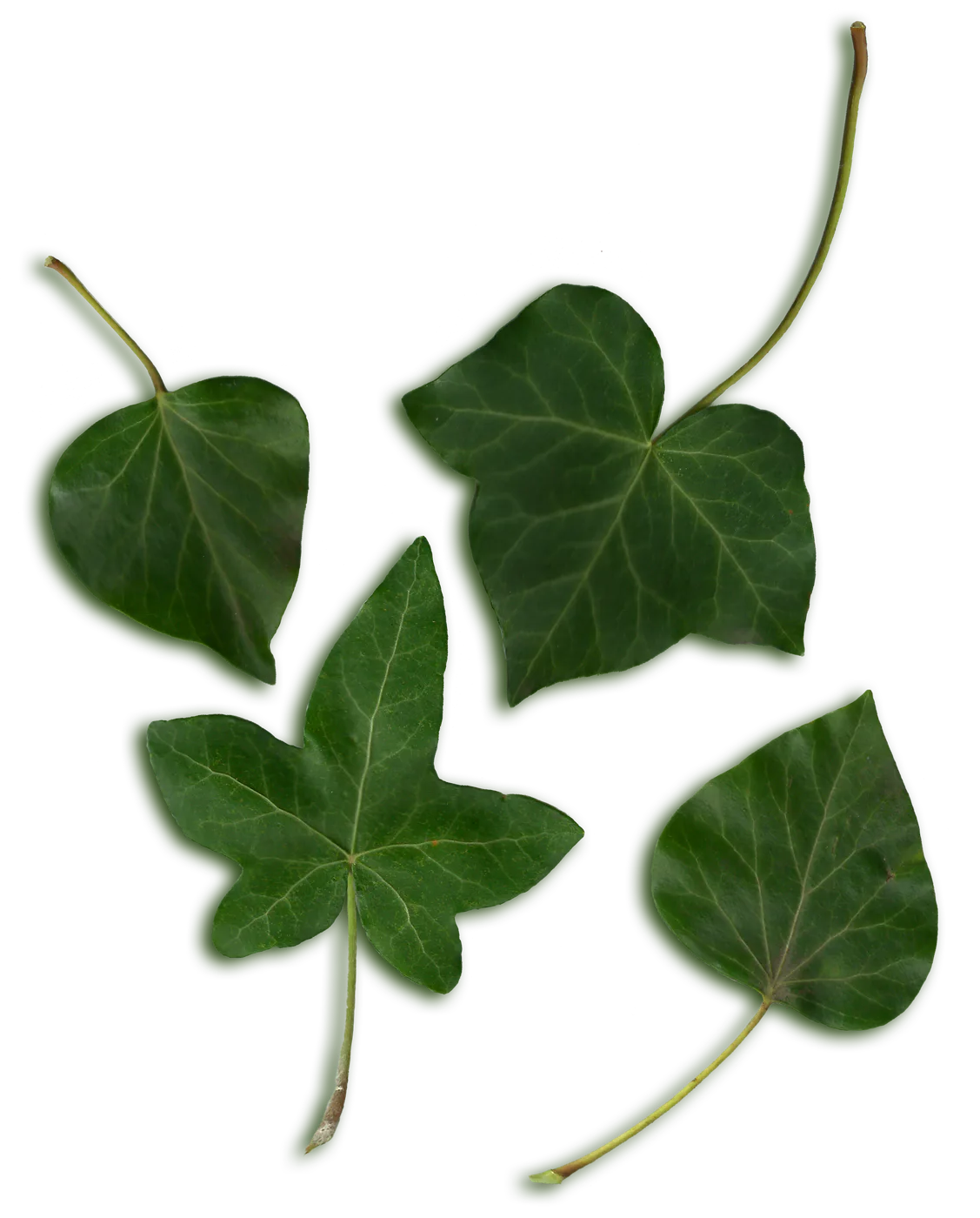
- Leaves on young, non-flowering climbing shoots usually have three to five pointed lobes.
- Leaves on older flowering shoots are often unlobed, oval or diamond-shaped, with pointed tips.
- Rounded clusters of small greenish-yellow flowers in autumn, visited by many insects.
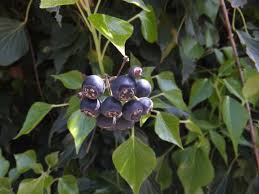
- Spherical berries, first green and later dark blue-black, ripening through winter and into spring.
The two quite different leaf shapes can make Ivy look like two separate plants. Follow a shoot upwards and you may find both forms on the same mature specimen.
Flower structure
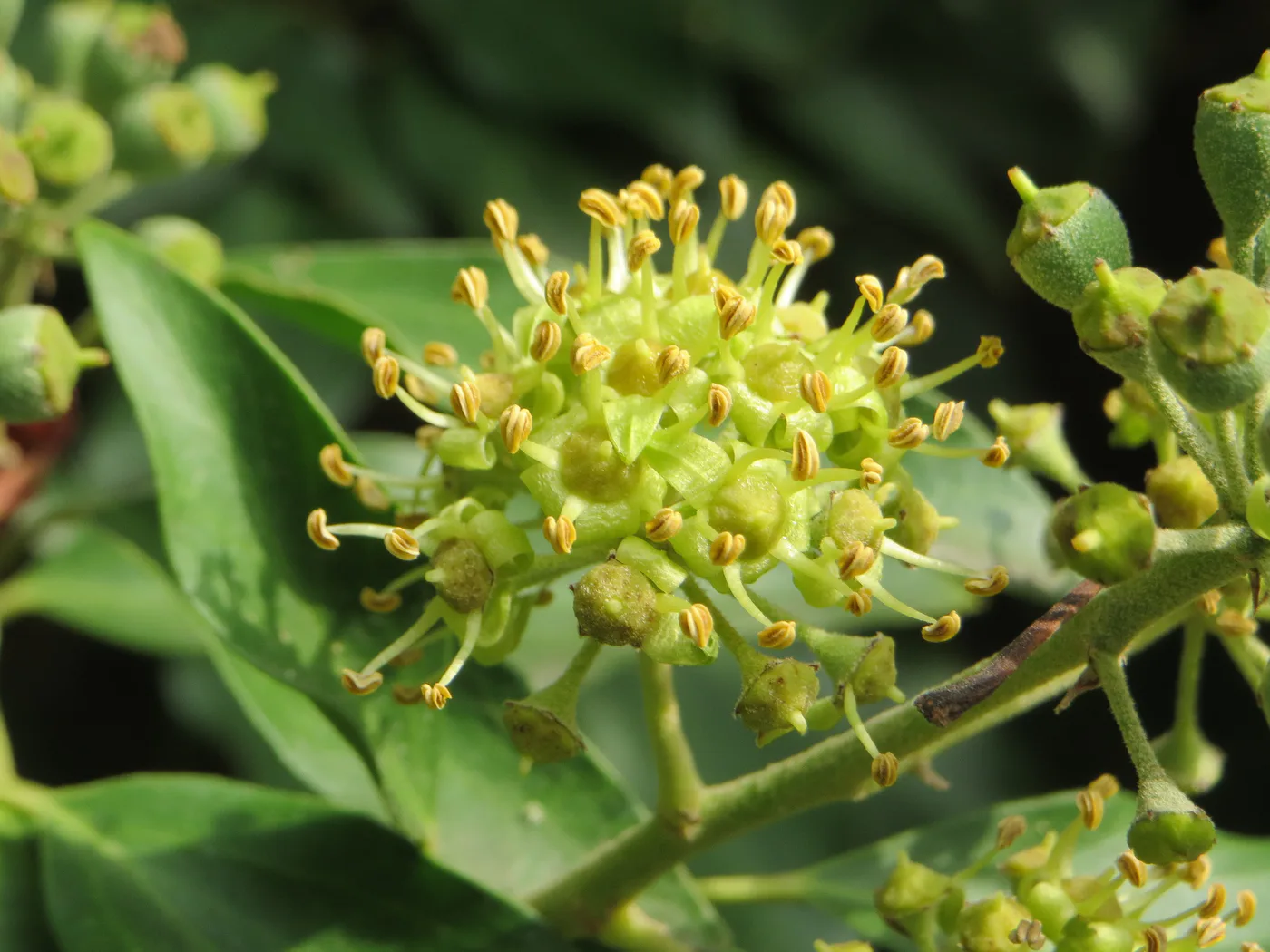
Ivy flowers appear in autumn, when many other wildflowers have finished. They are grouped into rounded umbels, in which several flower stalks radiate from approximately the same point. These clusters arise on mature, usually more bushy, flowering shoots.
Each small flower typically has five yellow-green petals, five stamens with conspicuous yellow anthers, and a central pistil. The ovary sits below the other flower parts. The flowers offer plentiful nectar and pollen to autumn-flying insects.
Leaves and stems
Ivy has two distinct growth forms. Young climbing shoots bear the familiar three- to five-lobed leaves, while mature flowering branches often produce broader, unlobed leaves. Both are arranged alternately along the stems. The leaves are firm and glossy above, often with lighter veins.
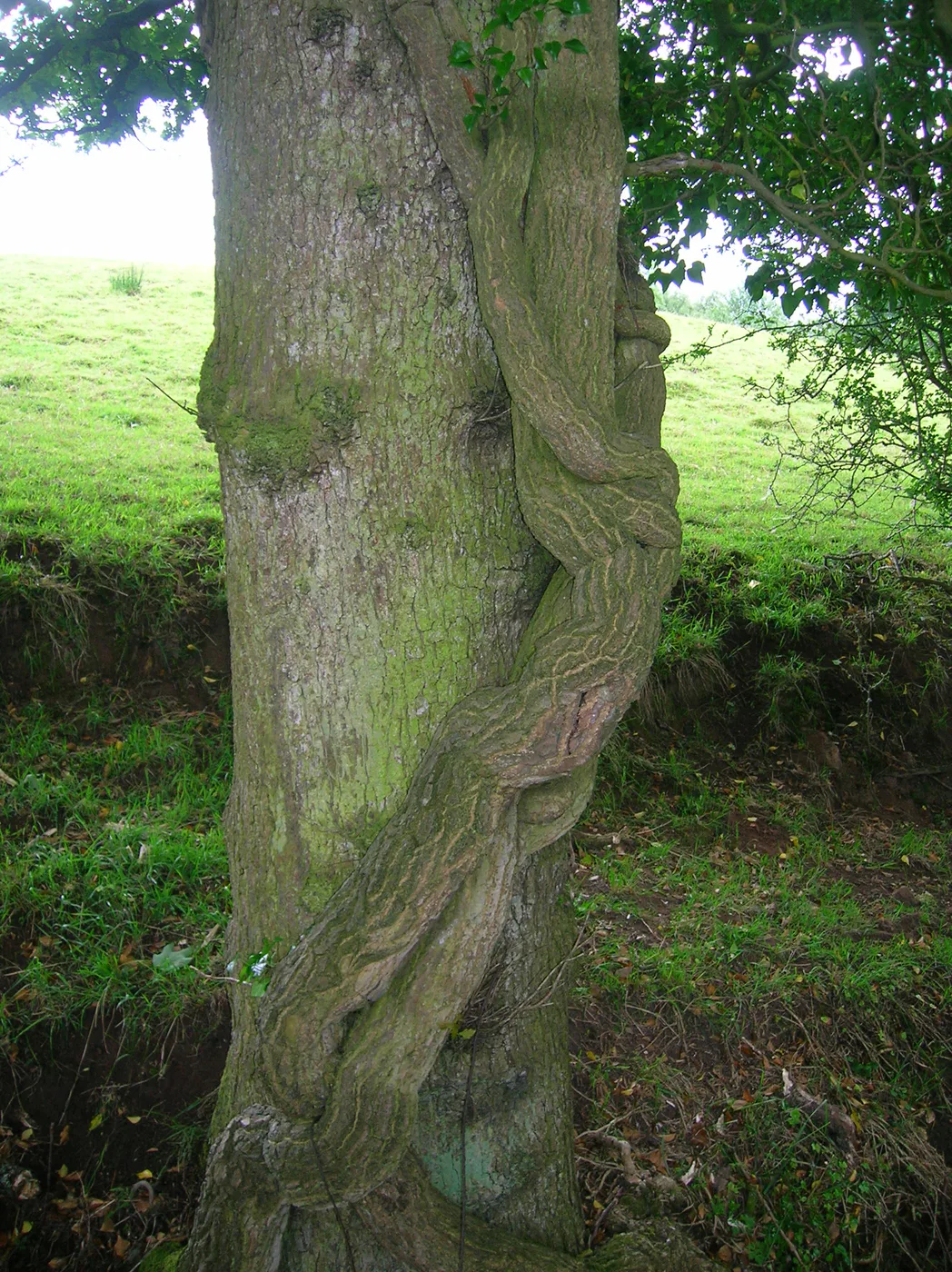
The climbing shoots produce short aerial roots which grip bark, stone or other surfaces. Ivy uses these only for support: it is not a parasite, drawing its water and mineral nutrients from roots in the soil. Older stems can become thick, woody and rather rope-like as they climb.
Fruits and seed dispersal
After pollination, clusters of nearly spherical, berry-like fruits develop. They begin green and gradually turn dark blue-black, usually becoming conspicuous during winter and early spring.
Birds such as Blackbirds, thrushes and Woodpigeons eat the ripe fruits and help disperse the seeds. Because the berries mature when many other food sources have disappeared, they are particularly useful late in the season.
Habitat
Look for Ivy in woodlands, hedgerows, scrub, parks, gardens, on walls and climbing mature trees. It is widespread throughout Britain and grows in both shade and sunlight, although flowering is usually strongest where mature shoots reach the light.
On woodland floors it can spread as a dense green carpet. When support is available, its shoots climb upwards, often flowering only after the plant has established itself for several years.
Flowering period
Common Ivy normally flowers from September to November. Its flowering season is unusually late for a native plant, making it a conspicuous source of nectar on mild autumn days. Although the leaves are present all year, the flowering period should not be confused with the plant’s year-round visibility.
Similar species
- Atlantic Ivy (Hedera hibernica) is another native ivy, particularly frequent in western Britain and Ireland. It often has broader, less deeply divided leaves, but the two species overlap in appearance and leaf shape alone is not always reliable for identification.
- Boston Ivy (Parthenocissus tricuspidata) may cover walls in a similar way, but it is not a true ivy. Its leaves are deciduous and often become bright red in autumn; it belongs to the grape family rather than Araliaceae.
- Ivy-leaved Toadflax (Cymbalaria muralis) has small ivy-shaped leaves, but is a delicate herb rather than a woody climber, and has purple flowers with a conspicuous spur.
Where the names come from
The name Ivy has ancient English roots and is closely associated with its clinging, climbing habit. Hedera is the classical Latin name for ivy, while helix comes from Greek for a spiral or winding shape, reflecting the plant’s habit of twisting and climbing.
Folklore & history
Ivy has long been associated with endurance and fidelity because it remains green through winter and clings firmly to its support. In ancient Greece and Rome it was linked with Dionysus or Bacchus, and ivy wreaths were worn at festivities and associated with poetry and celebration.
In British tradition, Ivy and Holly were brought indoors during winter as symbols of continuing life. Wreaths and evergreen sprays decorated houses at Christmas, while older folklore credited ivy with keeping unwanted spirits away. Its leaves also appeared in historical herbal remedies.
Wildlife
Ivy is one of the most important late-flowering plants for insects in Britain. Its autumn umbels attract Ivy Bees, hoverflies, wasps, honeybees, butterflies and other nectar-feeders when few other flowers remain.
The thick evergreen growth provides shelter, nesting cover and winter roosts for birds and small animals. Its berries feed Blackbirds, thrushes and other birds during the colder months. The foliage also supports insects and moth caterpillars, including those of the Holly Blue butterfly.