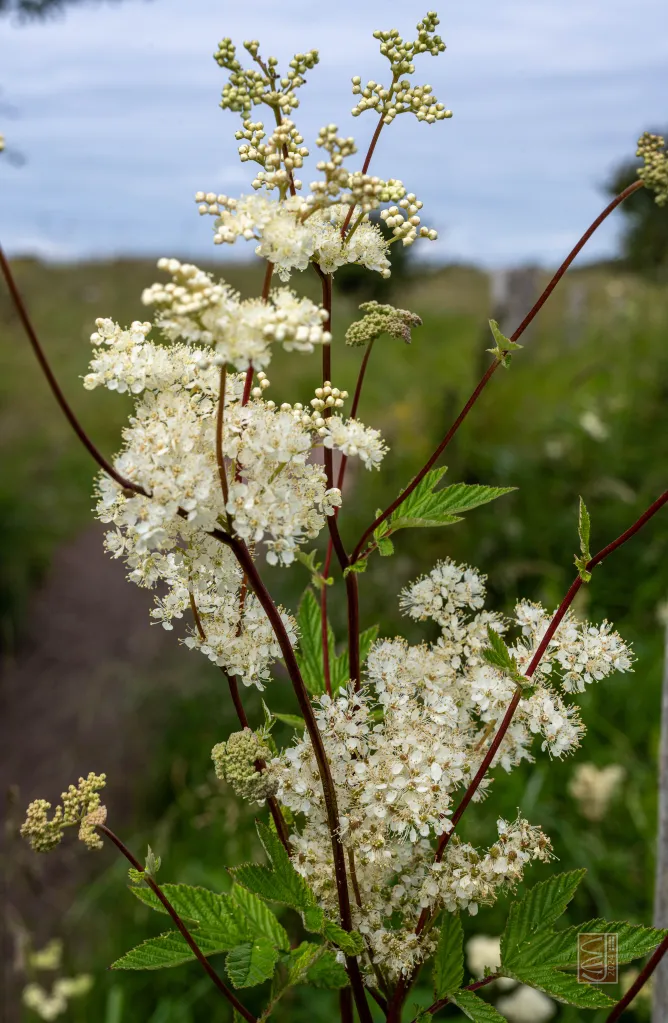
Meadowsweet is a fragrant native perennial of damp meadows, ditches, riverbanks and wet woodland. In summer its tall stems carry creamy-white flower clusters that look almost like froth above the surrounding vegetation. The sweet scent is often noticeable before the individual flowers are seen. Meadowsweet belongs to Rosaceae, the rose family.
Identification
- An upright perennial, usually around 60–120 cm tall, with strong leafy stems that may be tinged reddish.
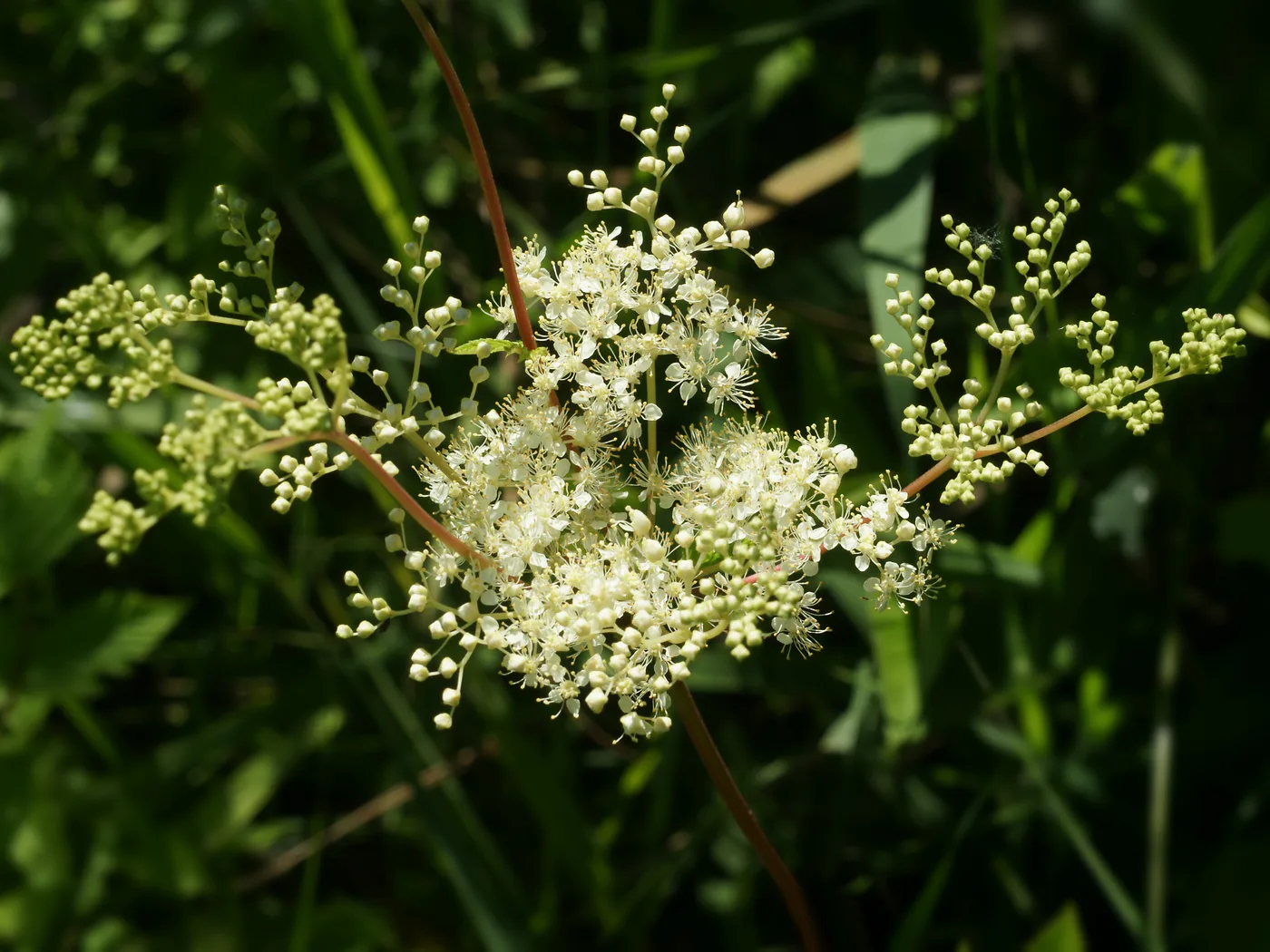
- Large, rather irregular clusters of many tiny cream or white flowers, giving a soft, foamy appearance.
- A distinctly sweet, honey-like or almond-like scent when the flowers are in bloom.
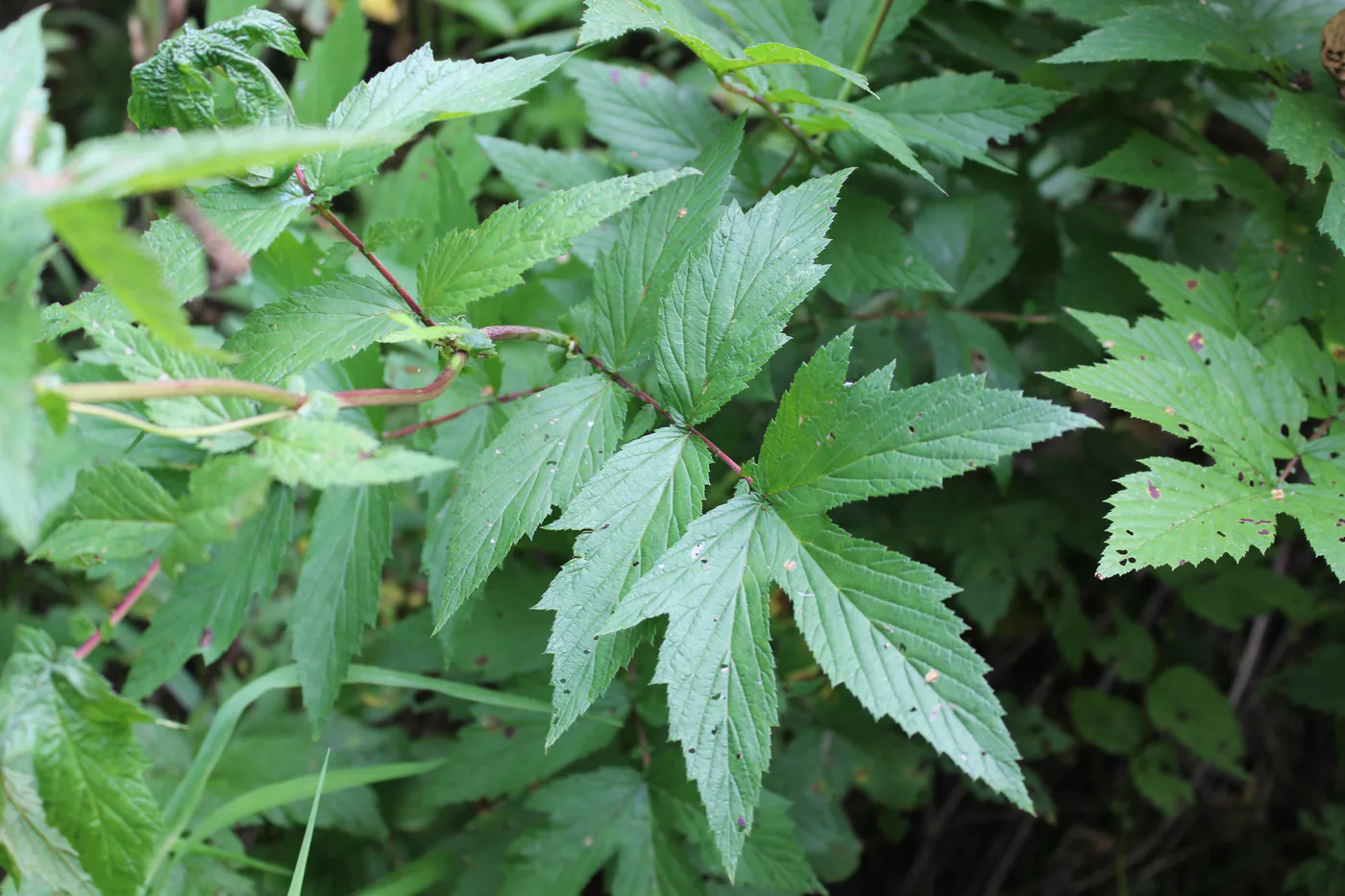
- Leaves arranged alternately along the stem, divided into pairs of toothed leaflets with smaller leaflets in between.
- The largest leaflet is usually at the end of the leaf and often has three lobes; the undersides of the leaves are noticeably pale or silvery.
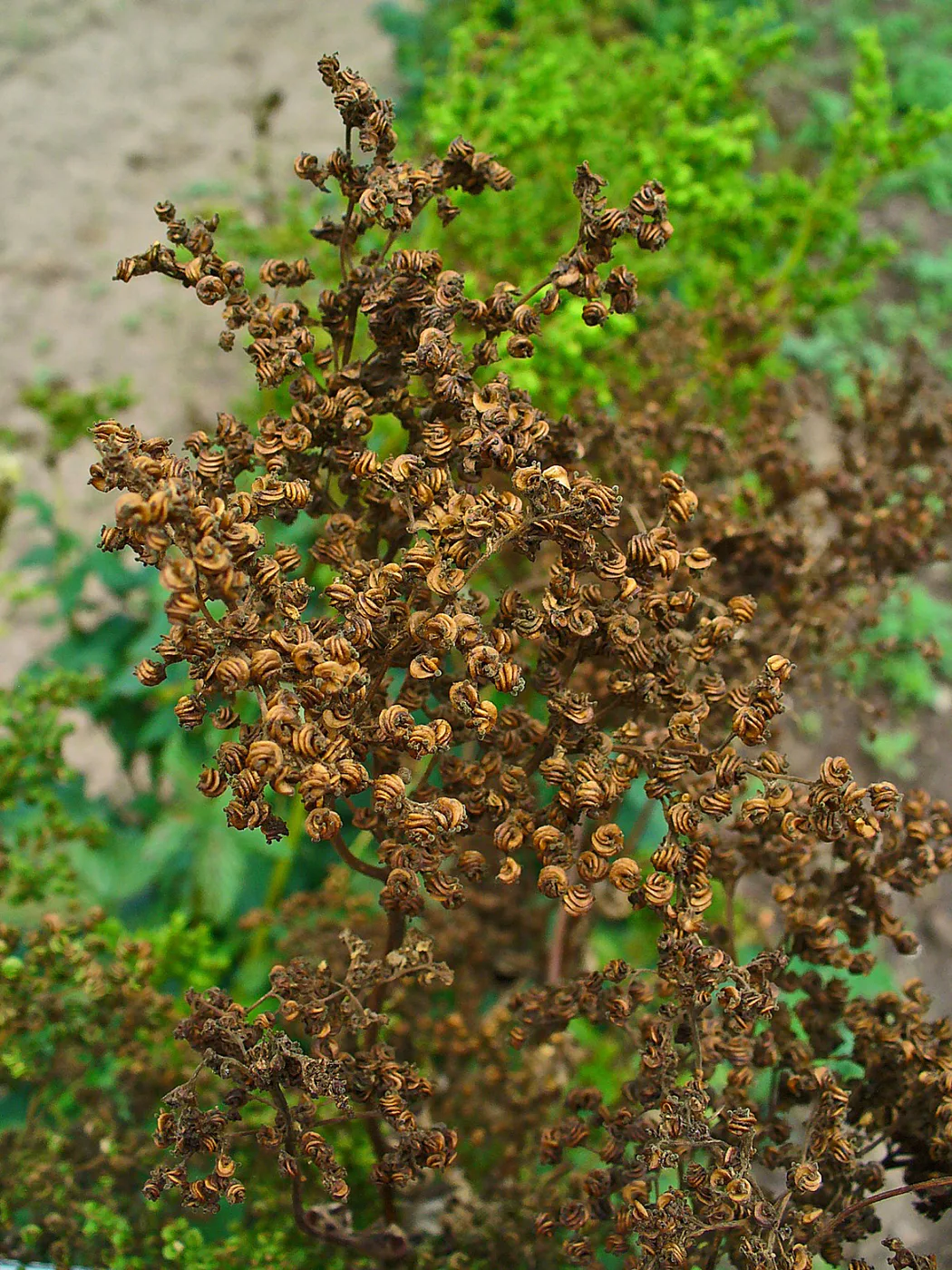
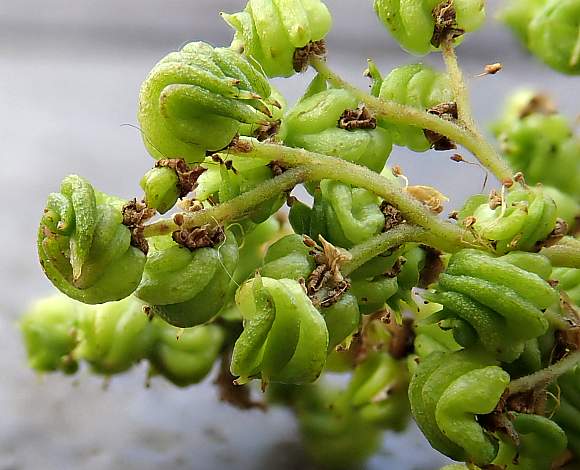
- After flowering, clusters of little tightly twisted, spiral-shaped fruits develop.
- Usually found where the ground remains damp, particularly beside water or in wet grassland.
The creamy flower plumes, divided leaves and preference for damp places make Meadowsweet familiar in summer. Later in the season, its spiral fruits are an especially useful identification feature.
Flower structure
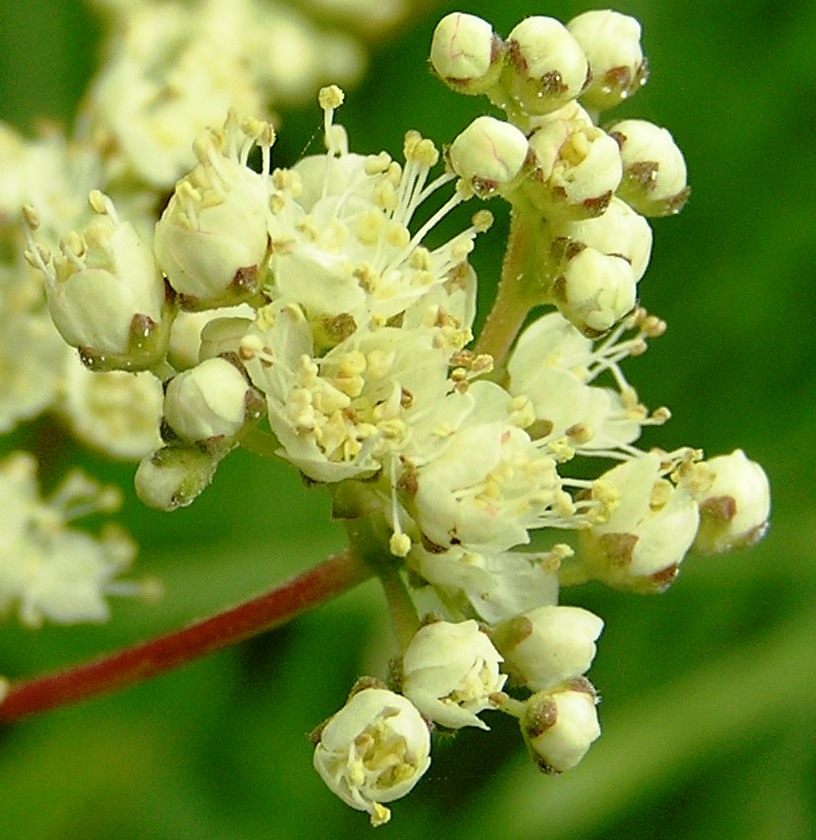
The dense flower heads are made up of many small flowers grouped into branching cymes. Each flower is typically only a few millimetres across and has five, occasionally six, small cream-coloured petals and usually five green sepals.
Numerous stamens project well beyond the petals, creating the fuzzy appearance of the flower clusters. In the centre of each flower are several separate carpels. After pollination, these mature into small, one-seeded fruits that twist around one another, forming the characteristic spiral shapes.
Although the individual flowers are much smaller than those of a garden rose, their numerous stamens and separate carpels are among the features that connect Meadowsweet with other members of the rose family.
Leaves and stems
The leaves are pinnately divided, with usually two to five pairs of large, deeply toothed leaflets and several much smaller leaflets between them. A larger leaflet sits at the tip, often divided into three lobes. The upper surfaces are deep green, while the undersides are paler and can appear silvery. Prominent veins and sharply toothed edges make the leaves distinctive.
Each leaf grows alternately along an upright, sometimes reddish, grooved stem. Leaf-like stipules occur at the base of the leaf stalks. The plant spreads slowly through a perennial underground rhizome, often forming sizeable clumps in suitable ground.
Habitat
Meadowsweet is widespread across Britain wherever the soil stays moist for much of the year. Look for it along streams and rivers, beside ditches, at the edges of ponds, in marshy fields and in damp woodland clearings. It can form large stands in wet meadows or alongside tall grasses and other waterside plants.
It grows in sun or partial shade, usually on moisture-retentive ground. Its preference for wetter habitats is helpful when distinguishing it from some related species.
Flowering period
Meadowsweet generally flowers from June to September. The flower heads open in succession, so a single plant may have buds and open flowers at the same time. After flowering, the developing green fruits gradually turn brown and can remain visible into autumn.
Similar species
- Dropwort (Filipendula vulgaris) is a close relative with similar creamy-white flower clusters. It is more often found on dry chalky or limestone grassland, has finer, more fern-like leaves, and produces fruits that are not tightly spiralled like those of Meadowsweet.
- Hemp-agrimony (Eupatorium cannabinum) also forms tall, soft-looking flower clusters in damp ground, but its flower heads are pinkish-mauve and its leaves are differently divided. It belongs to the daisy family.
- Common Valerian (Valeriana officinalis) may have pale, branching flower clusters and also grows near water, but its flowers are pinkish-white and its leaves consist of many narrower leaflets.
Where the names come from
The common name is often linked to the plant’s traditional use for flavouring mead, although it also describes its sweetly scented flowers and its presence in meadows. Other names include Queen of the Meadow, Meadwort and Bridewort.
The species name ulmaria refers to the resemblance of its toothed leaflets to the leaves of an elm (Ulmus). The genus name Filipendula comes from Latin words meaning ‘thread’ and ‘hanging’, originally referring to the root tubers of related species.
Folklore & history
Meadowsweet was valued for its fragrance and was one of the herbs scattered over floors in houses and halls to scent rooms. It was particularly associated with summer celebrations and weddings, which may help explain the old name Bridewort. Tradition records that Elizabeth I favoured the plant for strewing in her chambers.
Its flower heads were used to flavour mead, ale and other drinks, and sometimes preserves. Herbalists also employed the plant in preparations for fever, aches and digestive complaints. Meadowsweet contains salicylate compounds, and its former scientific name, Spiraea ulmaria, is connected to the origin of the name aspirin, introduced towards the end of the nineteenth century.
Wildlife
The flowers attract a variety of insects, including bees, hoverflies and beetles, which visit for pollen and nectar. Meadowsweet is also a food plant for the caterpillars of several moths.
Its dense growth helps give structure and shelter to damp meadow and riverside vegetation. Leaving the seed-bearing stems standing allows the twisted fruits to mature and adds interest to the margins of ponds and streams into autumn.