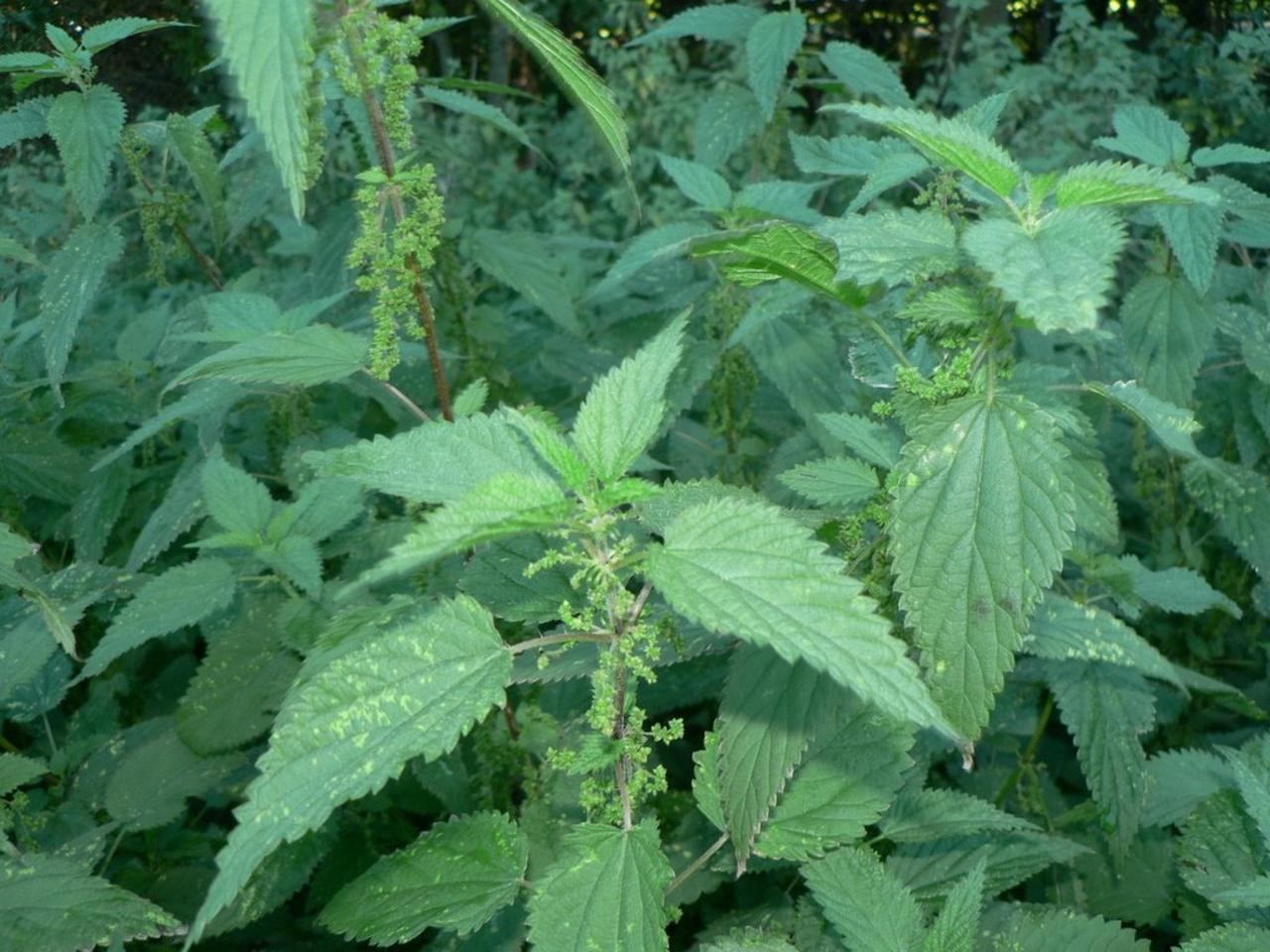
Stinging Nettle is one of the UK’s most familiar native plants, recognised by its pointed, toothed leaves and the sting produced by fine hairs on its stems and foliage. It grows vigorously in hedgerows, woodland edges, gardens and other places with fertile soil, often forming large patches. It belongs to Urticaceae, the nettle family, rather than the mint family to which dead-nettles belong.
Identification
- An upright, often densely growing perennial, usually 50–150 cm tall, sometimes taller in favourable conditions.
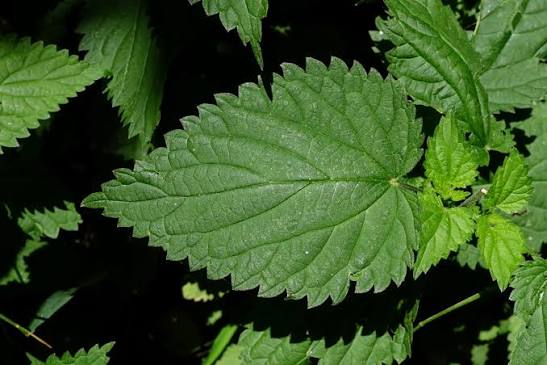
- Leaves grow in opposite pairs, with a pointed tip, a heart-shaped to rounded base and a coarsely serrate margin.
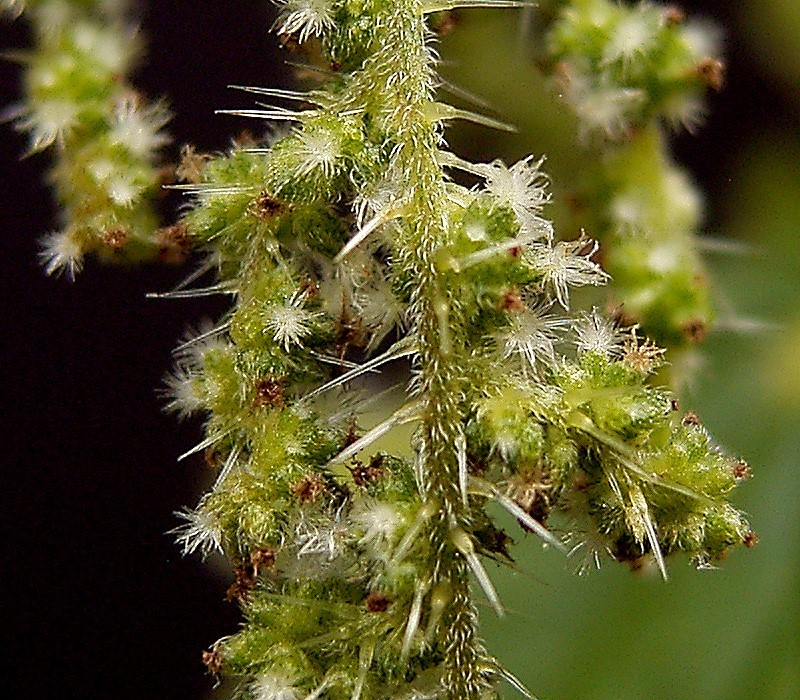
- Stems and leaves carry ordinary hairs as well as longer, brittle stinging hairs.
- The stem is usually four-angled and may be green or reddish.
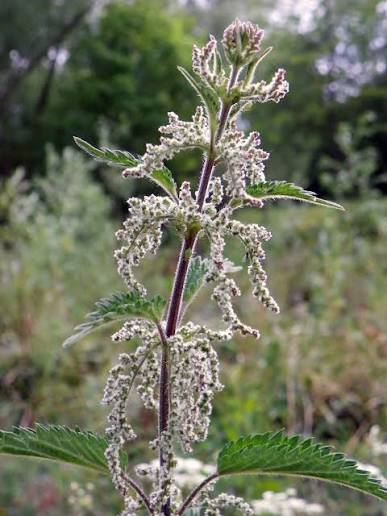
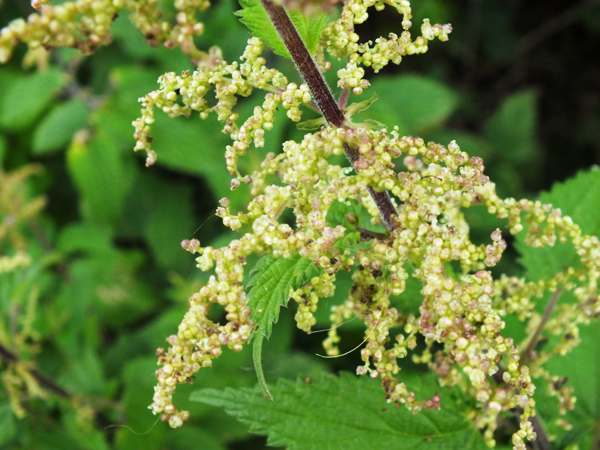
- Tiny greenish to cream-coloured flowers form branching, often drooping clusters from the upper leaf joints.
- Spreading underground stems allow established plants to form extensive patches.
Flower structure
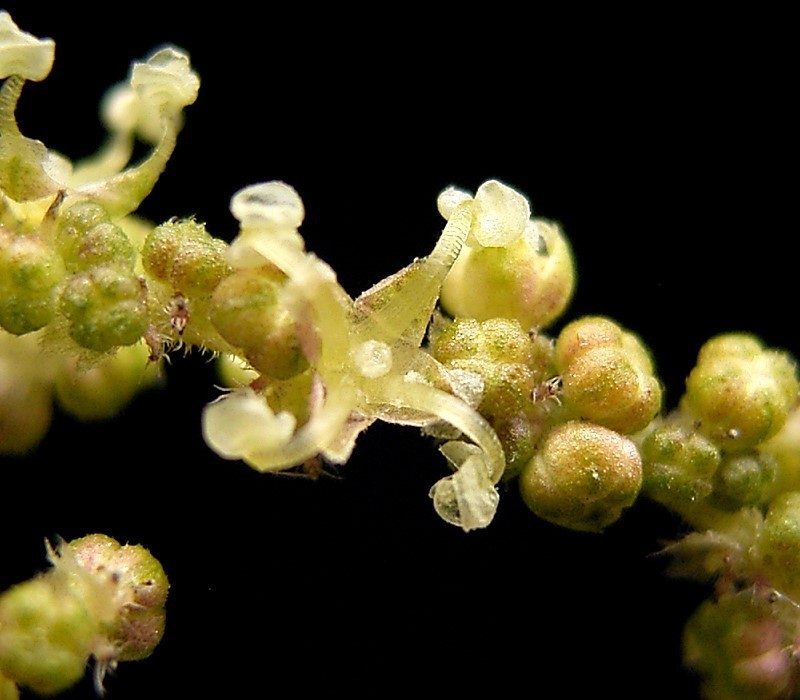
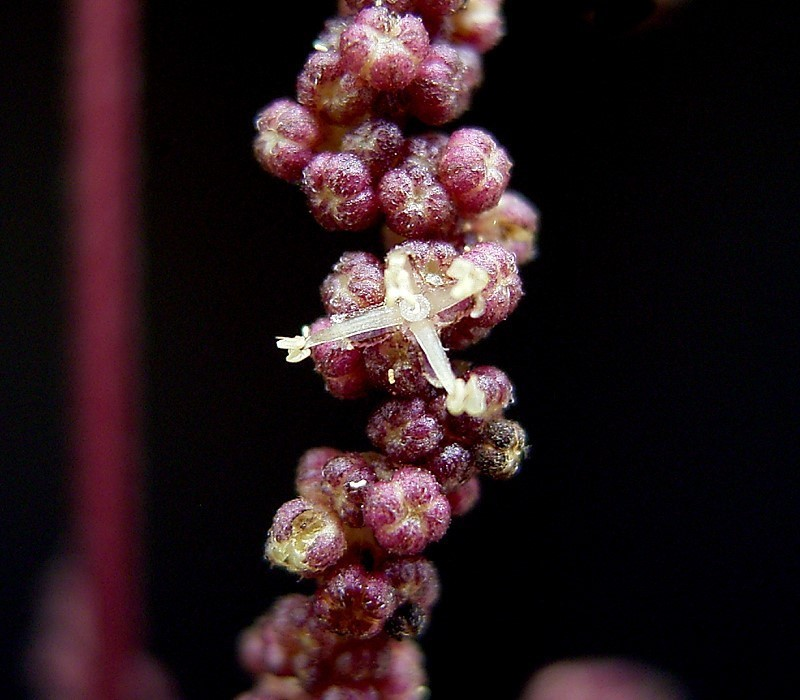
The flowers are easily overlooked because they lack brightly coloured petals. They are produced in loose, branching clusters that emerge where the leaf stalk joins the stem. Each tiny flower has a simple greenish perianth, usually consisting of four small segments.
Stinging Nettle is usually dioecious: male and female flowers occur on separate plants. Male flowers have four stamens, which spring outwards as they open and release pollen into the air. Female flowers contain the ovary and a small, brush-like stigma that catches wind-borne pollen. The plant relies mainly on wind rather than insects for pollination.
Leaves and stems
The leaves are dark green, slightly heart-shaped to oval, with long pointed tips and conspicuous veins. They occur in opposite pairs along the stem. Each leaf has sharp, saw-like teeth, and the terminal tooth may be noticeably longer than those beside it.
The sting comes from specialised, hollow hairs with brittle tips. When a hair breaks against skin, it releases irritating substances. The plant also has shorter, non-stinging hairs, so the entire surface may look softly bristly even before the longer hairs are noticed.
Below ground, creeping rhizomes produce new shoots, allowing nettles to return each spring and spread into dense stands.
Fruits and seed dispersal
After pollination, female flowers develop tiny, flattened, one-seeded fruits called achenes. These turn from green to brown as they ripen. Nettles also spread vegetatively through their underground stems, so an established patch need not depend entirely on seed.
Habitat
Stinging Nettle is widespread across the UK, particularly in nitrogen-rich, disturbed or fertile ground. Look for it along hedgerows, around woodland edges, beside rivers and streams, on waste ground and in gardens. It tolerates shade but also grows strongly in open, sunny places.
Large nettle patches often indicate fertile soil, although the plant is by no means restricted to heavily enriched sites.
Flowering period
The small greenish flowers are most often seen from June to September, although some plants begin flowering earlier or continue into autumn. Fresh shoots may be visible much earlier in the year, and old stems can remain standing after the growing season.
Similar species
- Small Nettle (Urtica urens) is a smaller, usually annual true nettle, with shorter flower clusters and more compact leaves. Unlike Stinging Nettle, its male and female flowers usually occur on the same plant.
- White Dead-nettle (Lamium album) has similarly toothed, opposite leaves, but bears obvious white, two-lipped flowers and has no stinging hairs. It belongs to the mint family (Lamiaceae).
- Red Dead-nettle (Lamium purpureum) is much shorter, often has purple-flushed upper leaves and produces pink-purple, two-lipped flowers rather than greenish flower clusters. It does not sting.
Where the names come from
The name Nettle comes from Old English netele, a word with ancient Germanic roots. Urtica is derived from Latin for a nettle and is associated with burning, while dioica refers to the species’ usual separation of male and female flowers onto different plants.
Folklore & history
Nettles have been gathered for centuries as food, fibre and dye plants. Young leaves were traditionally cooked in soups and spring dishes, while fibres from the tough stems were spun and woven into cordage and cloth. Nettle-based dyes were also used to colour fabric.
In British folklore, nettles sometimes featured in protective charms. Their familiar association with dock leaves has also passed through generations: docks and nettles frequently grow near each other, and people have long rubbed dock leaves on nettle stings.
Wildlife
Despite their sting, nettles are exceptionally valuable to wildlife. They are important larval food plants for Peacock, Small Tortoiseshell, Red Admiral and Comma butterflies. Many other insects feed, shelter or breed among the foliage, and aphids on nettles attract ladybirds and their larvae.
The dense growth also provides cover for small animals, while birds may feed on the seeds later in the year.