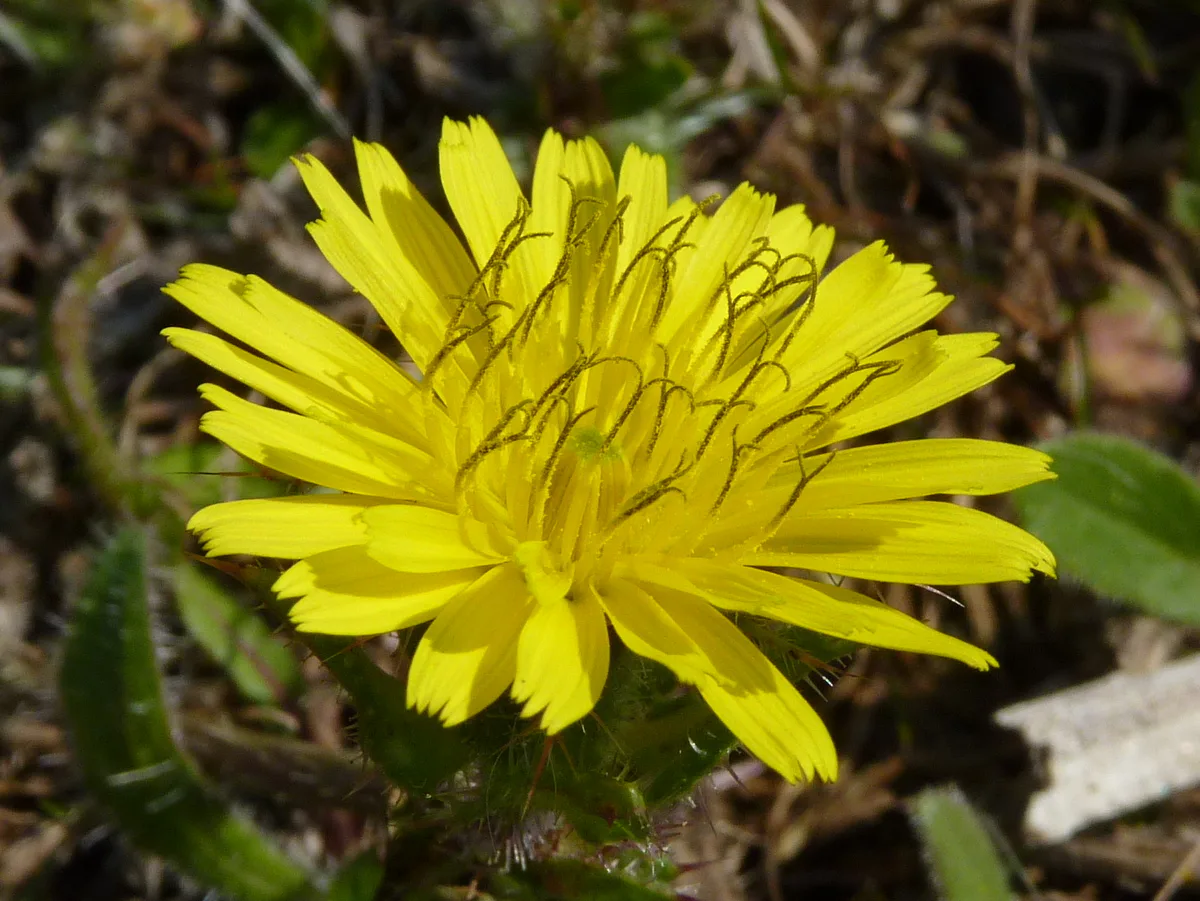
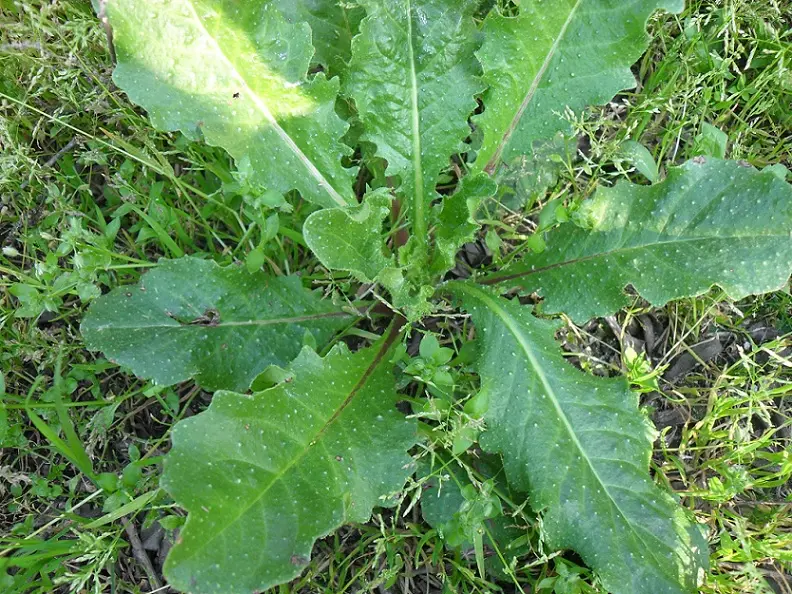
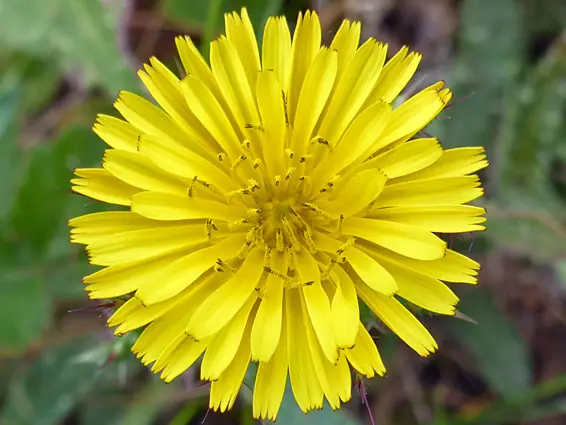
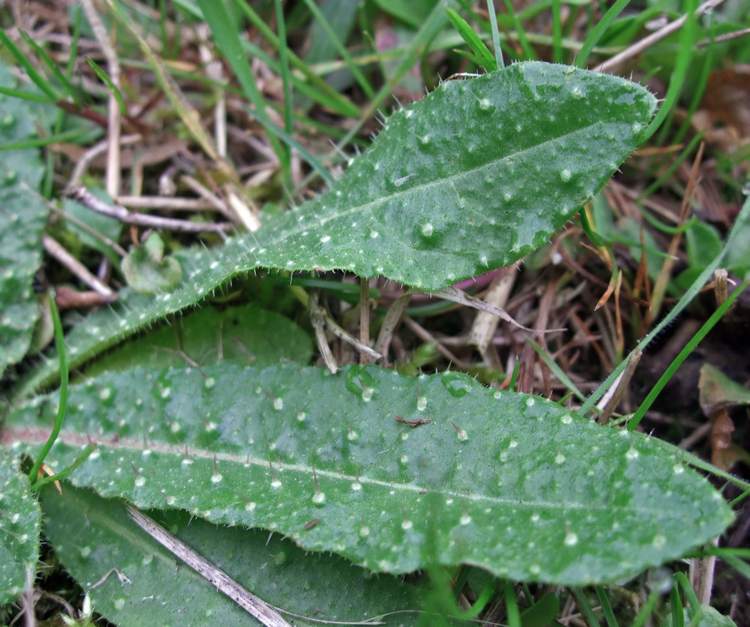
Bristly Ox-tongue is a robust, rough-haired plant with bright yellow, dandelion-like flower heads. It is especially distinctive for its coarse leaves and the unusually large, bristly green bracts beneath each head. It belongs to the daisy family, Asteraceae. Though long established in Britain, it is considered an introduced species, probably arriving many centuries ago.
Identification
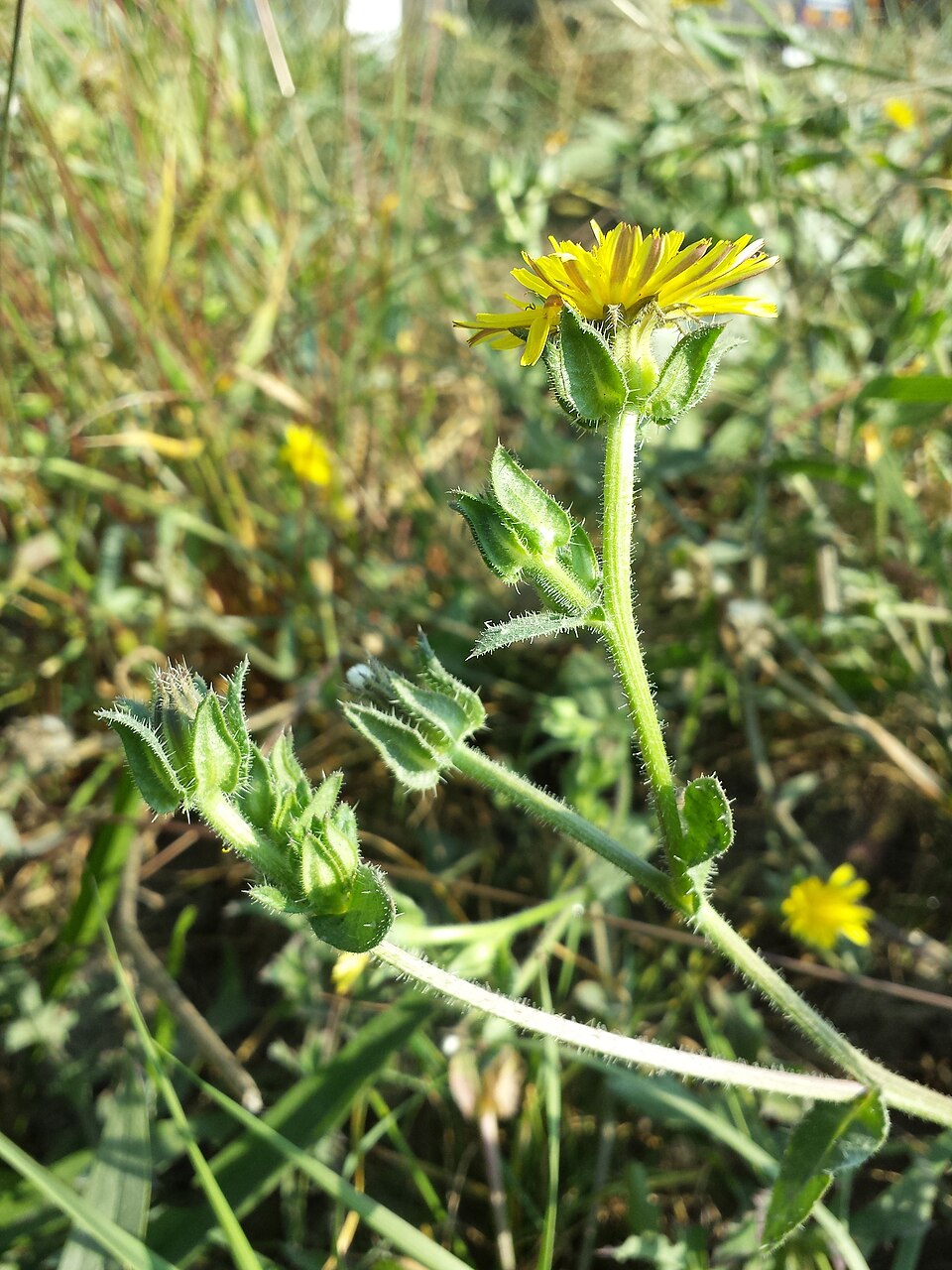
- Usually around 30–80 cm tall, with stout, branching, bristly stems.
- Yellow flower heads roughly 2–2.5 cm across, often opening in loose groups.
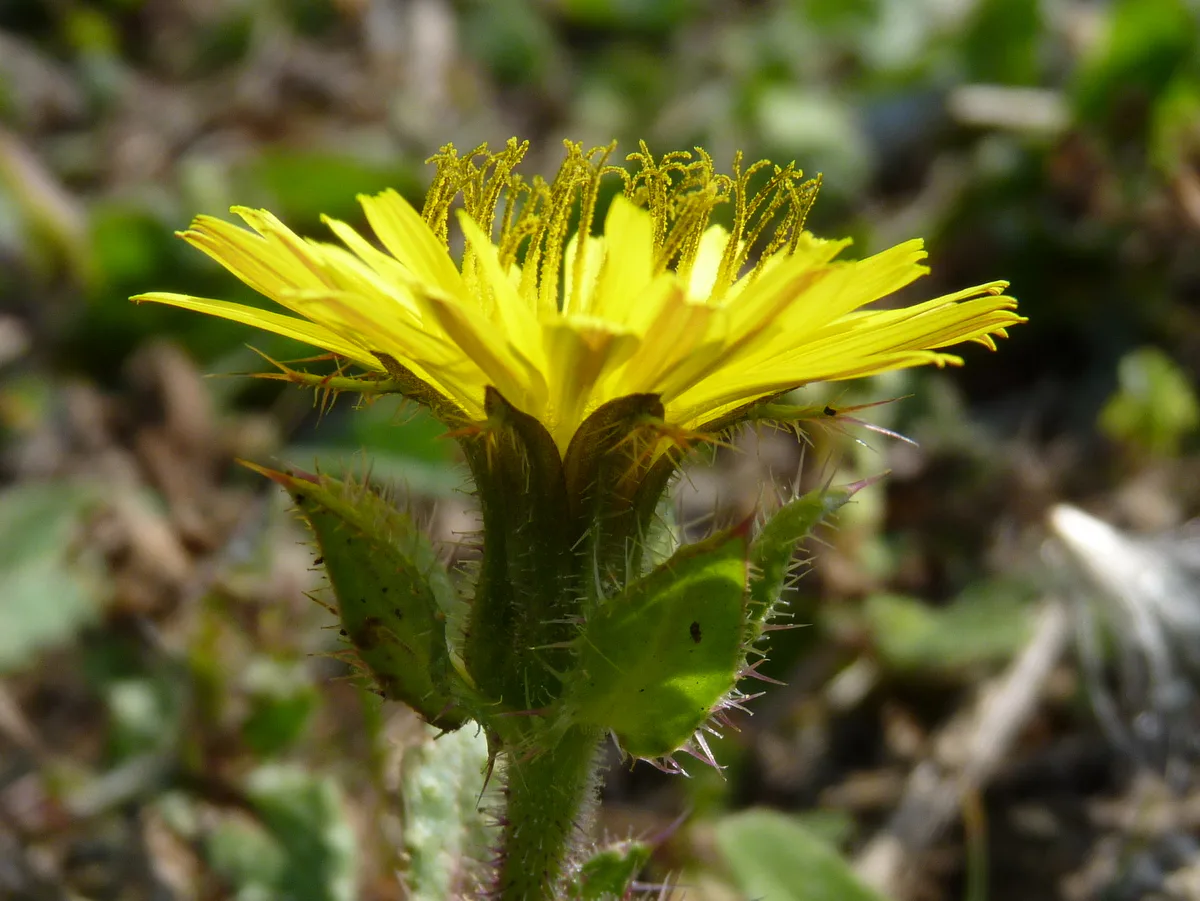
- A conspicuous ring of large, broad, leaf-like bracts spreads around the base of each head. These are often as striking as the flower itself.
- Rough, lance-shaped leaves with stiff bristles arising from swollen, pale or whitish bumps.
- Lower leaves often form a rosette; stem leaves are alternate and may clasp the stem.
- After flowering, the heads produce small dry fruits with a feathery pappus, which helps disperse them on the wind.
The combination of blister-like bumps on the leaves and large, bristly bracts immediately beneath the flower head is the best way to recognise this plant.
Flower structure
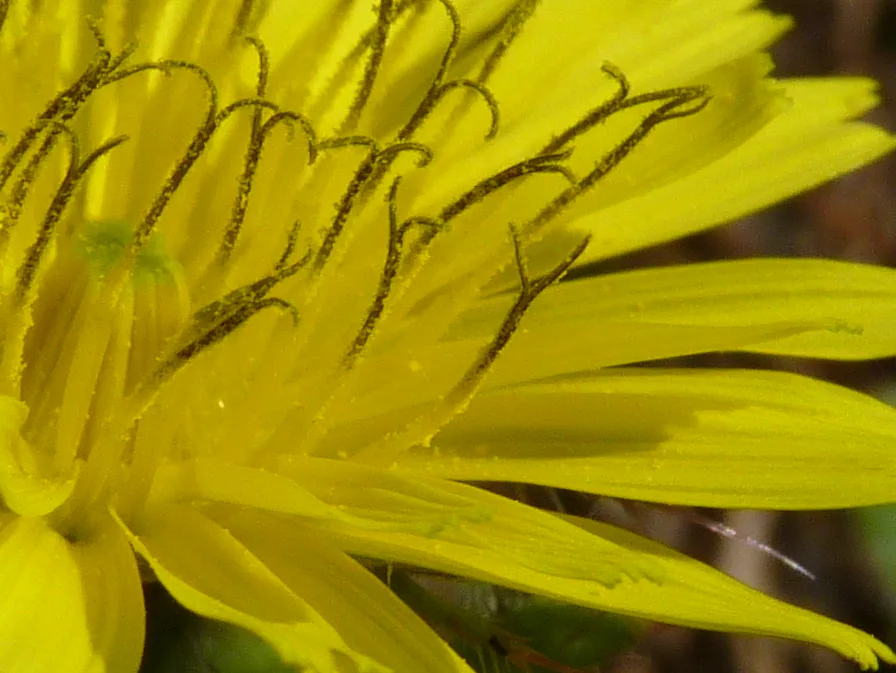
Like a dandelion, each yellow head is a capitulum, made up of many tiny individual florets. All the florets are strap-shaped, with a narrow, toothed yellow tip; there is no separate central group of tubular disc florets.
Below the florets, a narrow inner ring of bracts encloses the head. Outside it, several much broader green bracts spread out prominently, forming what looks like an additional cup around the flower. These outer bracts are usually hairy or prickly along their edges and are one of Bristly Ox-tongue’s most distinctive features.
After flowering, each floret produces a dry, one-seeded fruit, or achene. The inner fruits bear a tuft of fine, feathery pappus hairs.
Leaves and stems
The leaves are long, coarse and often irregularly toothed or slightly lobed. Their surfaces carry stiff, pale bristles, each arising from a conspicuous raised bump. From close up, these swollen bristle bases can look almost like tiny white blisters. They are especially useful for identifying the plant when it is not flowering.
The flowering stems are sturdy, ridged and hairy. Upper leaves become smaller and may partly clasp the stem.
Habitat
Bristly Ox-tongue favours open, disturbed places such as roadside verges, field edges, waste ground, rough banks and coastal margins. It is most frequent in southern and lowland England and generally less common farther north.
Its native range lies mainly around the Mediterranean and western Asia; in Britain it is usually regarded as an ancient introduction, or archaeophyte.
Flowering period
It normally flowers from June to October in Britain. Its yellow heads can still be seen on rough ground well into autumn.
Similar species
- Dandelion has similar yellow flower heads, but its flowering stalks are smooth and hollow, without the very large spreading bracts of Bristly Ox-tongue.
- Hawkweed Ox-tongue (Picris hieracioides) is also rough and yellow-flowered, but lacks the conspicuous broad outer bracts and swollen white bristle bases typical of Bristly Ox-tongue.
- Common Sow-thistle (Sonchus oleraceus) also has yellow heads and clasping leaves, but its foliage lacks the large, pale raised bristle bases and broad outer bracts of Bristly Ox-tongue.
Where the names come from
The name Ox-tongue refers to the long, rough leaves, likened to the coarse surface of an ox’s tongue. Bristly draws attention to the stiff hairs covering the plant.
The specific name echioides means ‘resembling Echium’, a reference to the similarly rough foliage of plants such as Viper’s-bugloss. An older scientific name, Picris echioides, is still found in many field guides.
Folklore & history
The name Ox-tongue is an old descriptive plant name, recorded in nineteenth-century accounts of British vernacular names. It reflects how closely people once observed the shape and texture of ordinary wayside plants.
Bristly Ox-tongue has long grown around cultivated land and settlements. In parts of its Mediterranean range, young leaves were gathered as greens, while local herbal traditions also made use of the plant.
Wildlife
The open yellow heads provide pollen and nectar for visiting bees, hoverflies and other insects during summer and early autumn. After flowering, the small fruits can be carried away by the wind on their feathery pappus hairs.