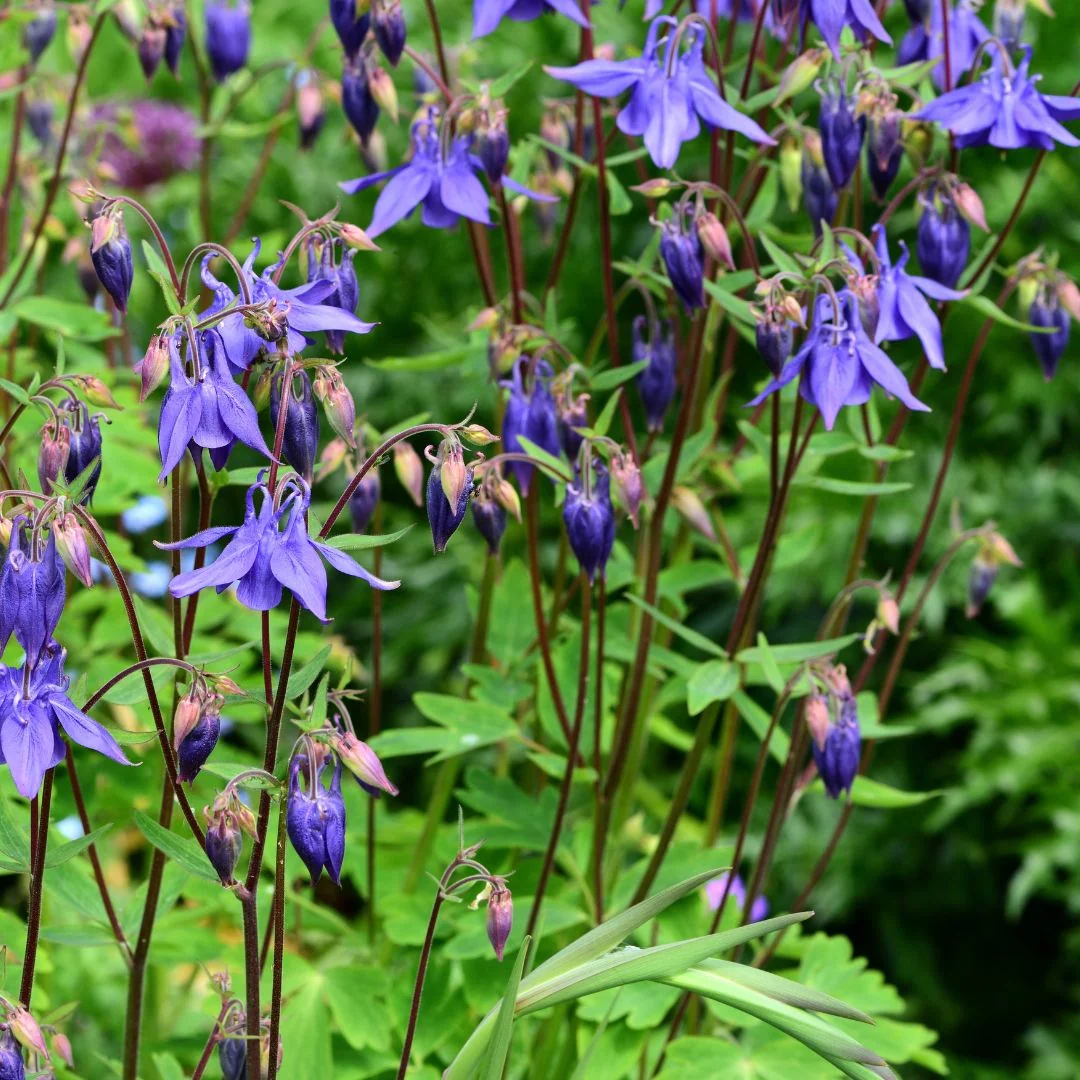
Columbine, also known as Granny’s Bonnet, is one of the most unmistakable flowers of late spring. Its nodding, violet-blue blooms hang from slender branching stems, with five backward-pointing spurs giving each flower a rather extraordinary shape. It belongs to Ranunculaceae, the buttercup family, although it looks very different from a familiar yellow buttercup.
The blue-flowered form is traditionally regarded as native in Britain, especially in parts of the west and south, but Columbine has also been grown in gardens for centuries. Cultivated forms and hybrids escape readily, making it difficult to tell some genuinely wild populations from descendants of garden plants.
Identification
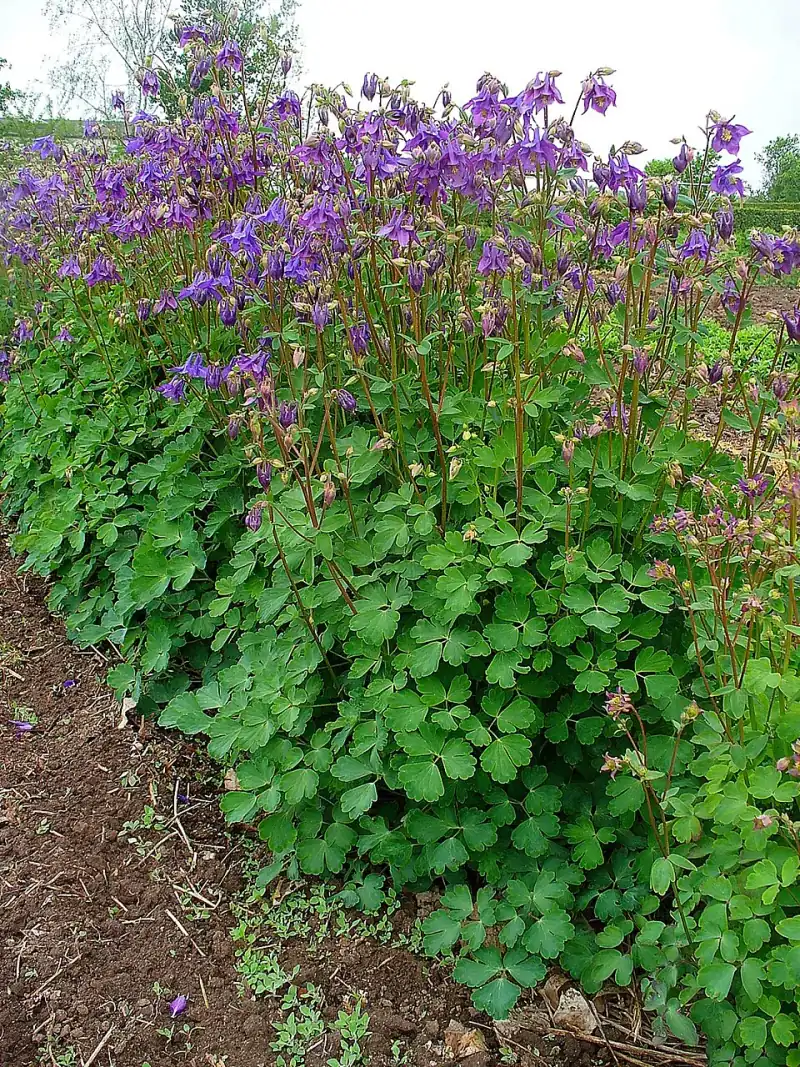
- A clump-forming perennial, usually around 30–100 cm tall.
- Slender, upright branching stems carry several hanging or nodding flowers, usually violet-blue in wild-looking plants.
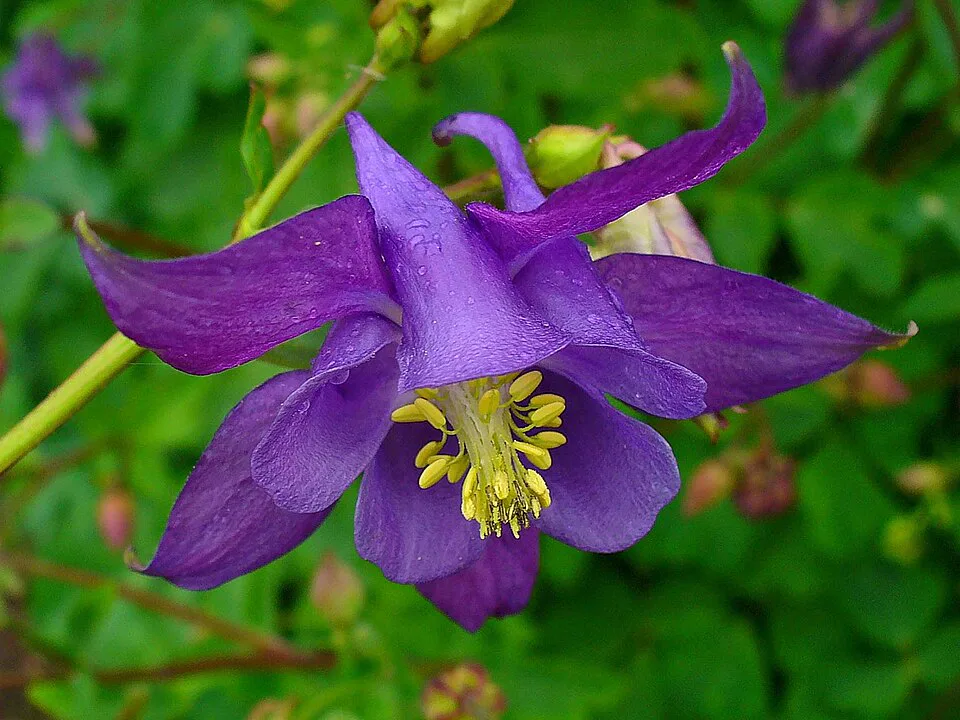
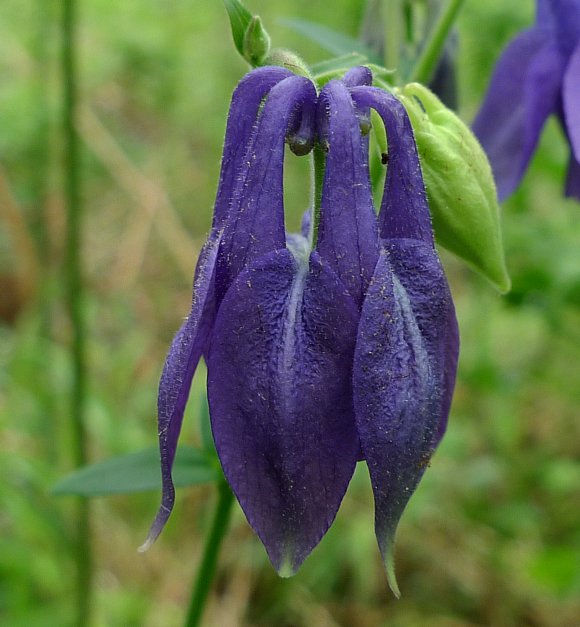
- Each flower has five broad, coloured sepals and five true petals, which form short tubes and extend backwards into curved spurs.
- The spurs are especially distinctive: five narrow, often hooked projections point away from the centre of the flower.
- Numerous yellow stamens hang from the centre of each flower.
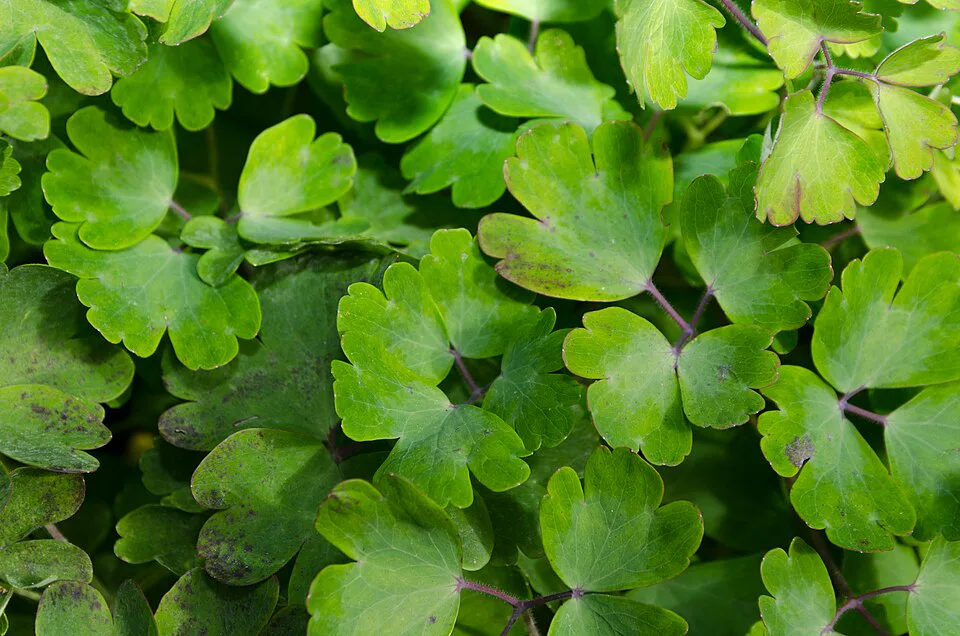
- Lower leaves are long-stalked and divided into groups of three, with rounded, scalloped leaflets.
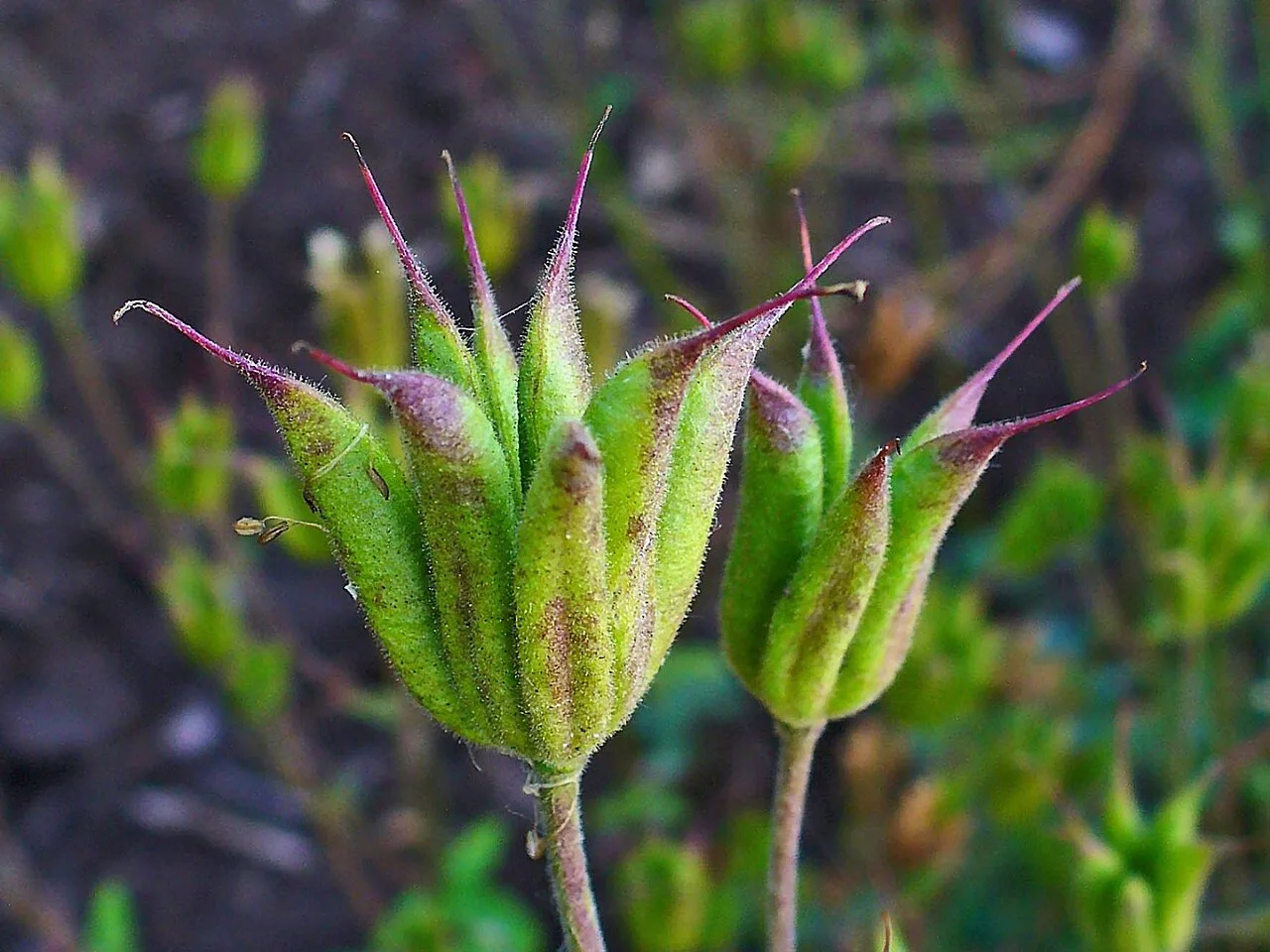
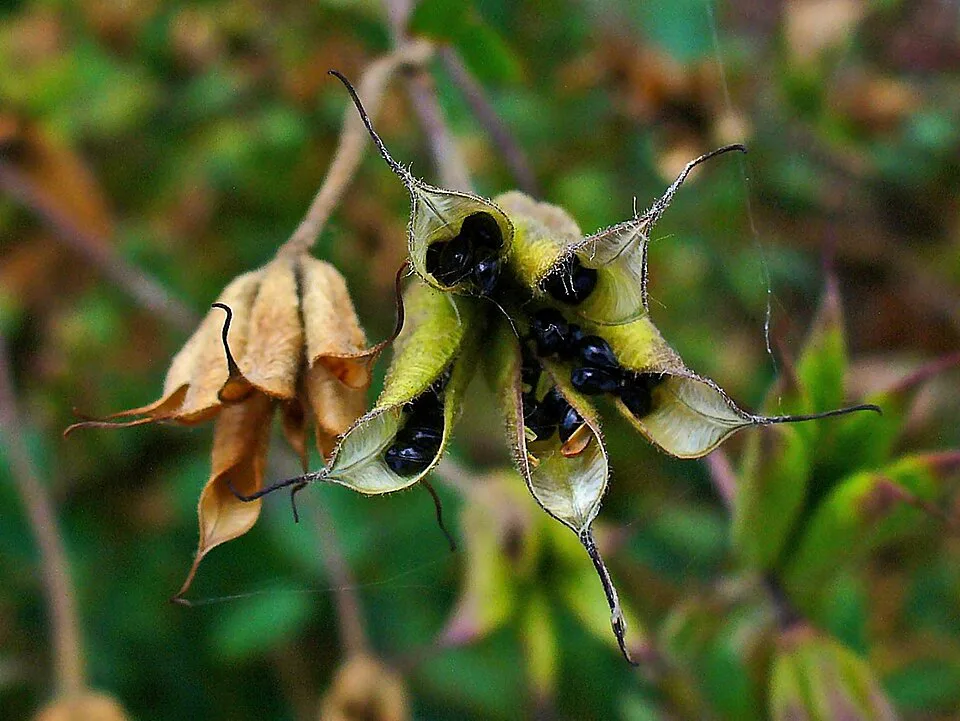
- After flowering, groups of upright, pointed seed pods develop in place of the flowers.
The combination of nodding bonnet-like flowers, five curved spurs and finely divided rounded foliage makes Columbine easy to recognise when flowering.
Flower structure
A Columbine flower repays close inspection. What at first looks like a double ring of petals is actually made up of two different whorls. The outer whorl consists of five large, petal-like sepals, typically purple-blue. Inside them are five smaller, true petals, each with a little cup or tube that extends backwards into a curved spur.
Each spur contains nectar. Long-tongued bees can reach into the flower to feed, and in doing so may transfer pollen between flowers. The centre holds many free stamens and usually five separate carpels, a useful reminder that this rather elaborate flower belongs to the buttercup family.
Unlike a daisy’s flower head, this is a single flower with distinct sepals, petals, stamens and carpels. The flowers normally hang downwards, so the yellow stamens often project below the coloured flower parts.
Leaves
The foliage is almost as characteristic as the flowers. The lower leaves have long stalks and are divided repeatedly into groups of three. Each leaflet is broad and rounded, commonly with three shallow lobes and gently scalloped margins. The leaves may have a soft, slightly bluish-green appearance.
Higher up the flowering stem, the leaves are smaller and generally less divided. The overall effect is delicate rather than feathery, quite unlike the narrow leaf segments of some other woodland flowers.
Fruits and seeds
After the flowers fade, the individual carpels develop into dry, pointed fruits called follicles. Usually five stand together in a cluster, each tapering to a long beak. Unlike a buttercup’s small, closed achenes, these fruits split along one side as they ripen, allowing the numerous shiny black seeds to escape.
This is another helpful example of how different the fruits can be within Ranunculaceae.
Habitat
Wild-looking Columbine can be found in woodland rides, open woodland, scrub and hedgerows, particularly on limestone or other calcium-rich soils. It also occurs in some damp grassland and fen habitats.
Columbine is a familiar cottage-garden plant, often seeding itself into borders, walls and roadside verges. Plants found near houses or villages may be escapes from cultivation, especially when they have unusual flower colours or extra petals.
Flowering period
Columbine flowers mainly in May and June, sometimes continuing into July. The green pointed fruits develop in early summer, with dry seed pods appearing later in the season.
Similar species
- Garden Columbines: Many varieties of Aquilegia vulgaris and hybrids with other Aquilegia species have flowers in pink, white, red or two colours, and some have extra rows of petals or reduced spurs. Their parentage is not always obvious from a casual look.
- Other cultivated Aquilegia species: Some have especially long or straight spurs, unlike the more strongly hooked spurs of typical A. vulgaris.
- Wood Anemone and Meadow Buttercup are relatives in Ranunculaceae, but neither has Columbine’s set of five nectar-bearing spurs.
The distinctive flower shape is the best starting point; colour alone is unreliable because garden varieties can be so variable.
Where the names come from
Columbine comes from the Latin columba, meaning ‘dove’. Look at an upturned flower and its five spurred petals can be imagined as five little doves gathered in a circle. The old name Granny’s Bonnet comes from the flower’s resemblance to an old-fashioned bonnet.
The genus name Aquilegia is often traced to Latin aquila, ‘eagle’, because the hooked spurs resemble an eagle’s talons. Another traditional explanation connects the name with water, alluding to the nectar held inside the spurs. The species name vulgaris means ‘common’ or ‘ordinary’.
Folklore & history
Columbine has been grown in European gardens since medieval times. Its curious flowers inspired both playful names and religious imagery. The resemblance to a gathering of doves made it a symbol of the Holy Spirit in Christian art, and it appears in paintings and decorative designs from the late Middle Ages and Renaissance.
The plant was also called Culverwort or Culverkeys: culver is an old word for a dove. Gardeners valued Columbine for its graceful flowers and willingness to seed itself into unexpected corners, while older herbals recorded various household and medicinal uses. Its place in cottage gardens has kept these old names and associations alive long after many other traditional flowers were forgotten.
Wildlife
The nectar stored at the tips of the spurs attracts bumblebees and other long-tongued pollinators, while the many stamens provide pollen. The flowers can also be visited by insects taking nectar through small holes in the spurs rather than entering from the front.