Creeping Buttercup is a familiar native perennial of lawns, damp meadows and grassy paths. Its bright yellow flowers resemble those of Meadow Buttercup, but the plant grows differently: long horizontal runners spread across the ground and take root to produce new plants. It belongs to Ranunculaceae, the buttercup family.
Identification
- Usually about 10–50 cm tall when flowering, with low spreading foliage and flowering stems rising above it.
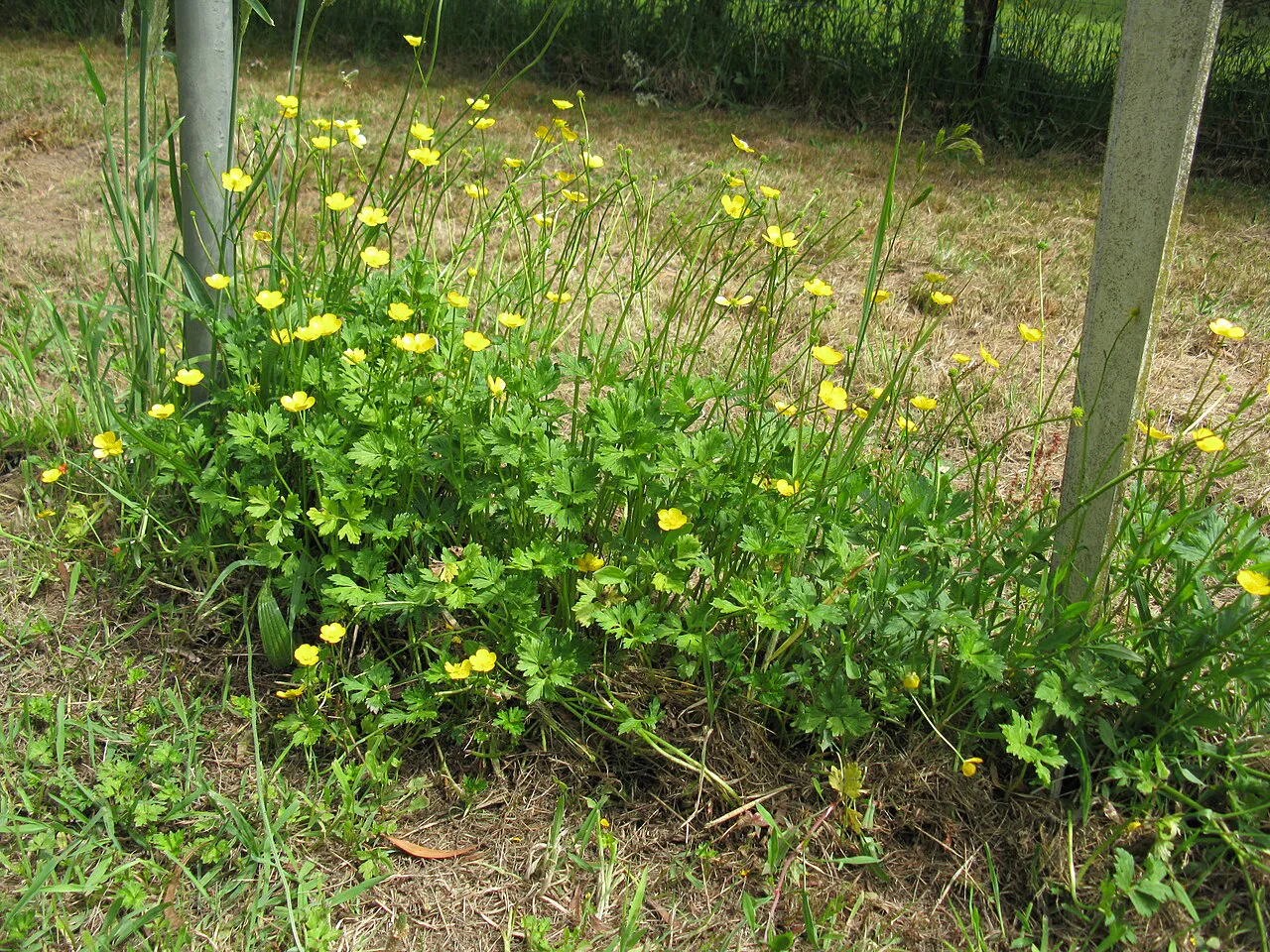
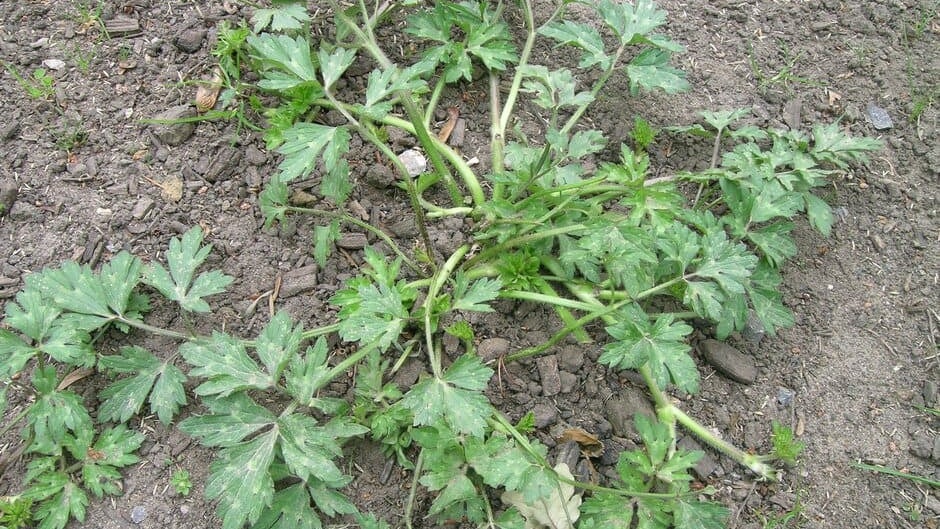
- Long, slender runners (also called stolons) creep across the soil and form roots and new shoots at the nodes.
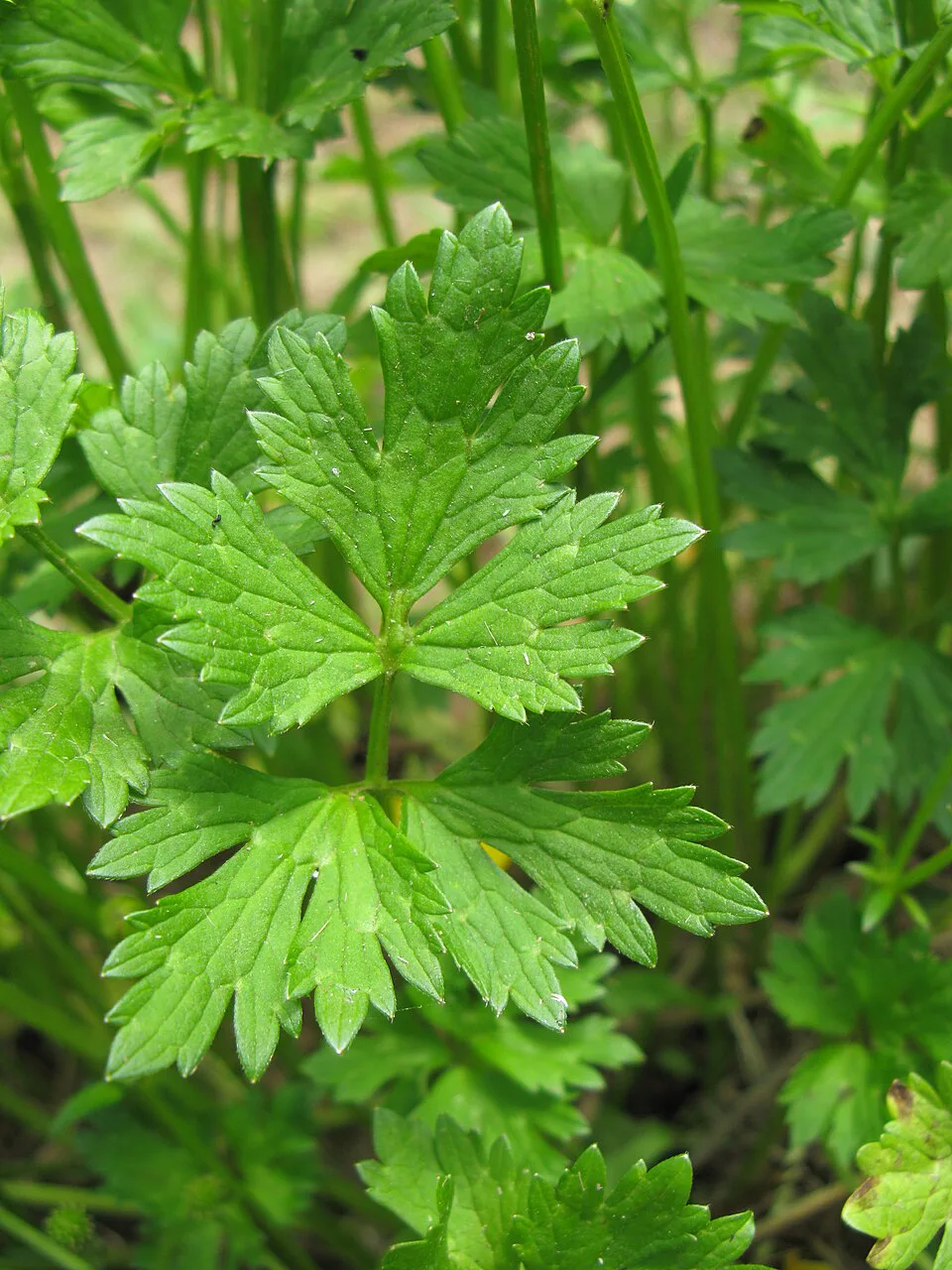
- Lower leaves are usually made up of three broad, toothed leaflets, each divided into smaller lobes.
- The terminal (middle) leaflet has a distinct little stalk of its own, whereas the side leaflets are generally shorter-stalked or almost stalkless.
- Leaves and stems are often hairy, and the leaves can have pale blotches.
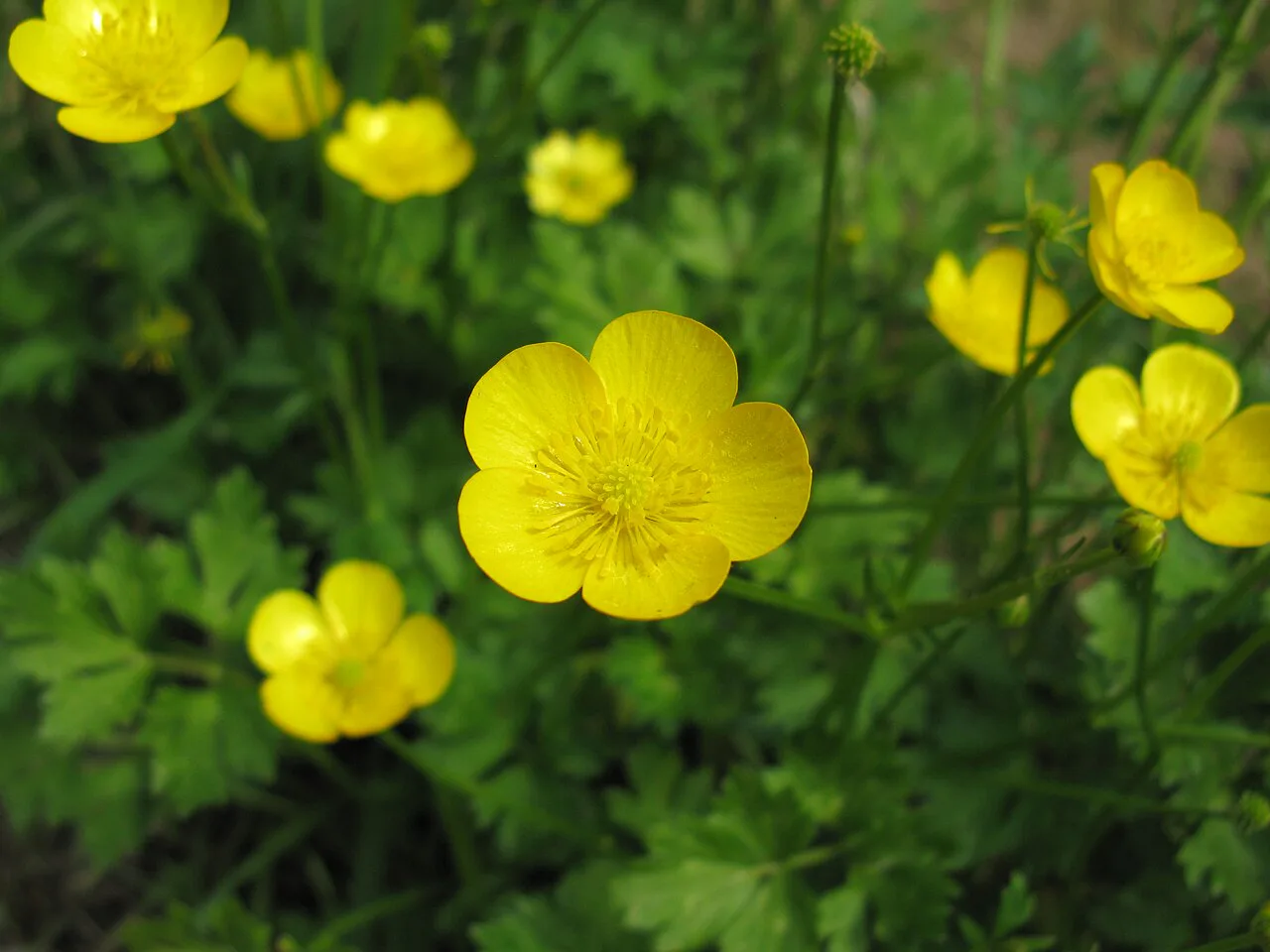
- Flowers are glossy golden-yellow, usually with five petals and five green sepals.
- The stalk immediately below each flower is grooved or furrowed; the sepals are not strongly folded back.
The easiest field combination is rooting runners, three leaflets with a stalked terminal leaflet, and grooved flower stalks. These characters are more reliable than flower colour alone.
Flower structure
A typical flower has five shiny, rounded yellow petals above five green sepals. The sepals usually lie close to the petals rather than being sharply bent backwards. Numerous free stamens surround a central group of separate carpels.
After pollination, the carpels develop into a rounded cluster of small, dry, one-seeded fruits called achenes. Like other buttercups, the flowers have a reflective surface that gives the petals their familiar buttery shine.
Leaves and stems
The long-stalked lower leaves are typically divided into three leaflets. The central leaflet is visibly stalked and each leaflet has coarse teeth and deep lobes. This makes the leaves particularly useful for distinguishing Creeping Buttercup from other yellow-flowered buttercups.
The plant spreads by above-ground runners. These slender stems grow horizontally, rooting where they touch suitable soil and forming new leafy rosettes. A patch can therefore consist of several connected shoots from the same plant. The flower stalks, unlike those of Meadow Buttercup, have noticeable longitudinal grooves.
Habitat
Creeping Buttercup is especially common where the ground stays damp or the soil is heavy: lawns, pastures, meadow edges, paths, field margins and roadside verges. It can also grow in partly shaded places. Its runners allow it to spread across open ground and through short grass.
Flowering period
It flowers mainly from May to August, sometimes continuing into September or later in favourable weather. The open flowers attract bees, hoverflies and other visiting insects.
Similar species
- Meadow Buttercup (Ranunculus acris) has a more upright, branching habit and does not spread by rooting runners. Its lower leaves are more deeply divided, the terminal leaf division is not set on a distinct stalk, and its flower stalks are not grooved.
- Bulbous Buttercup (Ranunculus bulbosus) also has grooved flower stalks, but its sepals are strongly bent backwards away from the petals. It has a swollen stem base rather than spreading by long rooting runners, and often grows in drier grassland. For these three species, check the sepals first, then the leaves, flower stalks and runners; a yellow flower by itself is not enough for confident identification.
Where the names come from
Buttercup refers to the glossy, butter-yellow, cup-shaped flowers. Creeping describes the runners that extend across the ground and root to produce new plants. Another traditional name is creeping crowfoot, referring to the divided, foot-like outline of the leaves.
The scientific name is equally descriptive. Ranunculus comes from Latin for “little frog”, traditionally linked to the wet places where many buttercups grow. Repens is Latin for “creeping” or “crawling”, referring directly to the plant’s spreading habit.
Folklore & history
Buttercups are closely associated with the childhood game of holding a flower beneath someone’s chin. A yellow reflection was said to reveal whether the person liked butter — a tradition remembered wherever buttercups are common in summer grassland.
The old belief that buttercups in pasture gave butter its golden colour linked the flowers with dairy farming and grazing meadows. Creeping Buttercup was also known by names such as sit-fast, a reference to how firmly its rooting runners can hold the plant in the ground.
Wildlife
The open yellow flowers provide accessible nectar and pollen for short-tongued bees, hoverflies and other small insects. In gardens and meadows, flowering patches can contribute to a varied supply of food for pollinators.