Hemlock is a tall, conspicuous biennial of hedgerows, ditches, riverbanks and disturbed ground. Its finely divided, fern-like leaves and white flowerheads resemble those of other members of the carrot family, Apiaceae, but its smooth, usually purple-blotched stems provide an important identification clue. All parts of the plant are highly poisonous.
Identification
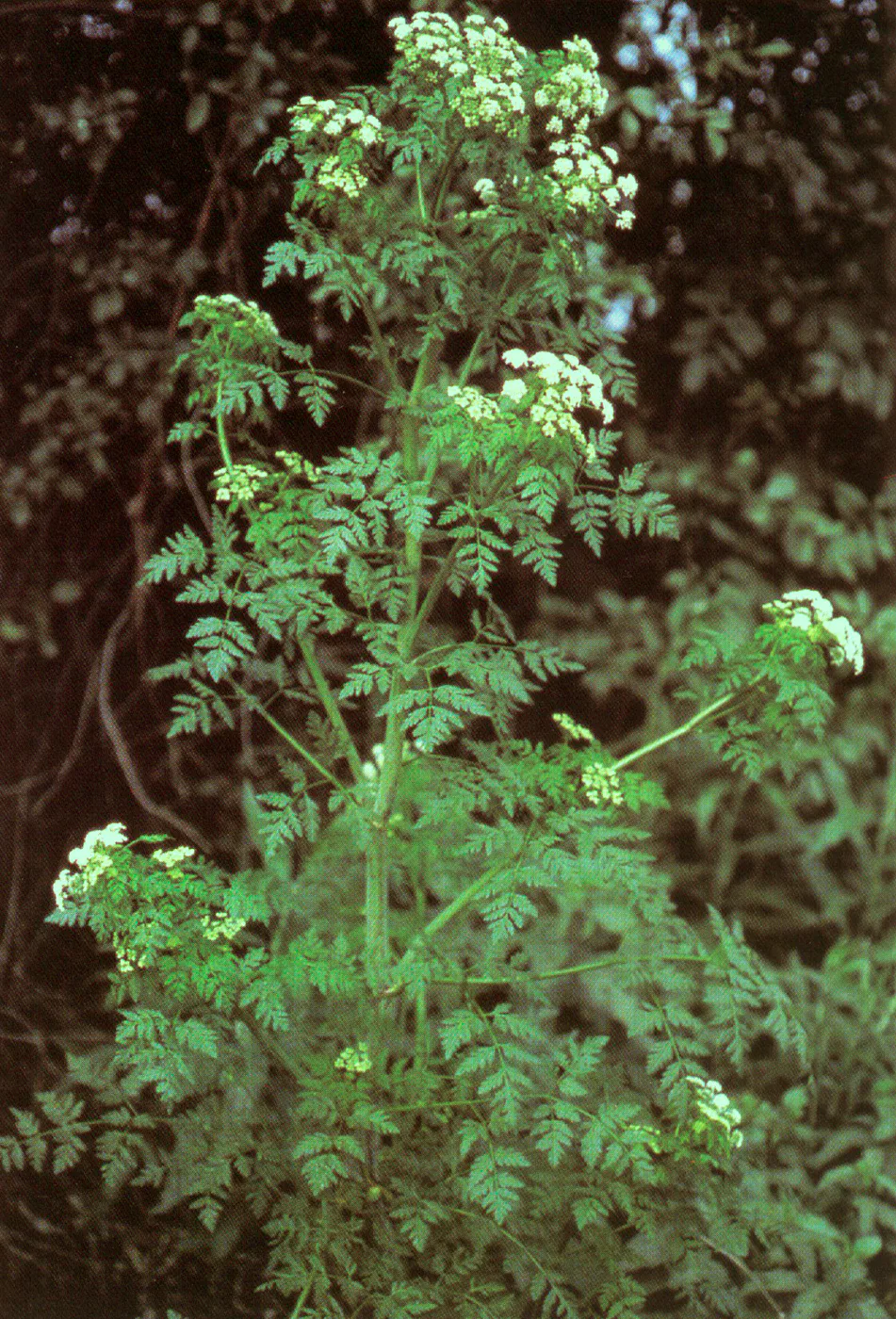
- Usually 1–2 m tall, occasionally reaching around 2.5 m on favourable ground.
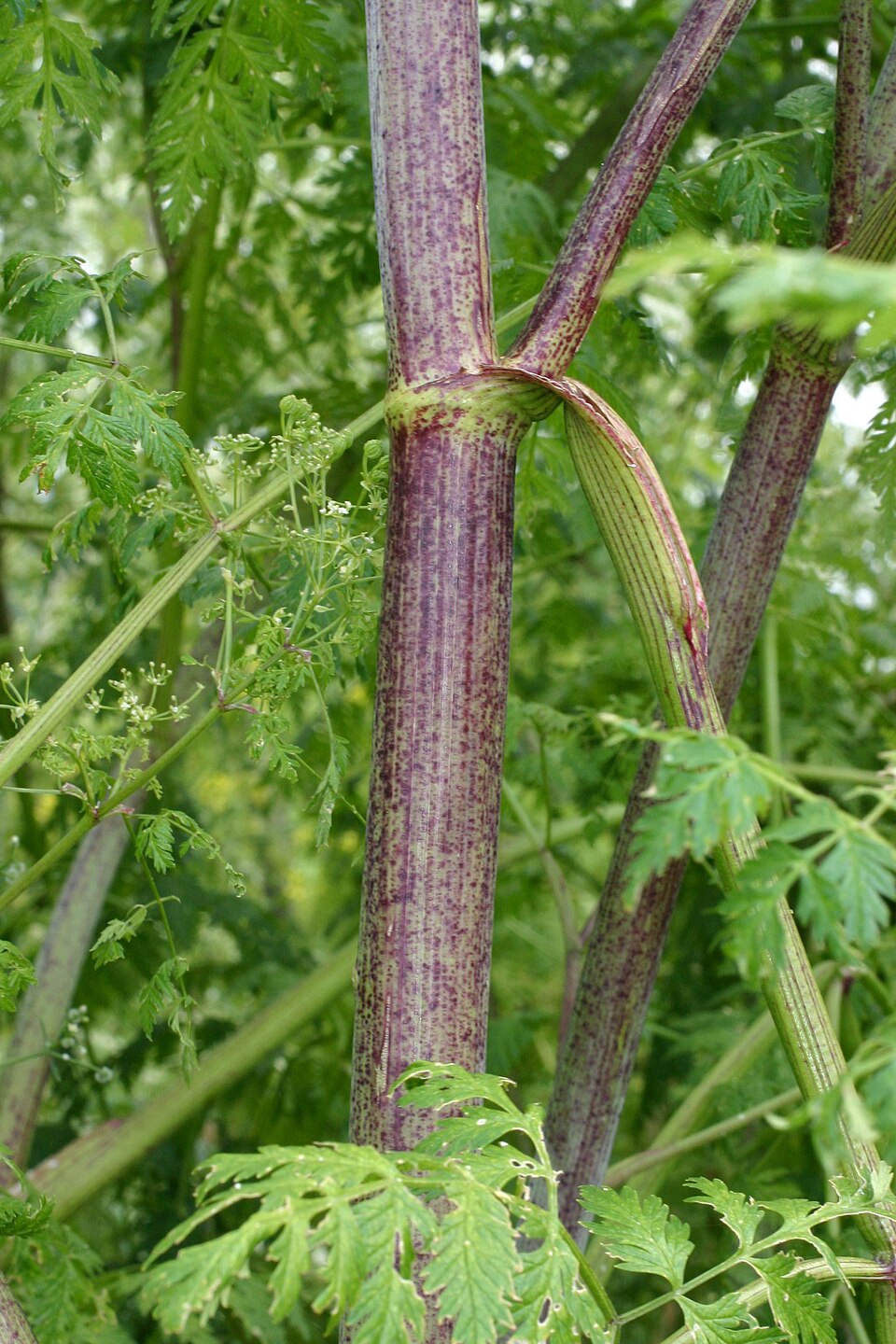
- Smooth, largely hairless, hollow stems with conspicuous reddish-purple blotches or spots, especially towards the base.
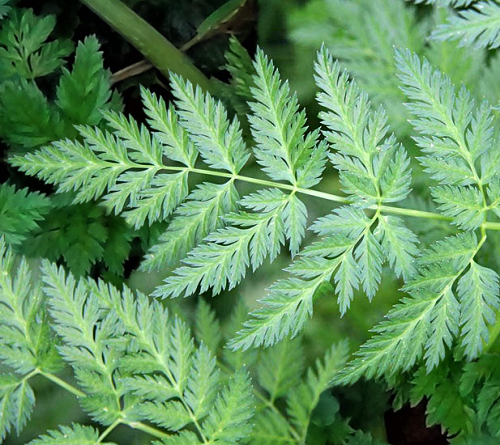
- Large, soft-looking, finely divided leaves, often triangular in outline and two to four times pinnate.
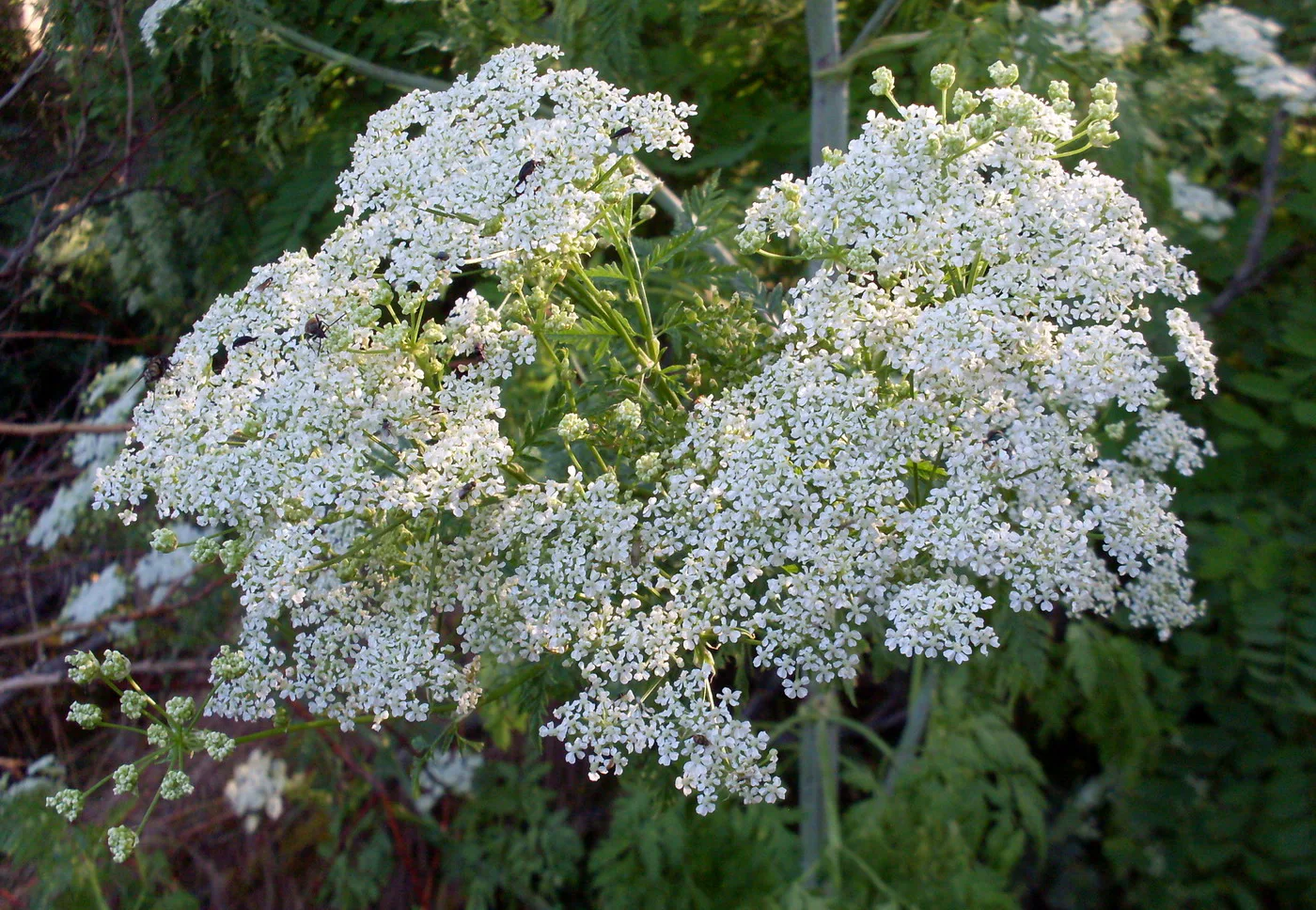
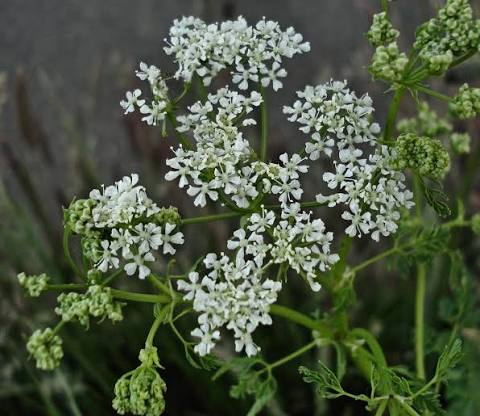
- Numerous small white flowers carried in rounded to slightly flattened compound umbels.
- An unpleasant, often mousy smell may be noticeable from damaged foliage, though smell should not be relied upon for identification.
The most useful combination is the hairless, purple-spotted stem together with the large, finely divided leaves and summer-flowering white umbels. Stem colour alone is not sufficient, since several other umbellifers can show purple markings.
Flower structure
The small white flowers grow in compound umbels. Stalks radiate from a common point, and each ends in a smaller cluster or umbellet. Hemlock’s main umbels usually have several narrow bracts beneath them, with smaller bracteoles beneath the umbellets.
Each individual flower typically has five tiny white petals and five stamens. The petals may be slightly unequal, especially towards the outside of a flower cluster.
Leaves and stems
The leaves are large and repeatedly divided into many pointed, toothed segments, giving them a lacy, almost fern-like appearance. Lower leaves have long stalks, whereas the upper leaves are smaller. The leaf stalk base forms a sheath around the stem.
The erect stems are hollow, lightly grooved and usually hairless. Their irregular purple or reddish-brown blotches are a distinctive feature, particularly when compared with the hairy stems of Wild Carrot and the generally green, ridged stems of Cow Parsley.
Fruits and seed dispersal
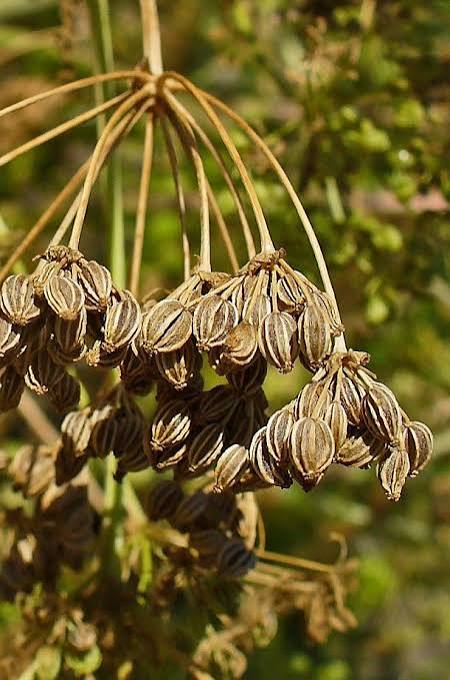
After flowering, the small rounded fruits become prominent. Each dry fruit is a schizocarp that eventually separates into two one-seeded halves called mericarps. The fruits have conspicuous wavy ribs that help distinguish Hemlock from its relatives.
The fruits mature through late summer, and the old umbels can remain on the stems after the flowers have disappeared.
Habitat
Hemlock favours fertile, often disturbed soils. It grows along rivers and drainage ditches, beside roads and footpaths, at hedge bases, in rough grassland and on waste ground. Although often associated with damp sites, it also occurs on fairly dry banks and neglected ground.
It is widespread in lowland England and Wales, with a more scattered distribution farther north.
Flowering period
The main flowering season is June and July. Plants can occasionally flower outside those months depending on conditions, but the white umbels are most conspicuous in early summer.
Similar species
- Cow Parsley (Anthriscus sylvestris) usually flowers earlier, particularly in spring. Its stems are generally green, hollow and ridged, rather than smooth with conspicuous dark-purple blotches.
- Wild Carrot (Daucus carota) is often shorter and has noticeably hairy or bristly stems. Its umbels bear prominent, deeply divided bracts and its fruiting heads frequently curl inwards into a bird’s-nest shape.
- Fool’s Parsley (Aethusa cynapium) is generally smaller, with slender, downward-pointing bracteoles beneath the umbellets. It is also poisonous.
- Wild Angelica (Angelica sylvestris) is usually more robust, with broader leaf segments and rounded flower clusters. Its stems are not typically marked with Hemlock’s fine purple blotching.
- Hemlock Water-dropwort (Oenanthe crocata) occurs mainly in wet places and has differently shaped leaf divisions and thick tuberous roots. It is also extremely poisonous.
Where the names come from
Hemlock is an ancient English plant name, recorded in various forms for centuries. The scientific name Conium comes from the Greek name for the plant, while maculatum means spotted or stained, referring to its distinctive stem markings.
The name Poison Hemlock is often used to distinguish this herb from the unrelated conifer trees commonly known as hemlocks.
Folklore & history
Hemlock is famous for its place in the history of ancient Greece. It is traditionally identified as the poison used to execute the philosopher Socrates in 399 BC.
Its reputation carried into European folklore and herbal writing, where it was associated with death, danger and powerful poisons. The blotched stems and strange smell made it a memorable plant in old descriptions, particularly because of its superficial resemblance to edible members of the carrot family.
Wildlife
Despite its toxicity, Hemlock’s open flower clusters attract hoverflies, small bees, beetles and other insects that can reach the nectar and pollen. Its foliage also supports certain insects adapted to feeding on this plant.
The tall stems and dense summer growth provide temporary cover in rough vegetation and along field margins.