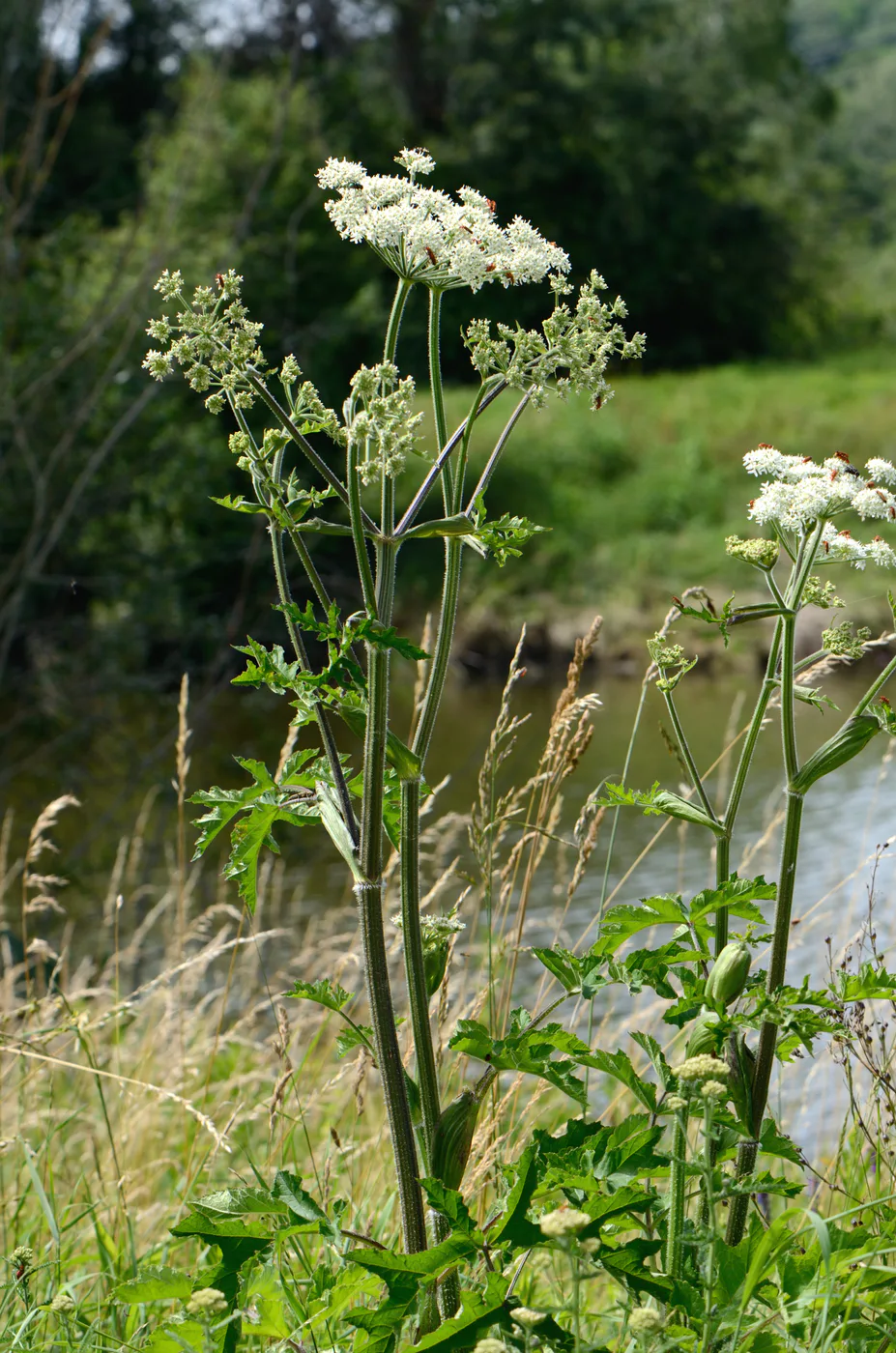
Hogweed is one of the most familiar large wildflowers of summer hedgerows, roadside verges and rough grassland. Its broad, rather coarse leaves and sturdy, hairy stems make it much more robust-looking than Cow Parsley. Above the foliage, clusters of creamy-white flowers spread out like umbrellas and attract an impressive variety of insects.
This native biennial or short-lived perennial belongs to the carrot family, Apiaceae. It is also called Common Hogweed, to distinguish it from the much larger Giant Hogweed.
Identification
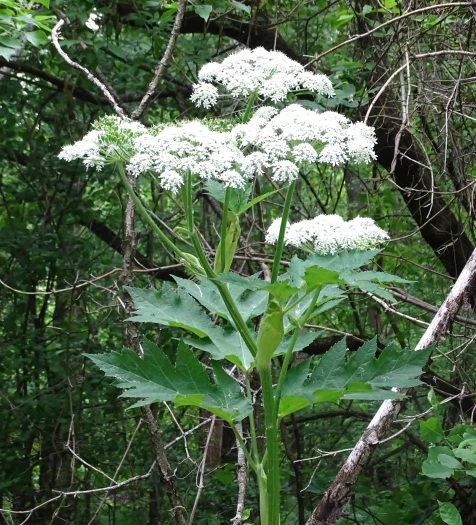
- Usually about 50–150 cm tall, but well-grown plants can reach around 2 m.
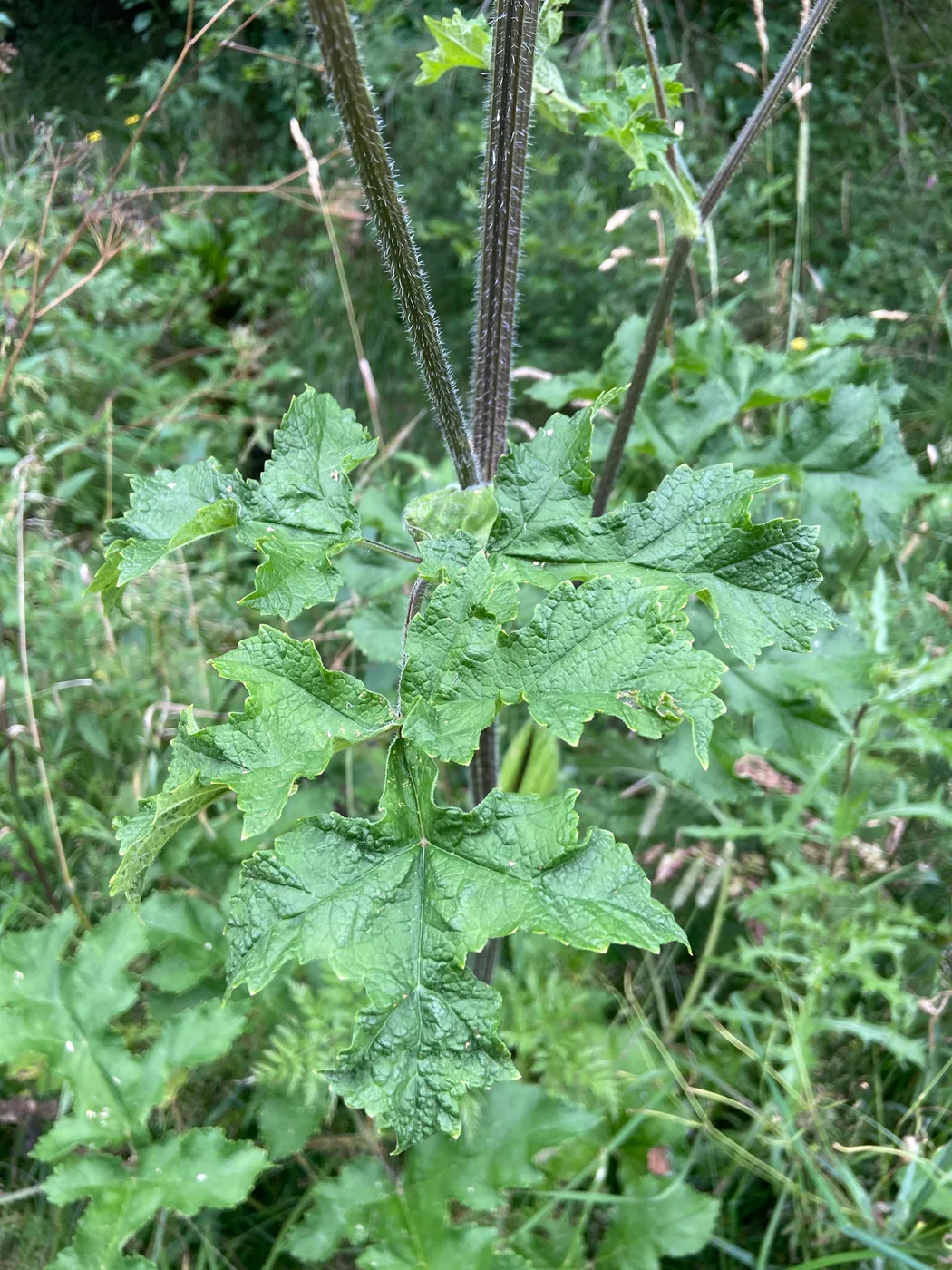
- Stout, hollow, strongly ridged stems, usually covered with coarse hairs or bristles.
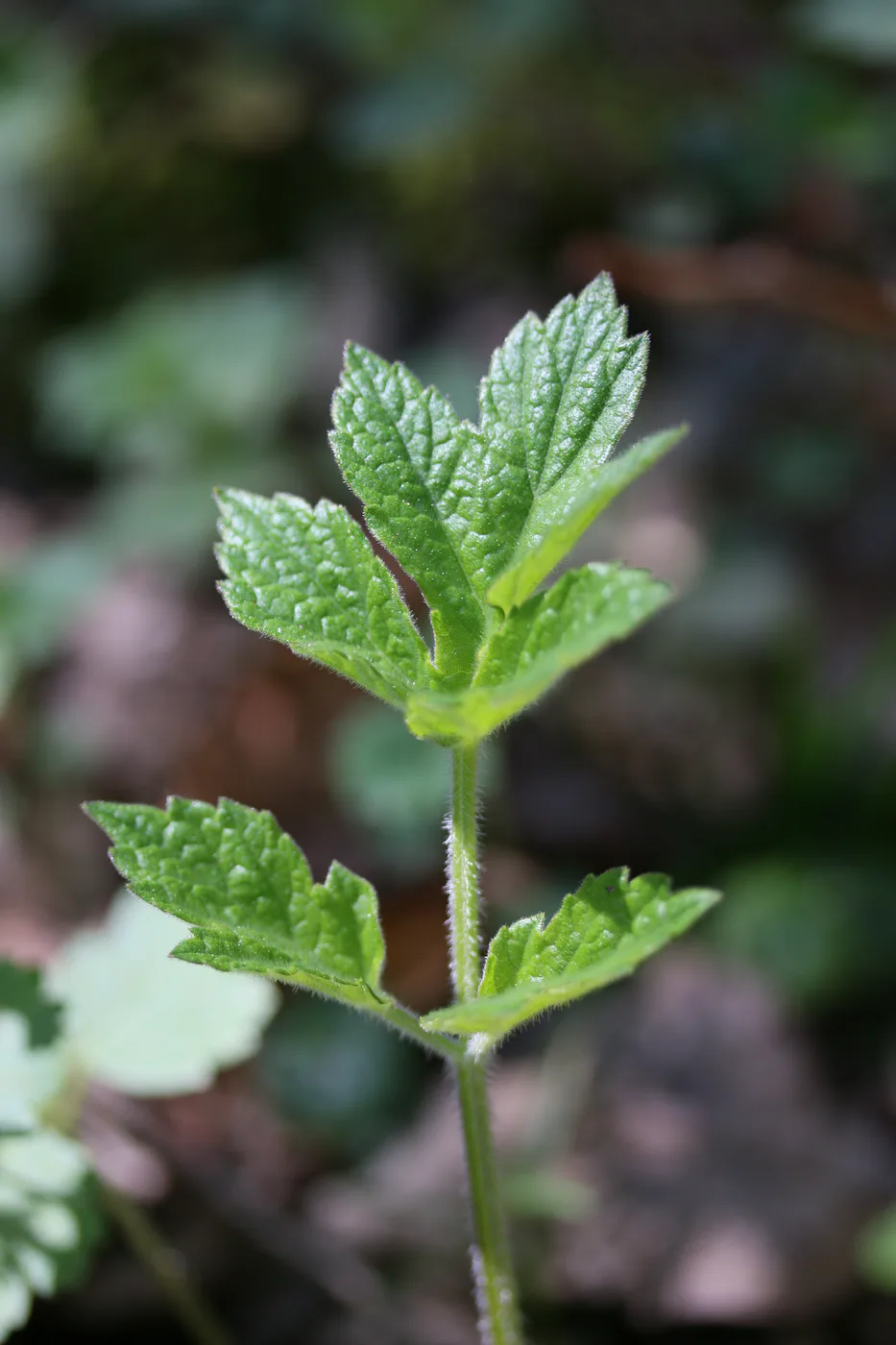
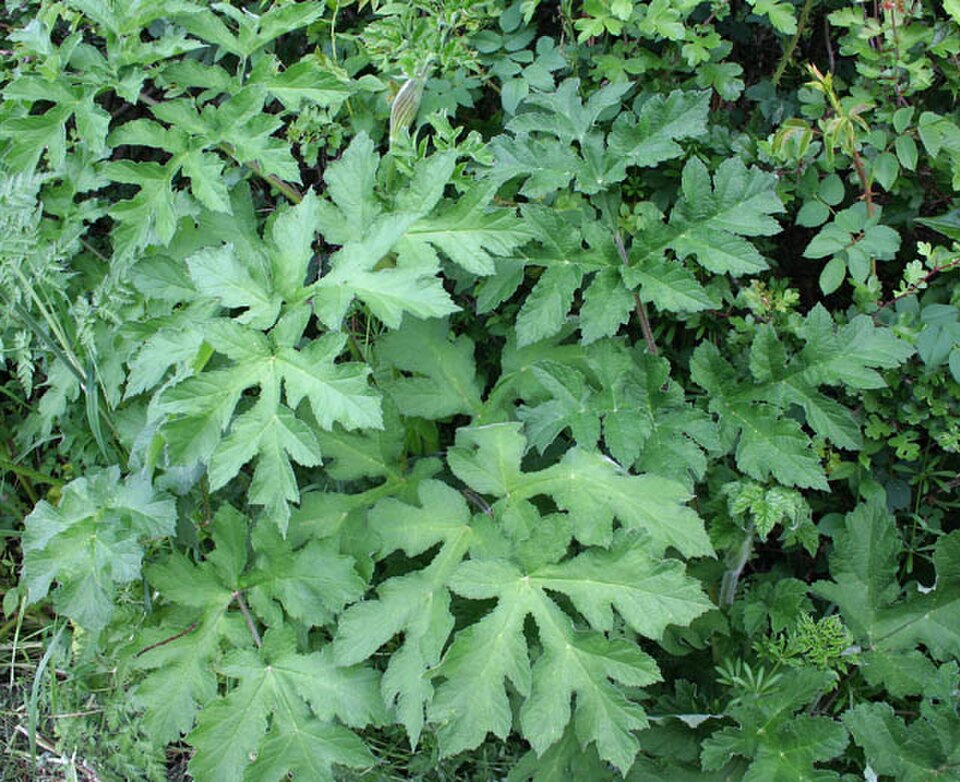
- Large green leaves divided into a few broad, irregularly lobed and toothed segments, rather than the fine, feathery foliage of Cow Parsley.
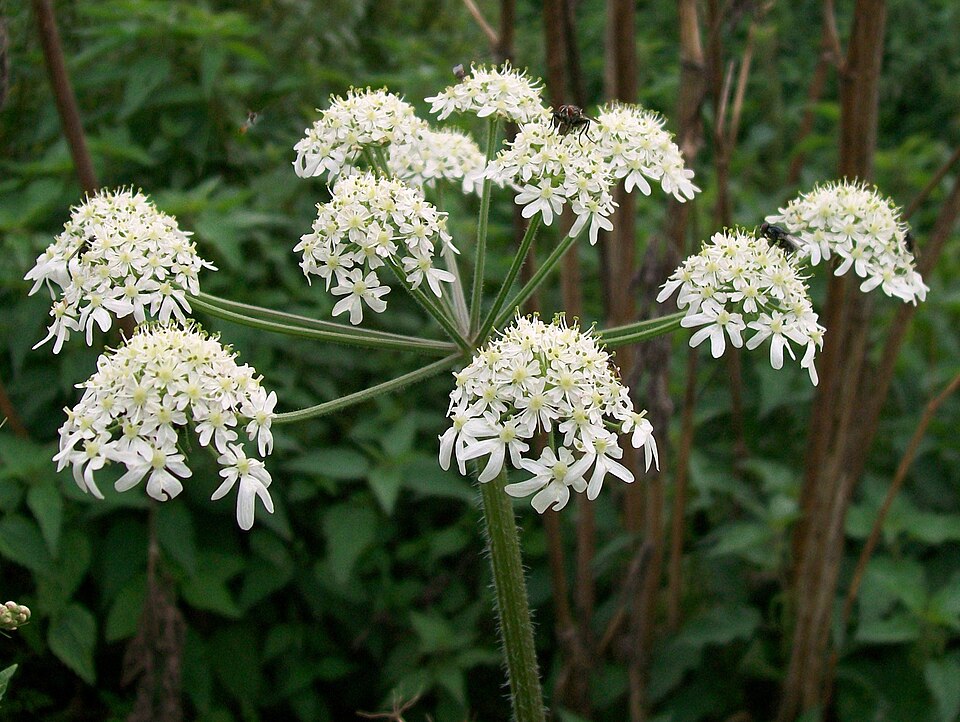
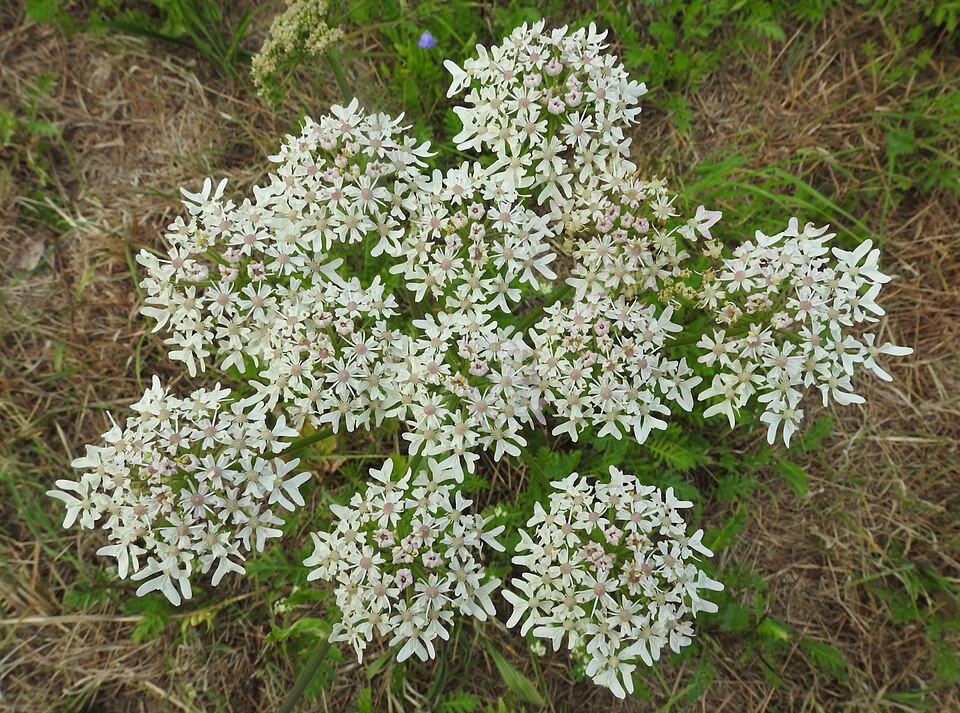
- White to creamy-white, occasionally pinkish flowers grouped into broad compound umbels, often about 10–20 cm across.
- Flowers at the edges of the umbel often have enlarged, unequal outer petals, giving the flowerhead a slightly lacy outline.
- Upper leaf stalks often have conspicuously swollen, sheathing bases where they meet the stem.
The combination of a hairy, ridged stem, large lobed leaves and broad flowerheads is particularly useful for recognising Hogweed.
Flower structure
Each apparent flowerhead is actually a compound umbel. Several main stalks, or rays, spread from one point, and each carries a smaller group of flowers called an umbellet.
Each tiny flower usually has five petals and five stamens. On the outer edge of an umbellet, the petals facing outwards are often conspicuously larger than the others. This gives some flowers an uneven appearance and makes the whole cluster look more ornate when viewed closely.
Leaves and stems
Hogweed’s leaves are alternate, large, hairy and usually pinnate, with a few broad segments that may themselves be deeply lobed. Their irregular, toothed edges can make the leaf appear almost jagged. The leaf divisions vary between plants, so it helps to examine more than one leaf.
The stems are thick, hollow, furrowed and often distinctly bristly. At the point where an upper leaf joins the stem, its stalk broadens into an inflated sheath. These swollen leaf bases are particularly noticeable on flowering plants.
Fruits and seeds
After flowering, the umbels produce broad, flattened, oval fruits. Each fruit eventually separates into two one-seeded halves, called mericarps. The fruits have thin, wing-like edges, helping distinguish them from the narrow or hooked fruits of some other members of Apiaceae.
The dry, branching remains of the flowerheads can persist after the summer flowers have disappeared.
Habitat
Hogweed favours fertile soils and is widespread across the UK. It grows in hedgerows, along roadside verges, on grassy banks and field margins, beside streams and in open patches near woodland. It can also form conspicuous stands on disturbed or neglected ground.
It tolerates both sunshine and partial shade and is especially vigorous where the soil is rich and not too dry.
Flowering period
The main flowering season is May to September, with plants often at their most conspicuous in June, July and August. In mild conditions occasional flowerheads may appear outside this period.
Similar species
- Giant Hogweed (Heracleum mantegazzianum) is a much larger, non-native relative, often 3–5 m tall, with enormous, sharply cut leaves and very broad umbels. Its thick stems often have conspicuous purple blotches and coarse hairs. Its sap can cause severe skin burns when exposed to sunlight; differences in size alone should never be used for identification.
- Cow Parsley (Anthriscus sylvestris) is generally more delicate, with finely divided, fern-like leaves and airier flowerheads. It is especially abundant in spring.
- Wild Carrot (Daucus carota) has much finer foliage, conspicuous divided bracts beneath the main umbel and flowerheads that often curl into a bird’s-nest shape in fruit.
- Hemlock (Conium maculatum) is highly poisonous and has finely divided leaves and mostly smooth, hairless stems often marked with purple blotches, unlike Hogweed’s conspicuously hairy stems.
- Wild Angelica (Angelica sylvestris) has broad leaves but its umbels tend to be more rounded, and it often grows in damper places.
Common Hogweed is not as hazardous as Giant Hogweed, but its sap can still irritate skin, particularly in sunlight.
Where the names come from
The name Hogweed is traditionally associated with its former use as fodder for pigs. Another old English name is Eltrot.
The genus name Heracleum refers to Heracles (Hercules), traditionally associated with the strength and imposing size of plants in this group. Sphondylium comes from an old Greek plant name.
Folklore & history
Hogweed has long been a familiar part of the countryside. Its young shoots were used as food in some regional traditions, while the plant also featured as fodder for livestock.
Its hollow stems were once used by children to make simple whistles, pea-shooters and water squirters. Such games reflect how common the plant was along lanes and field edges, where its tall stems and large leaves were easy to recognise.
Wildlife
Hogweed is an excellent insect plant. The open clusters of small flowers provide accessible nectar and pollen for hoverflies, beetles, bees, solitary wasps and many other visitors. The numerous flowerheads can be busy with insects on a warm summer day.
Its stems and broad foliage also add shelter and structure to the vegetation of hedgerows and rough grassland.