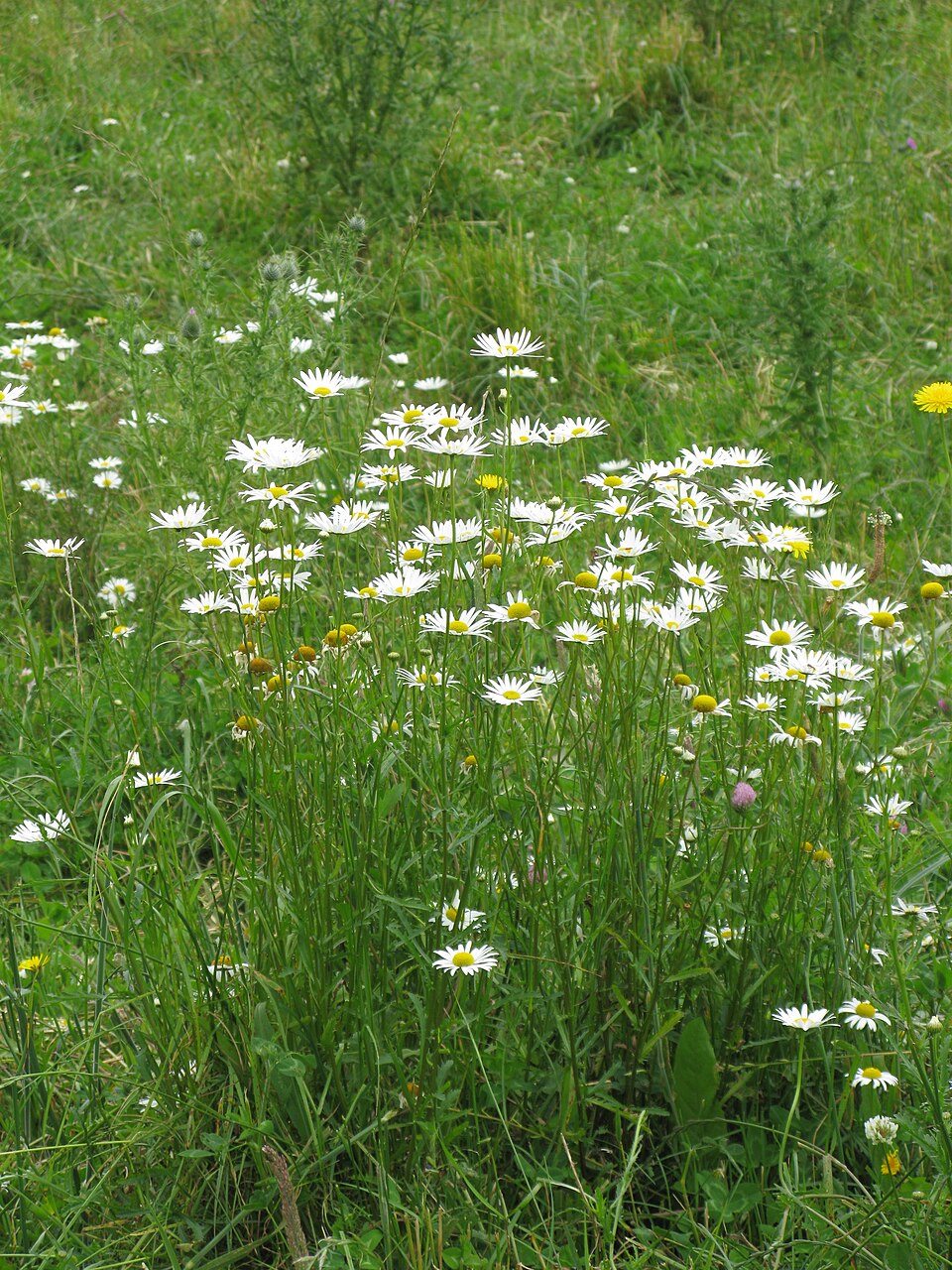
Oxeye Daisy is a familiar perennial of meadows, grassland and roadside verges. Its large white-and-yellow flower heads are held above the surrounding grass on long stems. It belongs to the daisy family, Asteraceae.
Identification
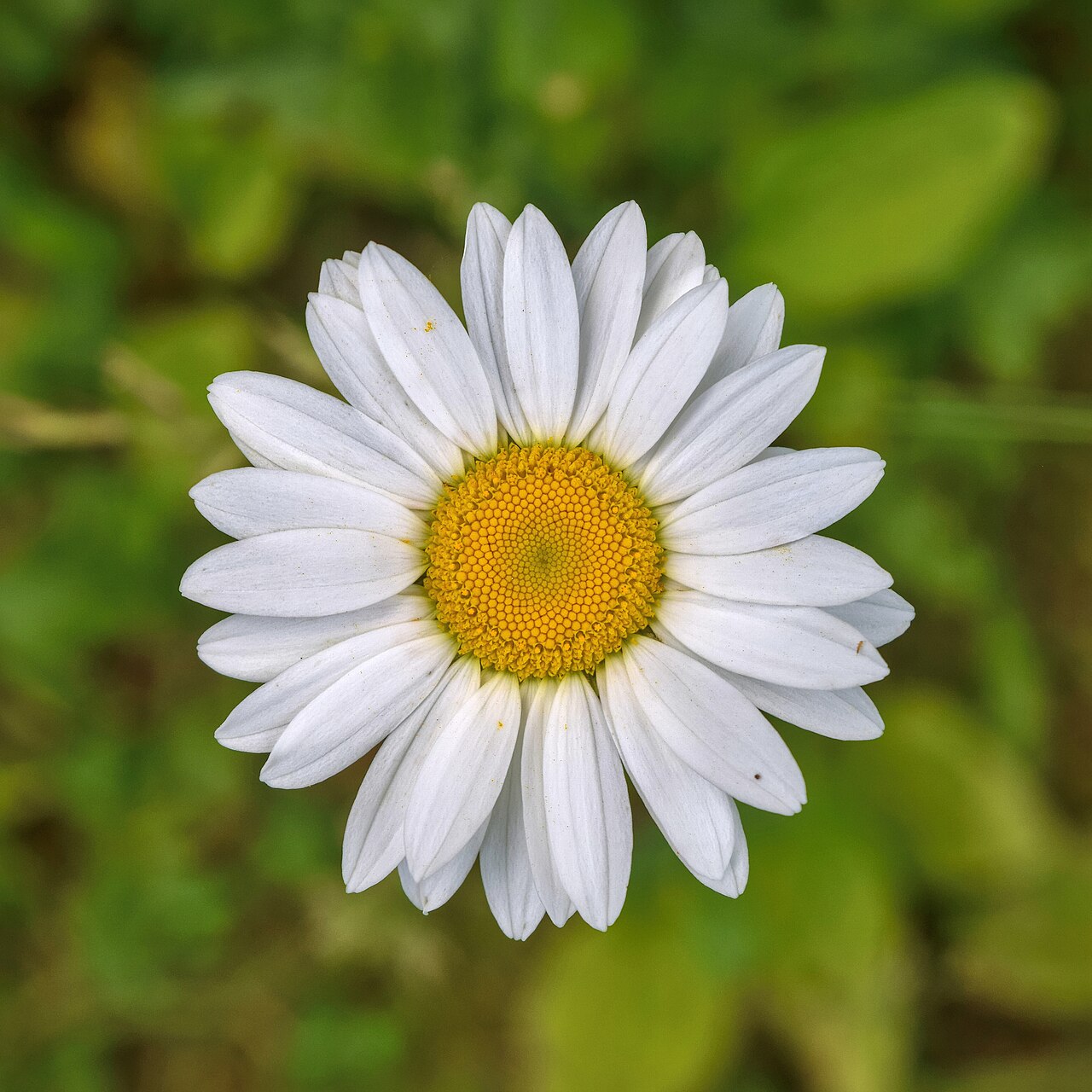
Look for a broad flower head, usually about 2.5–6 cm across, with white outer rays and a yellow centre. The heads are borne singly at the ends of long, mostly leafless flower stalks. The plant commonly stands 30–80 cm tall and can reach about 90 cm.
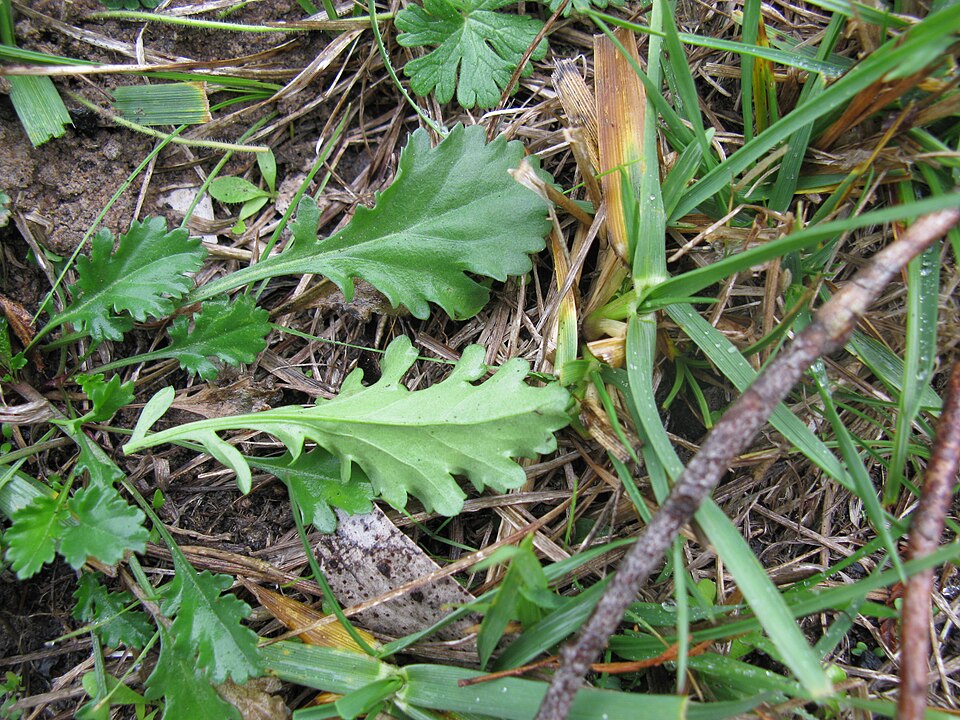
Check the leaves as well as the flowers: the lower leaves are broad and spoon-shaped, while those farther up the stem are narrower. The flower head is much larger and the stem much taller than those of the small Common Daisy (Bellis perennis) often found in lawns.
Flower structure
What looks like one flower is a capitulum: a head made up of many little flowers called florets. The white ray florets form the outer ring, and the yellow tubular disc florets fill the middle. Green bracts sit beneath the head; turning a flower head over makes them easier to see.
Unlike a dandelion, Oxeye Daisy does not develop a feathery seed clock: its fruits have no pappus.
Leaves
The lower leaves grow near the base of the plant. They are long-stalked, spoon-shaped and bluntly toothed. Stem leaves are narrower, more deeply toothed and have little or no stalk; the upper ones can clasp the stem at their bases.
Habitat
Oxeye Daisy grows in sunny, open places, especially meadows, other grassland, field margins and roadside verges. It can also occur on coastal dunes and banks.
Flowering period
It usually flowers from May to August, sometimes continuing into September. The exact season varies with location and weather.