Sneezewort is a perennial wildflower of damp grassland, meadows, ditch banks and other moist places. At first glance its white flower clusters can suggest a small-flowered Yarrow, but the leaves provide an excellent way to tell the two apart.
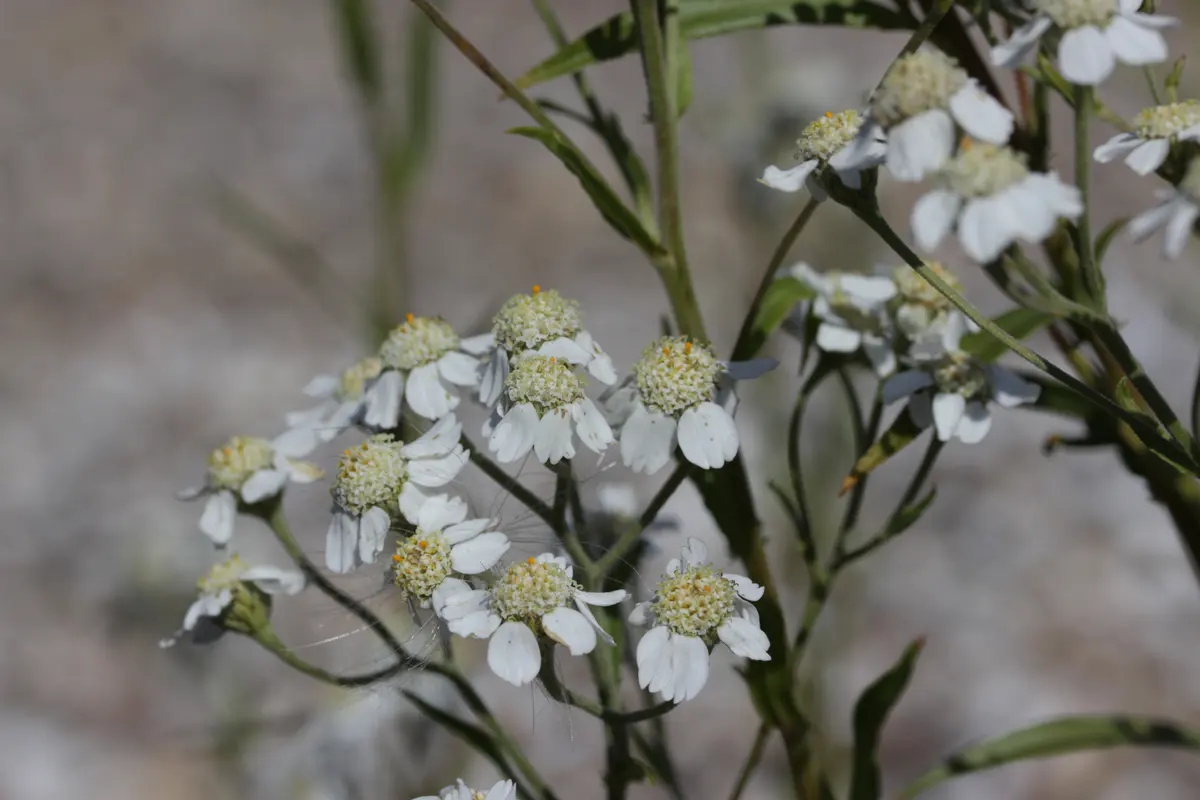
It belongs to the daisy family, Asteraceae. Each apparent flower is actually a flower head, or capitulum, made up of a number of individual florets.
Identification
- Usually around 20–60 cm tall, with upright stems.
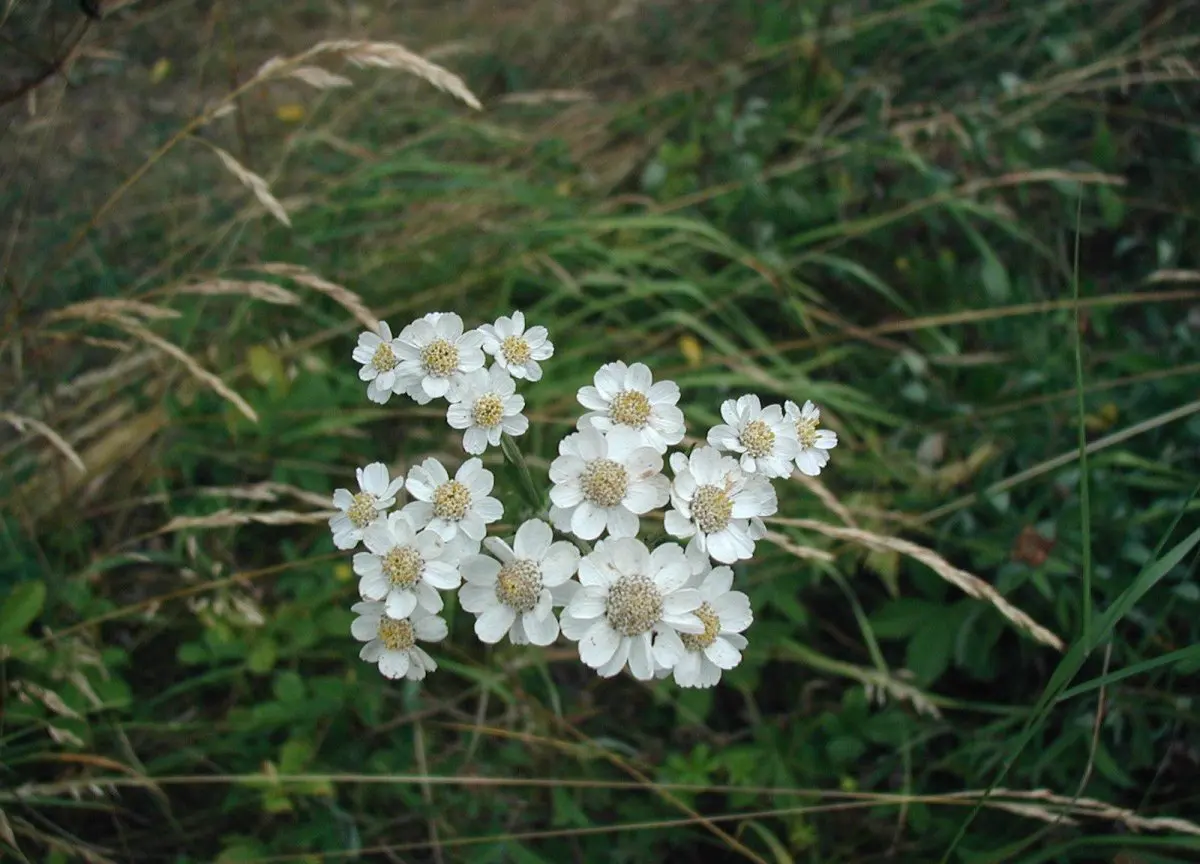
- White daisy-like flower heads are carried in loose, fairly flat-topped clusters.
- Each head is noticeably larger and more open-looking than the heads of Yarrow.
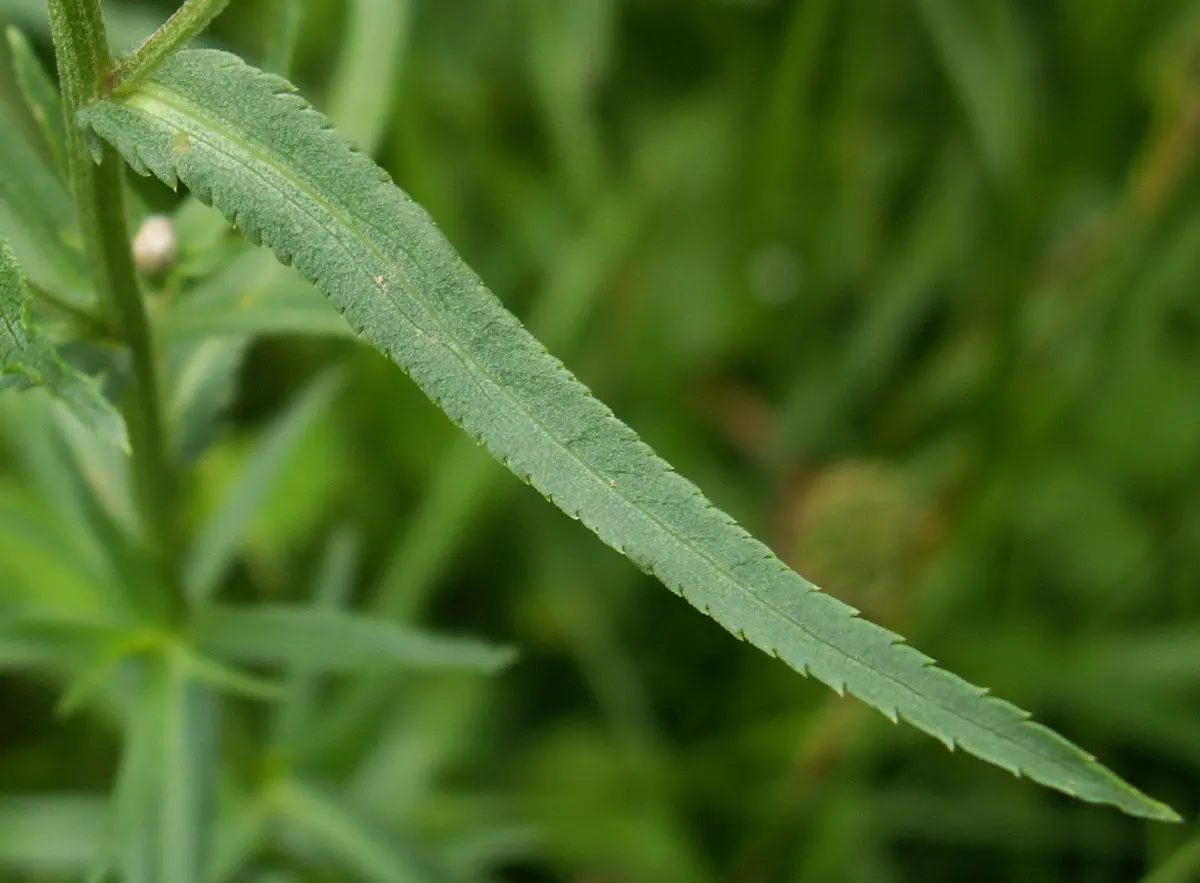
- Leaves are narrow, simple and undivided, with finely toothed edges.
- The leaves sit directly on the stem without a leaf stalk.
- Plants can spread by underground rhizomes and may form patches.
The narrow, undivided leaves are the most useful feature when separating Sneezewort from Yarrow.
Flower structure
Each flower head is a capitulum, typical of the Asteraceae family.
Around the outside are broad white ray florets. These surround a central disc of small tubular disc florets, which are usually pale yellowish or creamy white.
A number of green bracts surround the base of each flower head.
The individual heads are carried together in loose branching clusters. Because the flower stalks arise at different points but finish at roughly similar heights, the flowering top can appear broadly flat.
Leaves and stems
Sneezewort’s leaves are very different from those of its close relative Yarrow.
They are:
- narrow and lance-shaped
- simple rather than divided
- finely and sharply toothed along the edges
- arranged alternately along the stem
- attached directly to the stem without obvious leaf stalks
The upright stems are generally slender and branch mainly toward the flowering top.
This leaf shape is one of the quickest ways to recognise the plant even before examining the flowers closely.
Habitat
Sneezewort prefers damper ground than many other members of the genus Achillea.
Typical habitats include:
- damp meadows and pastures
- marshy grassland
- ditch banks
- stream sides
- wet roadside verges
- open ground on moist or acidic soils
It is widespread in Britain but is generally less abundant than Yarrow.
Flowering period
Sneezewort flowers mainly from July to September.
Its white flower heads can be conspicuous above damp summer grassland, especially where several plants have spread together to form a patch.
Similar species
- Yarrow (Achillea millefolium) is the species most likely to cause confusion. Yarrow usually has many smaller flower heads packed into denser clusters and, most importantly, has deeply divided, feathery leaves. Sneezewort has narrow, simple leaves with toothed edges.
- Oxeye Daisy (Leucanthemum vulgare) has much larger individual flower heads, usually carried singly rather than in loose clusters.
Other small white members of the daisy family may look similar from a distance, so checking both the leaves and the structure of the flowering cluster is useful.
Where the names come from
Sneezewort means ‘sneezing plant’: the dried plant was once used in snuff intended to provoke a sneeze. Here wort is an old English word for a plant or herb.
Achillea commemorates Achilles of Greek legend, as it does in Yarrow. Ptarmica is connected with Greek ptarmikos, meaning ‘causing sneezing’, making the scientific and common names unusually close in meaning.
Folklore & history
Older English names include Sneezeweed, Wild Pellitory, White Tansy and Bastard Pellitory.
Like Yarrow, Sneezewort has a long history of association with traditional herbal practice.
Wildlife
Sneezewort’s open flower heads provide nectar and pollen for a variety of insects.
Hoverflies, bees and other small pollinators can visit the exposed florets, making it a useful component of damp species-rich grassland and wildlife-friendly meadow planting.