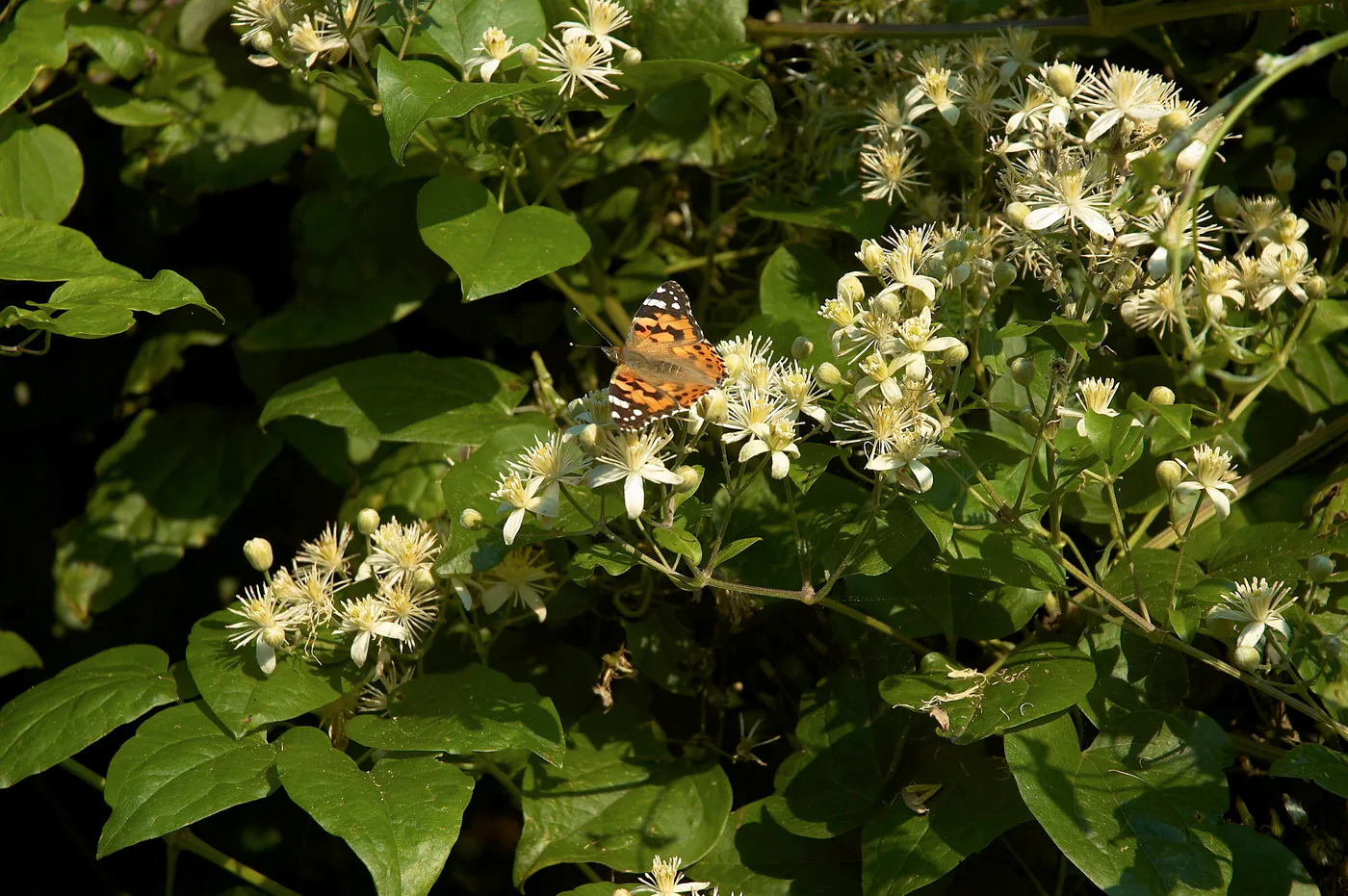
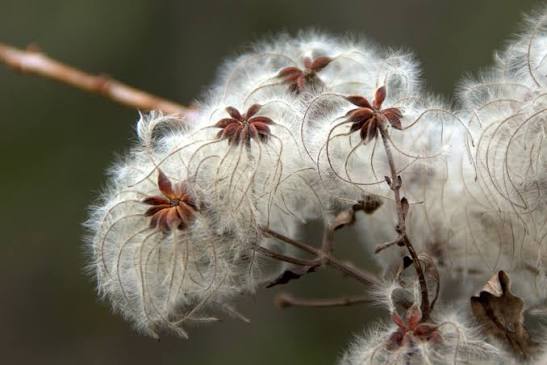
Traveller’s Joy, also known as Old Man’s Beard, is a vigorous native climber that drapes itself over hedges, shrubs and woodland edges. In summer it is covered in small, creamy-white flowers; by autumn these have changed into clouds of silvery, feathery seed heads. Unlike the garden clematis varieties with large, showy flowers, this wild species has delicate blooms and a more scrambling habit. It belongs to the buttercup family, Ranunculaceae.
Identification
- A woody, deciduous perennial that can climb several metres over neighbouring vegetation, sometimes forming thick tangles.
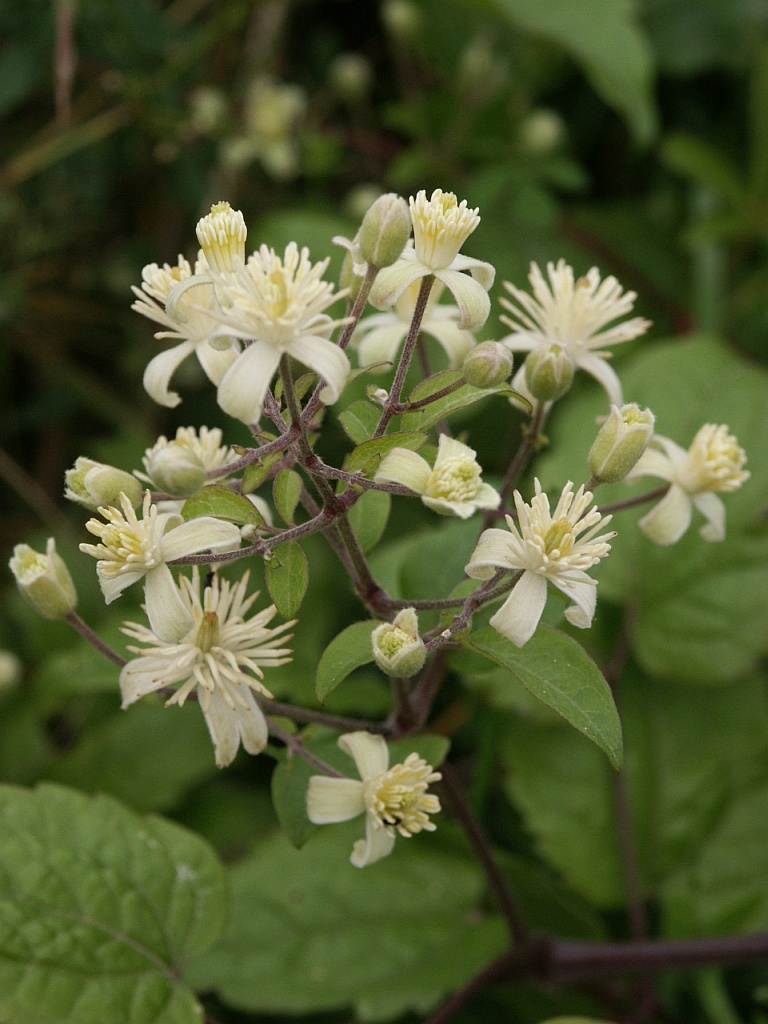
- Numerous small, creamy-white flowers, generally around 2 cm across, in loose branching clusters during summer.
- Each flower usually has four narrow, petal-like sepals, not four true petals, surrounding many conspicuous stamens.
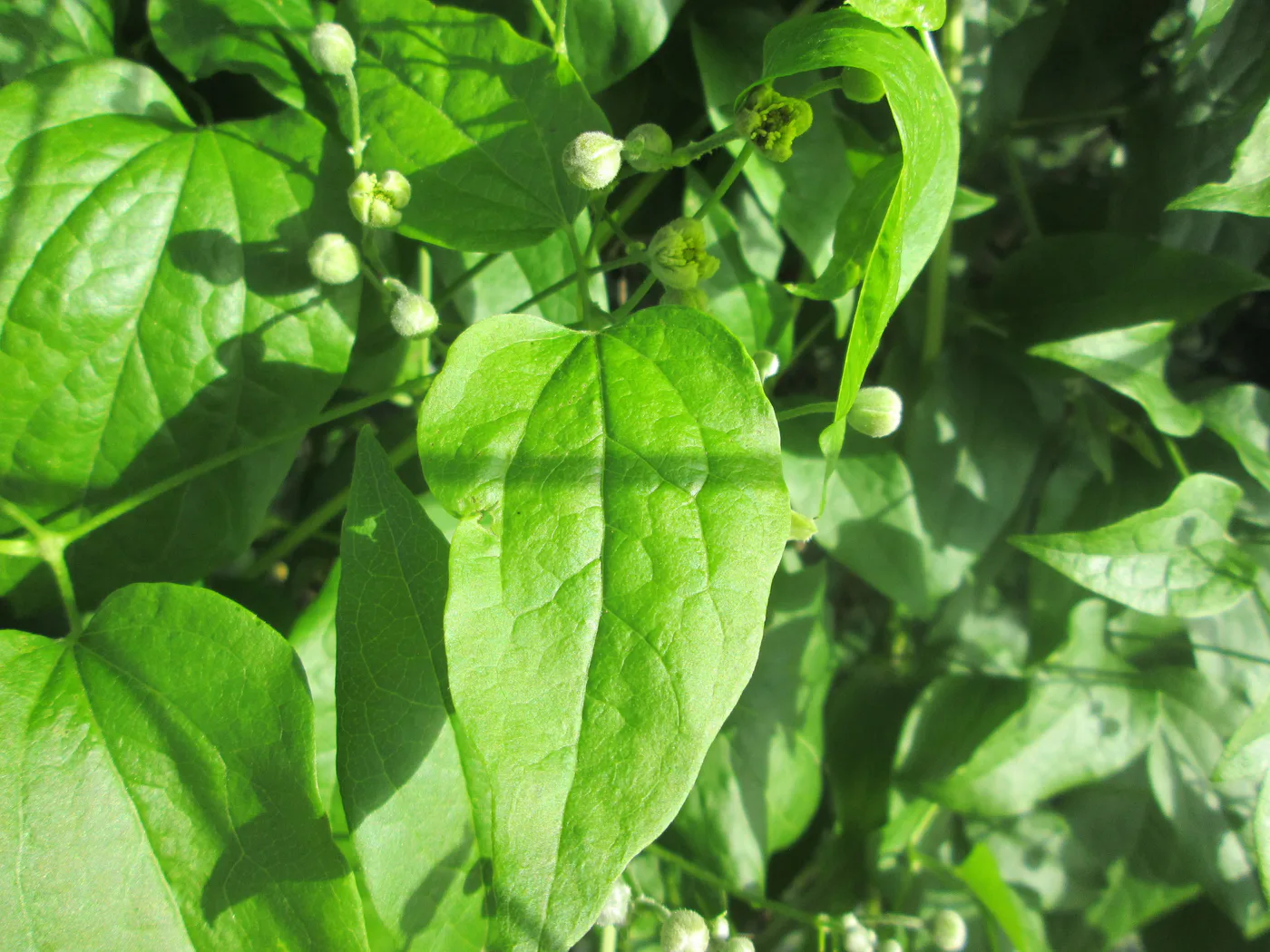
- Leaves grow in opposite pairs, with each leaf normally divided into three to five oval or pointed, sometimes toothed leaflets.
- The leaf stalks twist around twigs and branches, allowing the plant to climb without tendrils.
- Older stems become woody, with pale, stringy bark that can peel in long strips.
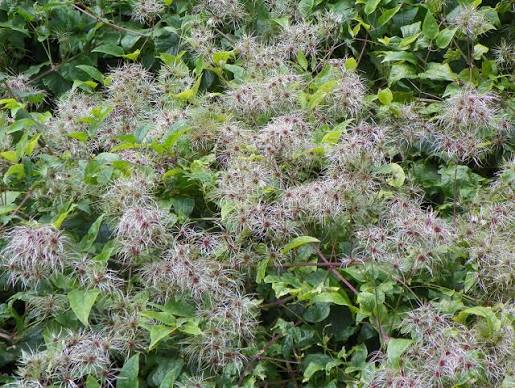
- In autumn and winter, round clusters of long, silvery-white plumes replace the flowers.
The most useful combination is opposite compound leaves, small four-sepalled flowers and the unmistakable fluffy seed heads.
Flower structure
Each bloom is a single flower, rather than a cluster of tiny florets like a daisy. The four narrow, creamy-white structures that look like petals are actually sepals. True petals are absent. A dense spray of pale stamens occupies the centre, giving the open flower a softly fringed appearance.
The flowers are carried in loose clusters at the ends of shoots and from the upper leaf axils. Their many separate carpels are another clue to the buttercup family. Bees, hoverflies and other insects visit the flowers for nectar and pollen.
Leaves and stems
The leaves are opposite, occurring in pairs at the stem nodes. Each is divided into three to five leaflets, which are oval to pointed, usually with scattered coarse teeth along the margins. Look at an entire leaf rather than a single leaflet when checking the arrangement.
Traveller’s Joy climbs using the stalks of its leaves and leaflets. These curl around thin supporting branches and help pull the shoot upwards. Unlike Common Honeysuckle, which twines with its stems, this clematis often forms tangled masses supported by many hooked or coiled leaf stalks. Older stems have a rough, fibrous bark that may peel away in narrow ribbons.
Fruits and seeds
After flowering, each separate carpel develops into a small, dry, one-seeded fruit called an achene. A long, feathery style remains attached to each achene, forming the familiar silky plumes that help the fruits travel on the wind.
The many plumes gather into rounded, silvery heads, often remaining on the plant through autumn and winter. These billowing masses are the source of the name Old Man’s Beard. They are one of the easiest ways to recognise Traveller’s Joy after its flowers have disappeared.
Habitat
Traveller’s Joy grows in hedgerows, thickets, scrub and open woodland margins, often where the soil is chalky or rich in limestone. It is especially characteristic of southern England but occurs elsewhere in the UK. Where conditions suit it, the plant can cover shrubs and small trees with long, woody shoots.
It is particularly noticeable on sunny roadside banks and along field edges, where its late-summer flowers and autumn seed heads can spread over a large area.
Flowering period
Flowers appear mainly from July to September, sometimes beginning earlier in warm weather. The fruits develop towards the end of summer, with the silky heads most conspicuous from autumn into winter.
Similar species
- Common Honeysuckle (Lonicera periclymenum) is another native hedgerow climber, but has tubular, often yellow and pink flowers and twining stems rather than Traveller’s Joy’s four-sepalled blooms and coiling leaf stalks.
- Wood Anemone (Anemone nemorosa) is also in the buttercup family and has petal-like sepals, but it is a small spring woodland plant with a single white flower rather than a woody climber.
- Cultivated clematis species and hybrids sometimes escape from gardens. They may have larger or differently coloured flowers, so check the leaf shape, growth habit and later seed heads as well.
Where the names come from
Traveller’s-joy was named by the 16th-century herbalist John Gerard in his 1597 Herbal. He gave it the name because the vigorous, scrambling climbing plant adorns country hedgerows, paths, and trackways with pleasant-smelling flowers in the summer and glowing, billowy, feather-like seed heads in the winter, “making in winter a goodly shew, covering the hedges white all over” and bringing pleasure or “joy” to weary wayfarers and travelers along the road. Old Man’s Beard refers to the long, tangled white plumes of the fruits.
The genus name Clematis comes from a Greek word associated with a flexible shoot or climbing plant. The species name vitalba is traditionally interpreted as referring to a white vine, an apt description of its flowering and fruiting stems.
Folklore & history
The extraordinary seed heads have inspired many folk names, including Father Christmas, Virgin’s Bower and Devil’s Twine. The long, pliable stems were sometimes used in rural basket making and informal bindings. In late autumn, when many other wildflowers have vanished, the pale plumes can make an ordinary hedge look as though it has been dusted with frost.
Wildlife
Traveller’s Joy provides pollen and nectar for bees, hoverflies and other visiting insects. Its foliage is eaten by the caterpillars of several moths, including the Pretty Chalk Carpet and Small Waved Umber. The dense climbing stems create shelter in hedgerows, while birds such as goldfinches may feed on the seeds.